



Gold Wrist Jewellery
Gold wrist jewellery comprises bracelets, bangles and wrist watches forged from yellow, rose and white gold across the Victorian, Edwardian, Art Deco and Mid-Century periods.
Gold Wrist Jewellery
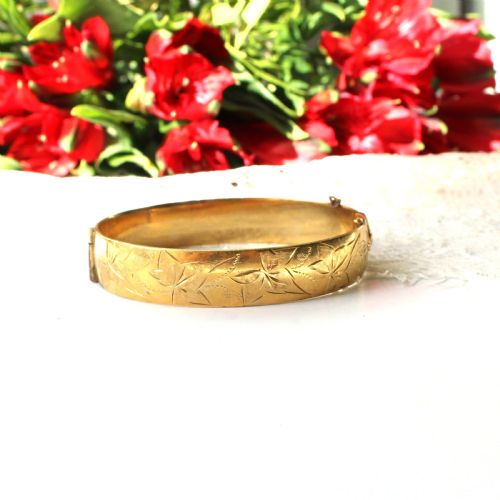
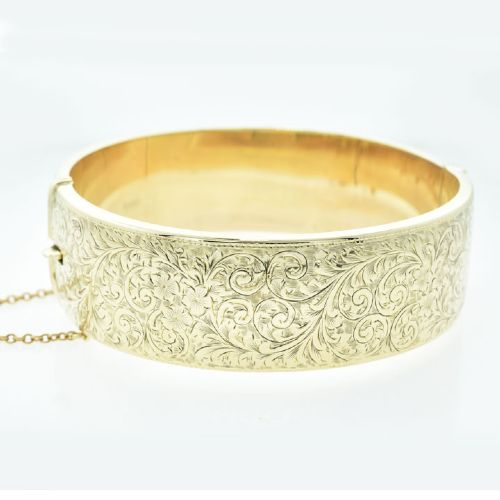
Gold wrist jewellery spans rigid bangles, articulated chain bracelets and gem-set pieces designed to encircle the arm. Buyers seeking gold wrist jewellery encounter Victorian cuff bangles, Edwardian gem-set designs and Art Deco tank bracelets.
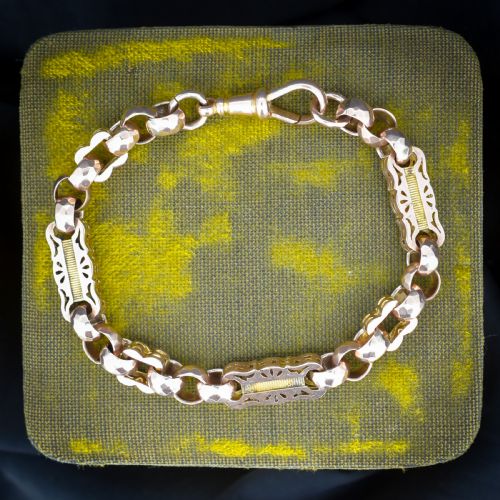
The selections on this page range from nineteenth-century fancy link chains to mid-century rolled gold pieces and vintage wrist watches. Solid gold work sits alongside rolled gold and metal core alternatives originating from British, Italian and Portuguese makers.
Materials and construction
Construction relies upon varying purities of gold, including nine-carat, fourteen-carat, fifteen-carat, eighteen-carat and eight-carat standards, often shaped into hollow rolled gold or solid metal forms. Master jewellers utilised yellow gold, rose gold and white gold as foundations for structural links and clasps.
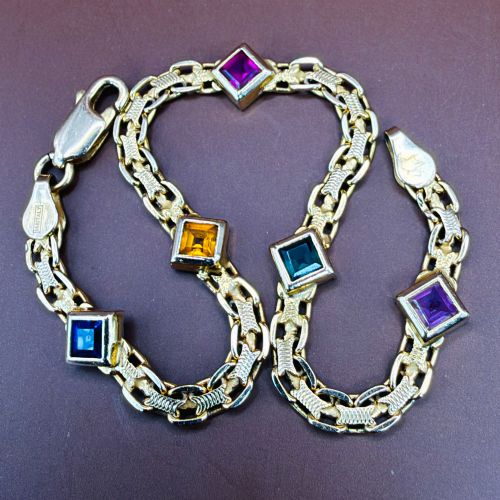
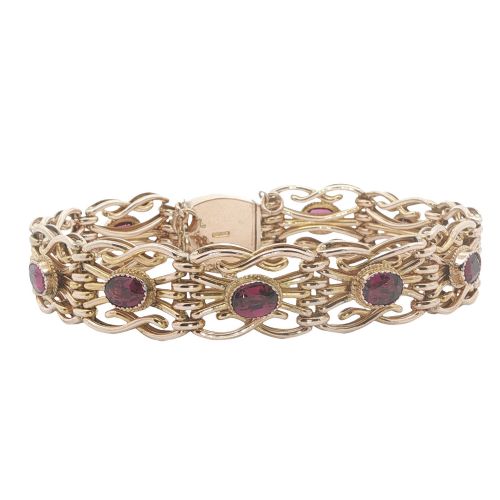
Gemstones such as almandine garnets, rubies, sapphires, emeralds, diamonds, pearls and natural green zircons are flush-set, bezel-set or princess-cut into the metal framework. Engraving, intricate link assembly and original boxes demonstrate period workshop capabilities.
Gold Wrist Jewellery Retail Price Guide 2026
Typical asking prices for gold wrist jewellery among the pieces listed under this phrase on Sellingantiques today, from the lower quarter to the upper quarter. They describe what is for sale here now, not the wider market.
The listings encompass items fashioned from nine-carat, fourteen-carat, fifteen-carat, eighteen-carat and eight-carat gold across Victorian, Edwardian, Art Deco and Mid-Century eras.
Distinctions in standard
Quality separates through the purity of the metal and the integrity of the structural links, ranging from solid eighteen-carat gold down to rolled gold metal cores. Superior pieces display crisp hand-engraving and secure box clasps or T-bars.
The selection and treatment of gemstones also define the standard, marked by unheated natural stones like Ceylon sapphires and matched rubies rather than lesser composite assemblies. Maker marks, such as Chester assay stamps, indicate verifiable provenance.
Smith and Pepper·Elgin
The Gold Wrist Jewellery Glossary
- Bangle
- A rigid circular or oval ornament worn around the wrist, either solid or hinged as a cuff.
- Rolled gold
- A manufacturing method where a layer of gold is mechanically bonded to a base metal core for durability and lower cost.
- Tank bracelet
- A chunky, geometric link style popular during the Art Deco period, named for its resemblance to industrial treads.
- T-bar
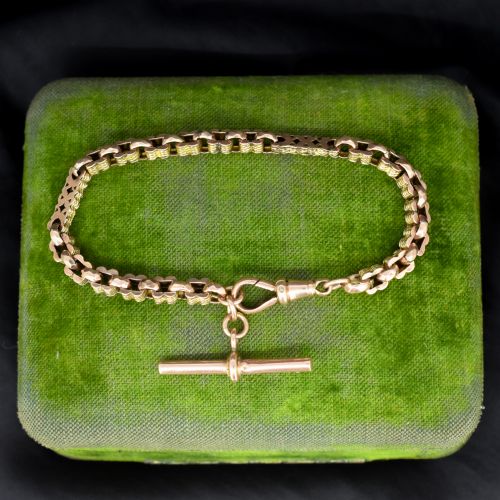
- A transverse metal bar attached to a chain bracelet, historically used to secure a pocket watch or act as a toggle fastener.
Gold Wrist Jewellery: Frequently Asked Questions
How do I clean an antique gold bracelet?
Warm soapy water and a soft brush remove surface dirt from solid gold links safely. Avoid soaking pieces containing pearls or backed gemstones.
Pat the item dry thoroughly with a soft cloth to protect any delicate engraving or hinges.
How do I know my wrist size for a bangle?
Measure the widest part of your hand when your thumb is tucked into your palm, as the hand must pass through a rigid bangle.
Flexible chain bracelets and hinged cuffs offer adjustable sizing or secure clasps that bypass the need to slip over the knuckles.
Can antique watches be worn daily?
Vintage mechanical wrist watches require gentle handling and protection from moisture due to their age and delicate internal movements.
Wind them with care and consult a specialist horologist for routine servicing to maintain proper timekeeping.