

Gold Watch Chain Clip
A gold watch chain clip secures the heavy pocket watch links and chatelaine fobs that define traditional watch chains.
Gold Watch Chain Clip
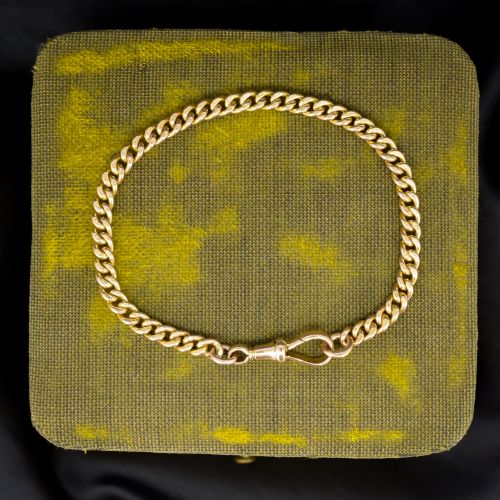
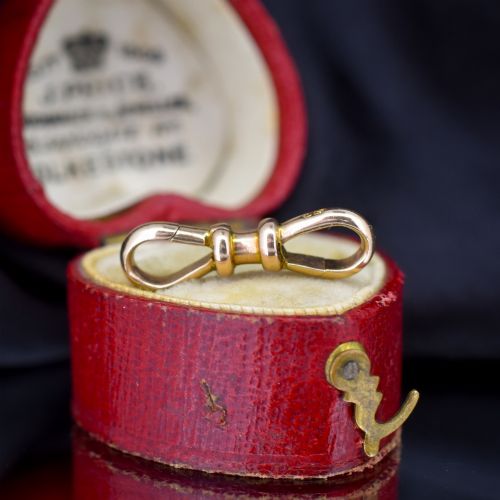
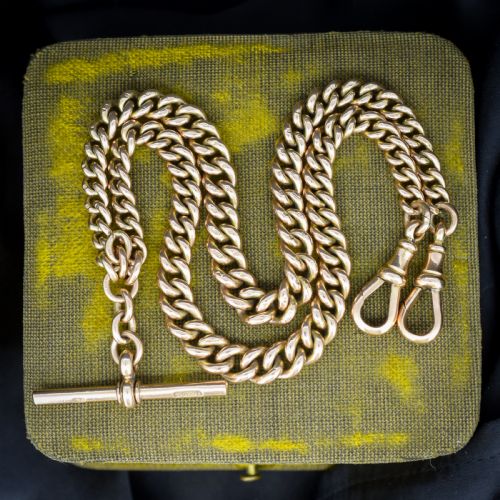
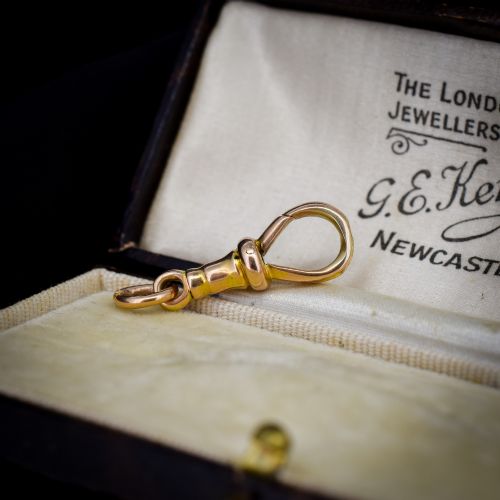
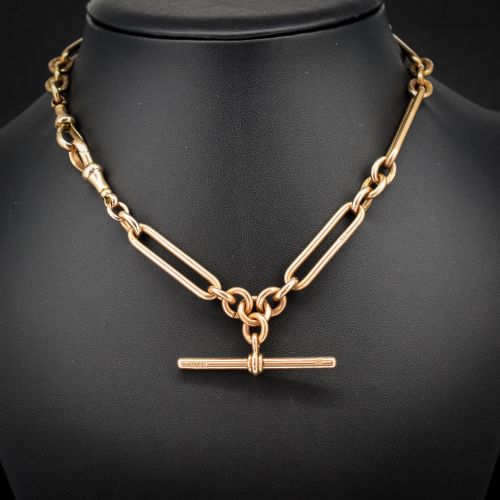
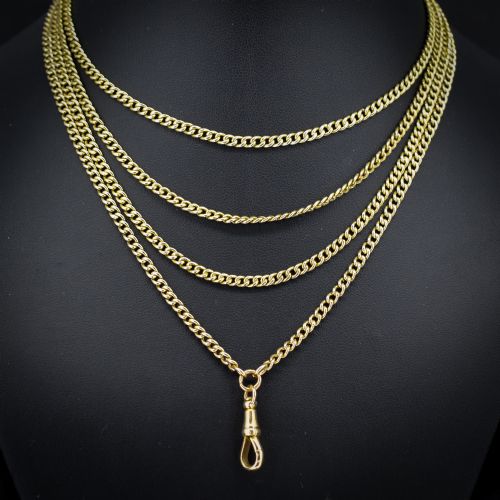
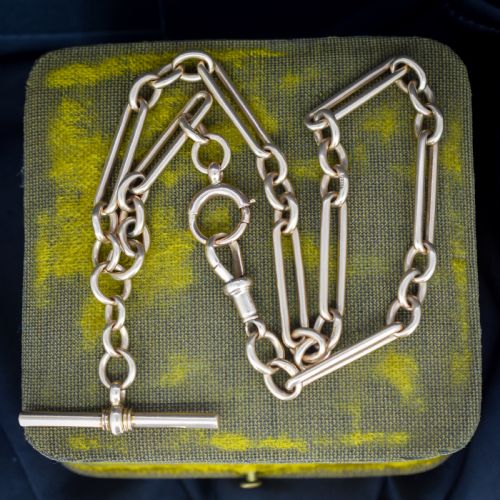
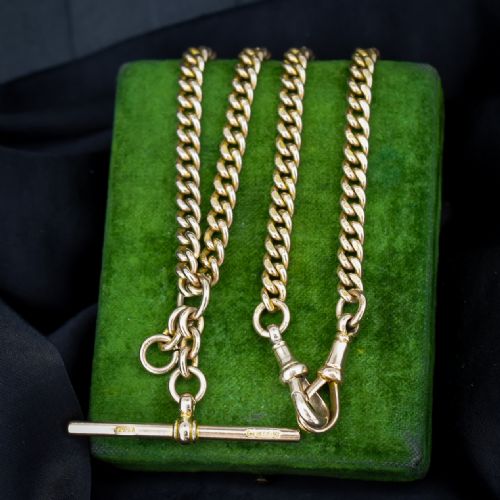
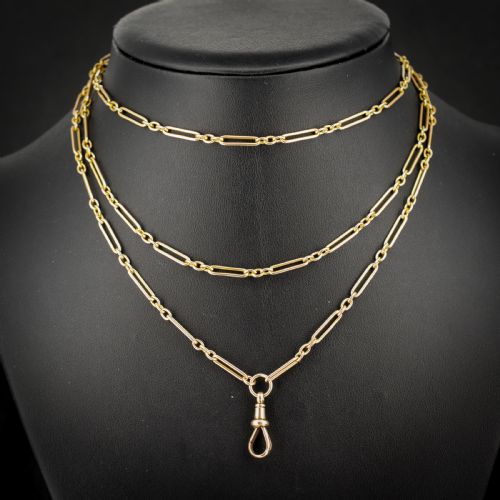
A gold watch chain clip, commonly referred to as a dog clip or swivel clasp, functions as the primary fastening mechanism on historic pocket watch chains, Albert chains, and longuard necklaces. These practical hardware components appear across Victorian, Edwardian, and Art Deco eras, usually securing a heavy chain to a waistcoat or garment buttonhole.
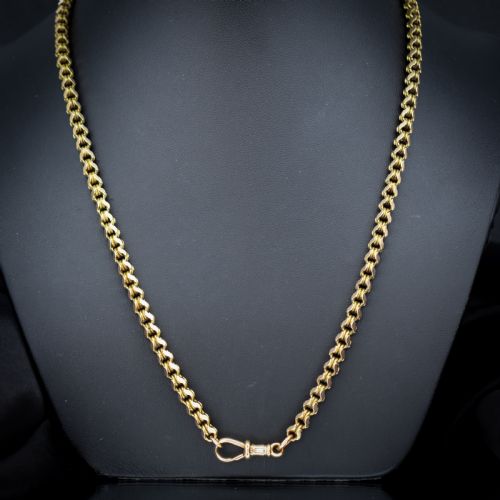
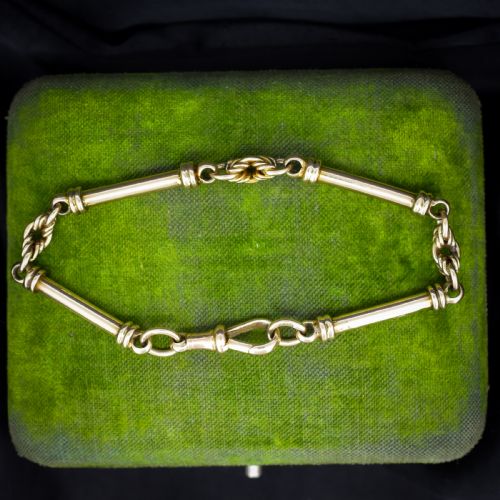
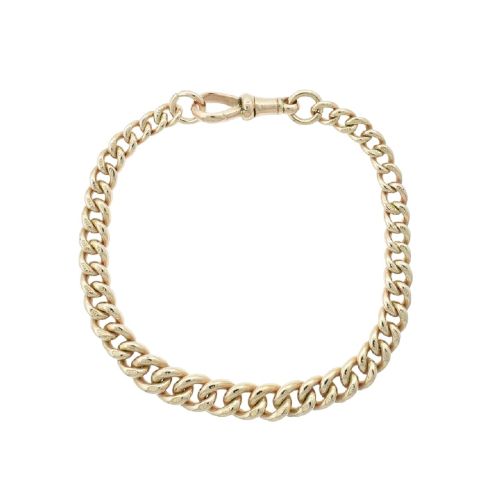
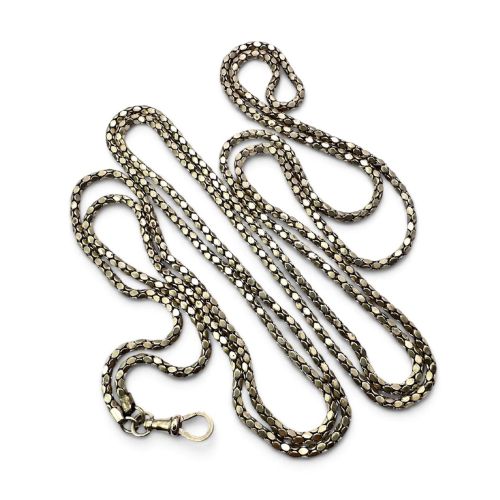
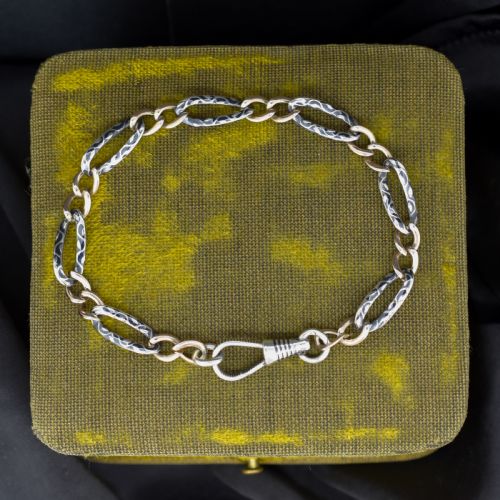
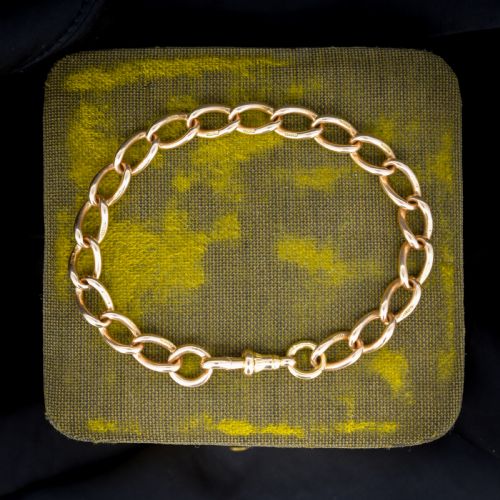
Most examples encountered here arrive attached to long guard chains, fancy link necklaces, and graduated curb link bracelets rather than as isolated items. They serve both functional purposes in securing timepieces and decorative roles when worn as charm pendants or multi-strand bracelets.
Origins span the nineteenth and early twentieth centuries, encompassing diverse regional assay offices and workshops across Britain. The forms range from simple single spring-loaded clips to heavy double dog clip configurations designed for elaborate watch chains.
How they were made
The construction relies primarily on solid gold variants, specifically nine carat, fifteen carat, and eighteen carat yellow, rose, and white gold, alongside rolled gold and niello silver accents. Goldsmiths fashioned the spring-loaded mechanisms by hand, integrating internal steel springs to ensure the pivoting thumb lever snaps securely shut against the loop.
Link formations span heavy curb, trombone, fancy, paper, and belcher patterns, often soldered directly to the base of the swivel mechanism or connected via jump rings. Hallmarks stamped onto the metal surface indicate the exact gold purity standard and assay office origin.
The inventory combines traditional Albert watch chains and long guard necklaces with rarer niello silver and platinum hybrid designs.
What varies in quality
The integrity of the internal spring mechanism governs the primary functional tier, determining whether the thumb lever maintains sufficient tension to remain firmly closed during daily wear. Weight and gold carat substance similarly separate standard production hardware from substantial fifteen or eighteen carat gold specimens designed for heavy pocket watches.
Artisanal execution distinguishes basic utilitarian clasps from ornate examples featuring hand-carved detailing, dual swivel functions, or integrated geometric styling from the Art Deco period. Preservation of original maker marks and legible assay stamps adds tangible historical substance to the physical construction.
Connell
The Gold Watch Chain Clip Glossary
- Dog clip
- A spring-loaded fastener featuring a pivoting lever that resembles a dog leash snap hook. This mechanism forms the standard terminal connection on nineteenth-century watch chains.
- Longuard chain
- An exceptionally long necklace designed to be doubled or tripled around the neck. These pieces frequently terminate in a secure dog clip for holding pocket watches or pendants.
- T-bar
- A short transverse bar attached to the centre of a watch chain. It slips through a waistcoat buttonhole to anchor the entire assembly.
- Graduated link
- Links that systematically decrease in size from the centrepiece outwards toward the fastenings. This construction distributes visual weight evenly along the chain.
Gold Watch Chain Clip: Frequently Asked Questions
What is a dog clip on a watch chain?
A dog clip is a small, spring-loaded clasp with a thumb lever that opens an inner gate. It was originally designed to secure pocket watches and fobs to an Albert chain.
Today, these clips allow collectors to hang charms, suspend pendants, or connect different lengths of antique chains together securely.
How do I wear an antique watch chain?
Antique watch chains can be doubled around the neck as a short necklace or worn straight as a long guard chain. The dog clip attaches directly to a pendant or fastens back onto the chain to create a layered bracelet.
Adding a T-bar through a garment buttonhole recreates the traditional Victorian waistcoat styling.
How do I date a gold watch chain clip?
Dating relies on identifying hallmarked stamps, gold purity standards, and the overall link style. Victorian pieces often feature heavy rose or yellow gold curb links, while Edwardian versions incorporate finer fancy link patterns.
Art Deco examples introduce geometric uniformity, and stamped year letters on the metal provide precise assay office dates.
What gold purity should I look for?
Historic watch chains and clips appear in nine carat, fifteen carat, and eighteen carat gold, alongside rolled gold variants. Fifteen carat gold displays a richer yellow hue characteristic of the Victorian era before legal standards shifted.
Markings stamped directly onto the metal confirm the exact gold composition and manufacturing origin.