


Antique Gold Pendant Clasp
These antique gold pendant clasp pieces are secure connectors and charms built to hold chains or display trinkets.
Antique Gold Pendant Clasp
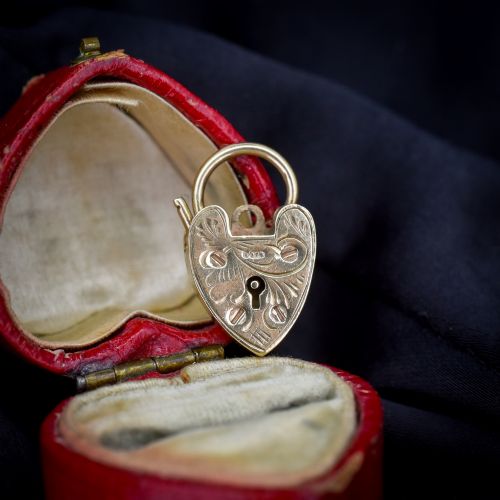
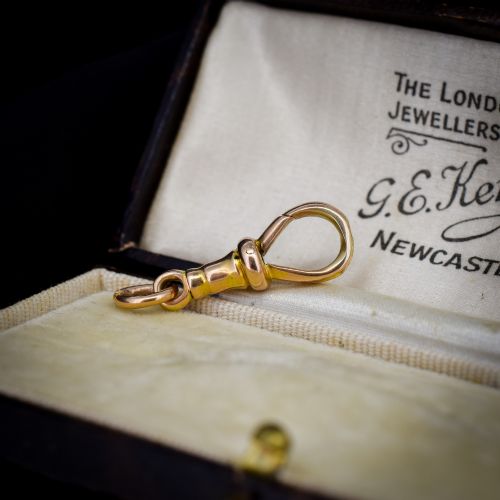
An antique gold pendant clasp is a functional piece of jewellery designed to secure necklaces or suspend charms. The pieces found here include heart padlocks, dog clips, spring rings, and purse padlocks.
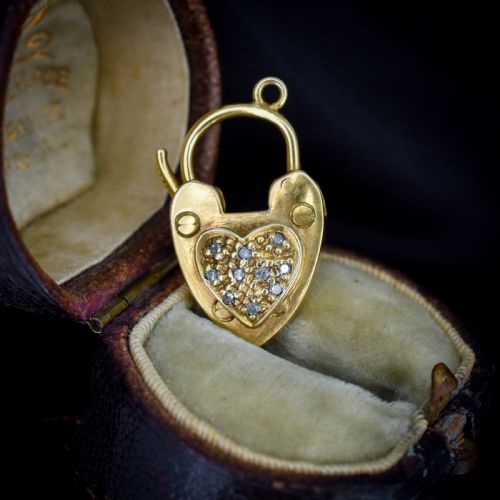
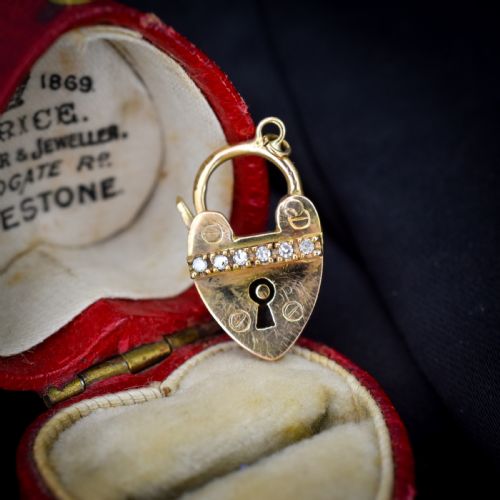
The selection ranges across the Victorian, Edwardian, and later twentieth-century periods. Forms include engraved heart padlocks set with diamonds alongside turquoise clasp sets and large dog clips.
Makers and manufacturers utilised various gold purities, including nine-carat, fifteen-carat, and eighteen-carat rose and yellow gold. These items function simultaneously as practical connectors and decorative pendants.
How they were made
The construction relies on gold metals shaped into functional mechanisms like spring rings, dog clips, and opening padlocks. Artisans worked with nine-carat, fifteen-carat, and eighteen-carat yellow and rose gold alloys.
Surface ornamentation involved hand engraving on heart padlocks and mounting small diamonds into the gold body. Certain examples integrate turquoise stones or feature opening mechanisms such as purse designs.
Listings span the Victorian, Edwardian, and 1960 eras, featuring nine-carat, fifteen-carat, and eighteen-carat gold materials.
What varies in quality
Detailing determines distinction, such as hand-engraved patterns on heart padlocks or the inclusion of pavé-set diamonds. The smoothness of operation in spring rings and dog clips also distinguishes finer examples.
The Antique Gold Pendant Clasp Glossary
- Dog clip
- A spring-loaded fastener with a snap hook action used to attach watch chains or charms. This mechanism appears on larger antique pendant pieces.
- Padlock charm
- A small padlock-shaped jewellery piece, often featuring an engraved surface or a secure shackle. These items serve as both functional clasps and decorative pendants.
- Spring ring
- A circular hollow ring fitted with a spring-loaded thumb slide for opening and closing. French examples often appear in larger proportions.
- Turquoise
- A hydrous phosphate of copper and aluminium valued for its robin's egg blue colour. This mineral appears set into early Victorian chains and clasps.
Antique Gold Pendant Clasp: Frequently Asked Questions
How do these clasps function?
These pieces operate through spring mechanisms, snap hooks, or opening shackles. They were designed to secure necklaces or hold hanging charms.
Users can open the spring rings or dog clips by pressing the internal lever to attach them to chains. Padlocks snap shut to secure the wearer's chosen items.
What gold purities do they use?
The items utilise various gold alloys including nine-carat, fifteen-carat, and eighteen-carat gold. Both yellow gold and rose gold variations appear throughout the collection.
Higher carat numbers indicate a greater proportion of pure gold within the metal alloy. This influences the overall tone and weight of the pendant.
How are periods identified?
Periods are recognised through specific design characteristics, maker marks, and recorded dates. Victorian and Edwardian examples display distinct aesthetic choices.
Details such as hand engraving, diamond settings, and specific clasp shapes help separate nineteenth-century items from mid-twentieth-century vintage pieces.
Can these be worn daily?
These pieces are sturdy enough for regular wear when the mechanisms are secure. Their dual purpose allows them to function as clasps or standalone pendants.
Owners should check the spring tension and hinges periodically to ensure the closure remains reliable during daily use.