

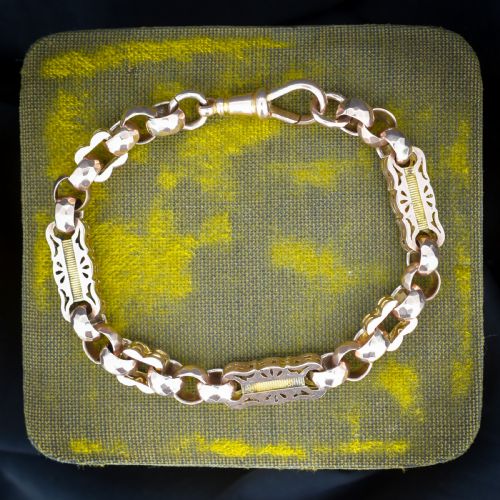


Victorian Gold Swivel Clasp
A victorian gold swivel clasp secures watch chains and bracelets with a clever rotating mechanism, offering both practical utility and fine period craftsmanship.
Victorian Gold Swivel Clasp
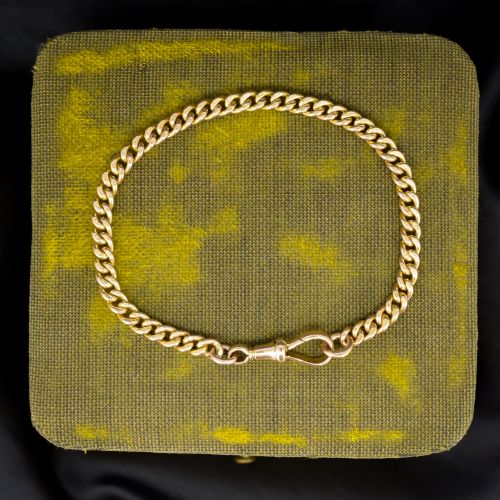
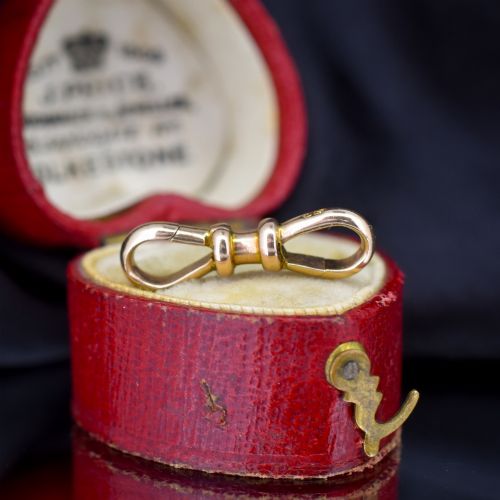
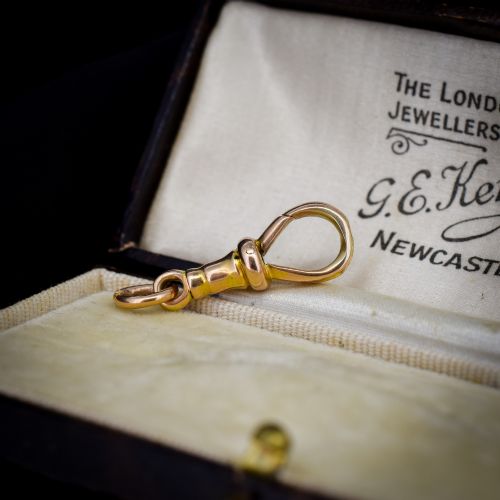
When you search for a victorian gold swivel clasp, you encounter functional components attached to pocket watch chains, albert chains, bracelets, and longuard necklaces. These clasps operate with a spring-loaded gate that pivots on a small swivel base, allowing the attached chain or fob to turn without twisting the links.
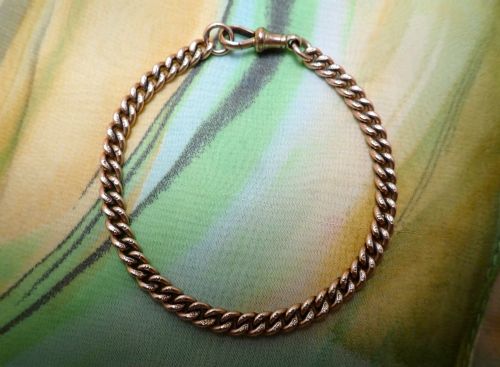
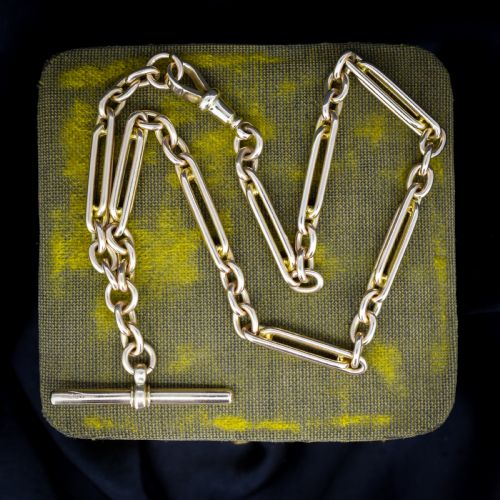
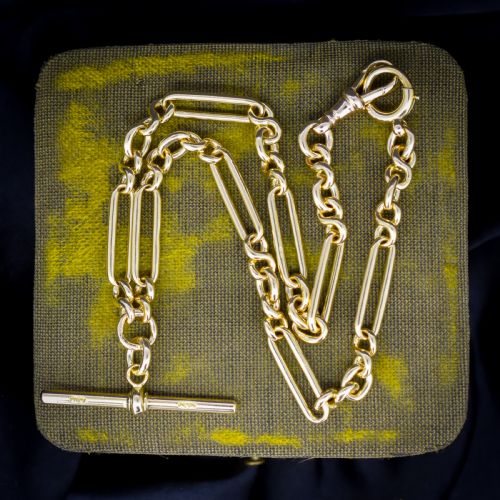
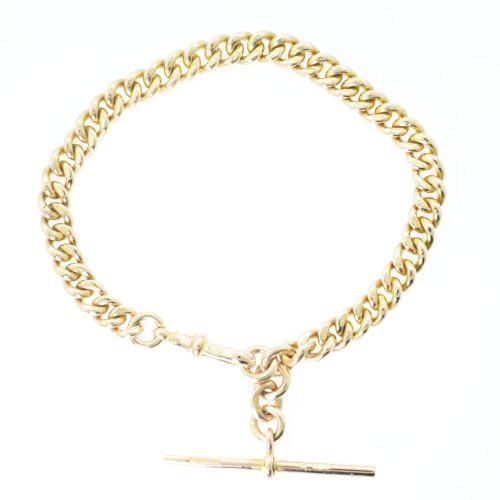
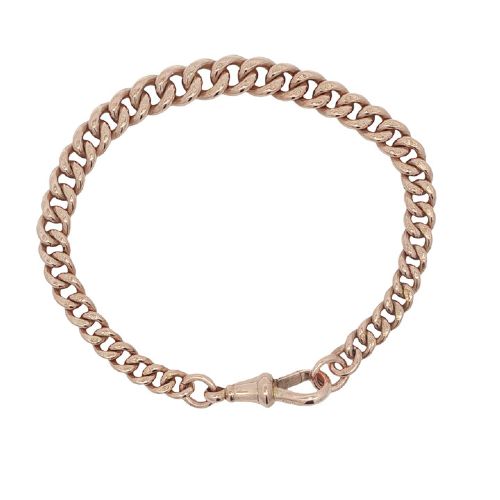
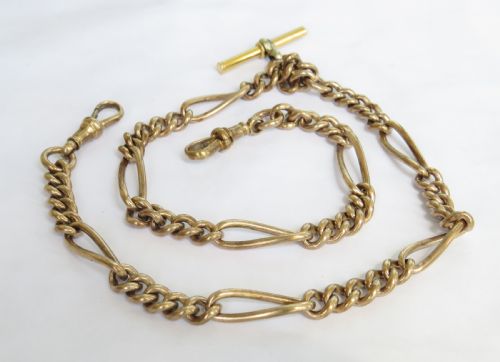
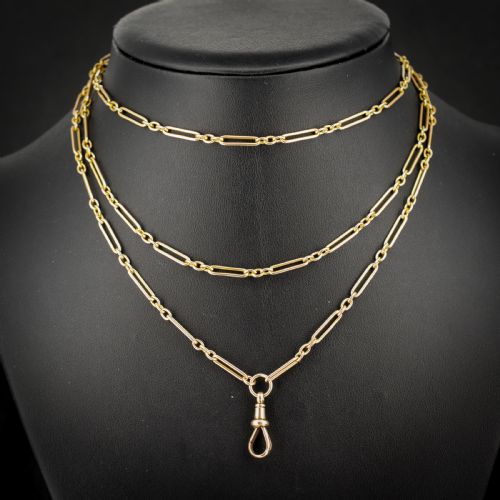
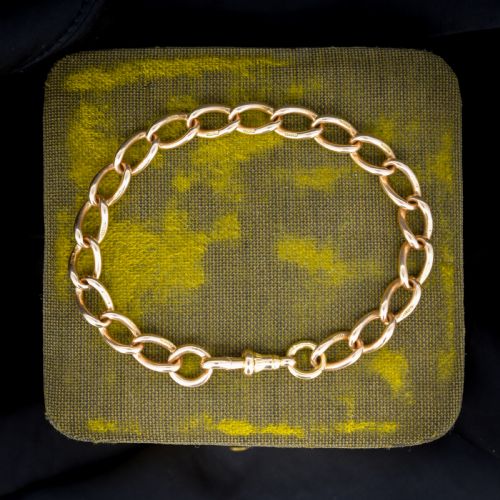
The pieces on this page span the Victorian, Edwardian, and early twentieth-century periods, alongside French antique examples. They appear predominantly on heavy watch chains, charm pendants, and graduated bracelets configured in curb, trombone, paper link, and belcher styles.
Materials and construction
These items utilise various gold alloys including 9ct rose gold, 9ct yellow gold, 15ct gold, 18ct yellow gold, and rolled gold. Goldsmiths shaped these metals into substantial link chains and mechanical clasps such as dog clips and albert clips.
The construction relies on solid metal forming for higher karat pieces alongside rolled gold layering over base metal cores. Components integrate spring mechanisms within the swivel housing to maintain tension on the opening gate.
Factors of quality and weight
The quality of these pieces depends on the purity of the gold alloy, ranging from 9ct up to 18ct, and the overall mass of the item. Substantial weight, such as heavy grammage in bracelets and long chains, distinguishes more substantial examples.
Mechanical integrity defines the standard of the clasp itself, where the spring action of the swivel gate remains firm and precise. Refinement in link styles, from plain curb to fancy patterned stars and bars, also separates standard items from finer work.
The Victorian Gold Swivel Clasp Glossary
- Swivel clasp
- A mechanical fastening featuring a rotating loop that prevents attached chains from tangling or twisting during wear. This mechanism forms the defining element of albert chains and watch attachments.
- Albert chain
- A pocket watch chain designed to be secured through a waistcoat buttonhole, often fitted with a T-bar at one end and a swivel clasp at the other. These chains frequently support charms or pocket watches.
- Dog clip
- A spring-loaded fastener shaped like a small snap hook, commonly utilised as a clasp on watch chains and charm bracelets. It operates via an inward-pressing thumb lever.
- Longuard chain
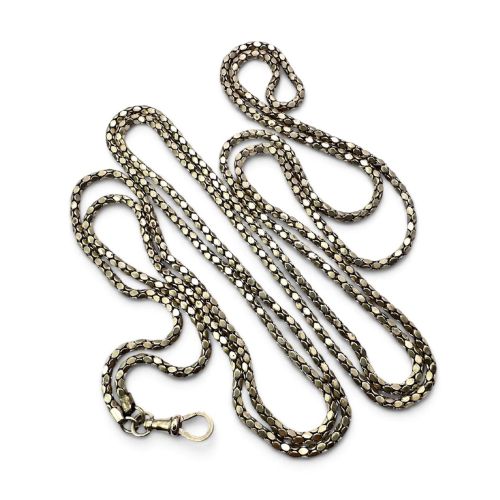
- An exceptionally long Victorian necklace, often measuring around seventy centimetres or more, designed to be doubled around the neck. They frequently terminate in a swivel clasp or dog clip for hanging watches or pendants.
- Rolled gold
- A material formed by bonding a thin sheet of gold to a base metal core under heat and pressure. This technique provides the appearance and wear resistance of solid gold at a different weight and cost.
Victorian Gold Swivel Clasp: Frequently Asked Questions
What is a victorian gold swivel clasp used for?
These clasps were originally designed to secure pocket watch chains to waistcoats or garments, allowing the watch to be detached easily. They also served to attach pendants, charms, and fobs to bracelets and longuard necklaces.
Today, collectors utilise them to fasten antique chains, wear them as standalone connectors for charms, or adapt long chains for modern jewellery styling.
How do I tell different gold karats apart?
Gold purity in these pieces is typically indicated by hallmarks stamped onto the metal, showing designations such as 9ct, 15ct, or 18ct. Higher karat gold generally displays a richer, deeper yellow hue, though rose gold alloys exhibit a distinct pinkish tone regardless of karat.
Rolled gold items lack solid gold hallmarks and rely on the mechanical bonding of gold over a base metal core. Examining the wear points can sometimes reveal the underlying base metal.
How do I care for antique gold chains and clasps?
Antique gold items require gentle cleaning with warm soapy water and a soft cloth to preserve the metal finish and any delicate links. Avoid harsh chemical dips or ultrasonic cleaners, particularly on pieces with integrated spring mechanisms or set stones.
Store chains flat or hung carefully to prevent kinks in hollow or intricate link patterns like trombone and paper link designs.
Are these clasps secure for daily wear?
The security of an antique swivel clasp depends on the strength of the internal spring within the gate mechanism. Most retain adequate tension for regular use, but vintage springs should be checked periodically by a jeweller.
When attaching heavy pendants or charms, ensure the gate closes flush against the loop to prevent accidental detachment during movement.