

Gold Swivel Clasp Chain
A gold swivel clasp chain is a functional piece of historic jewellery that collectors wear as a necklace today.
Gold Swivel Clasp Chain
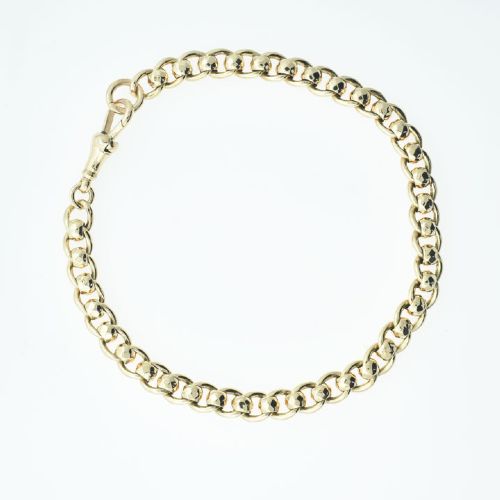
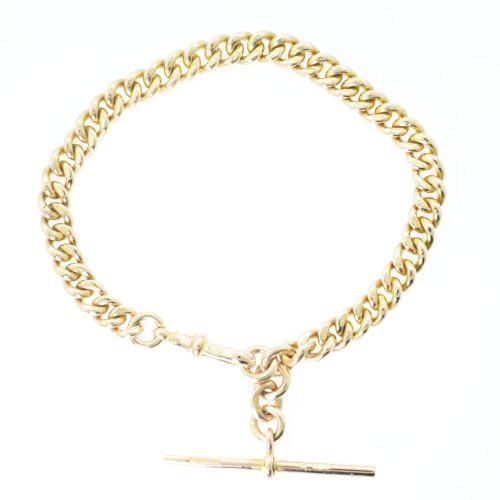
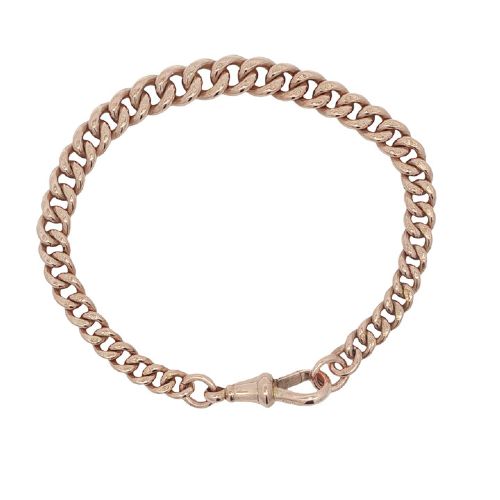
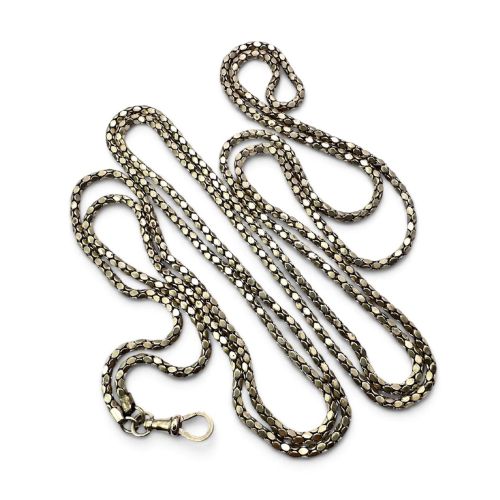
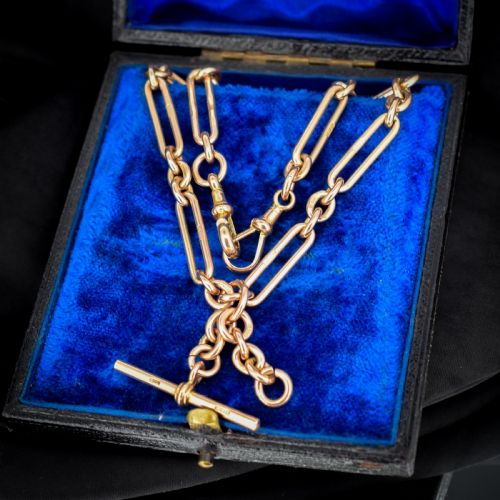
A gold swivel clasp chain is a substantial link chain designed originally to secure a pocket watch, and the pieces found here span from the nineteenth century into the nineteen twenties. These items most frequently appear as watch chains and Albert chains, adapted by modern wearers to function as necklaces.
The selection includes specific Victorian and Edwardian iterations alongside French antique pieces, reflecting the wearable history of the period. Collectors encounter distinct nineteenth century examples alongside pieces bearing dates such as nineteen twenty five.
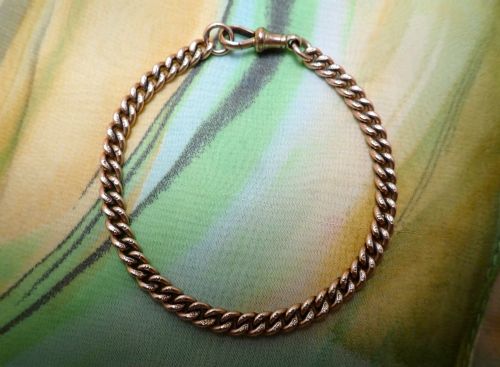
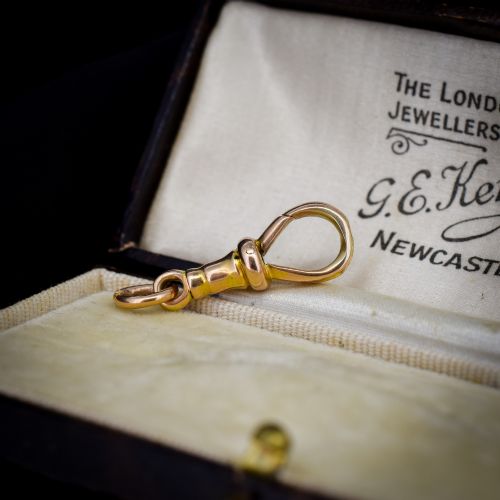
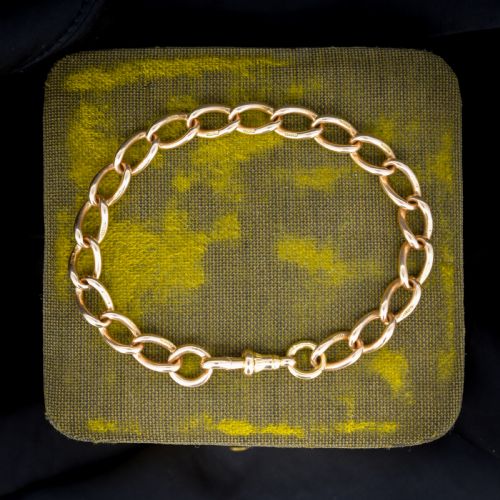
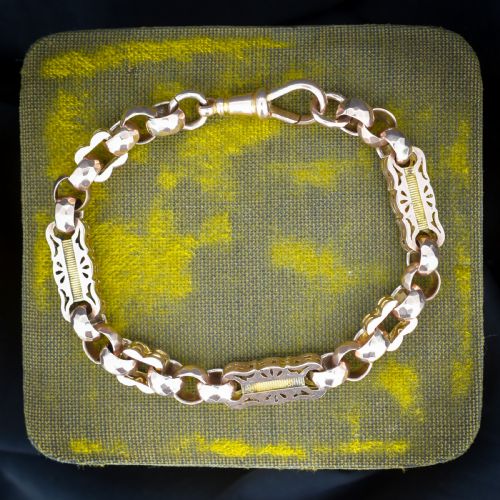
The form relies on sturdy construction designed for daily utility, featuring links like the trombone or fancy faceted curb pattern. Each piece retains the characteristic pivoting mechanism that gives the clasp its name.
How they were made
Goldsmiths constructed these chains using nine carat gold and eighteen carat yellow gold, shaping the metal into distinct link formations. The fabrication demands precise wire-working and soldering to create durable lengths capable of holding a timepiece.
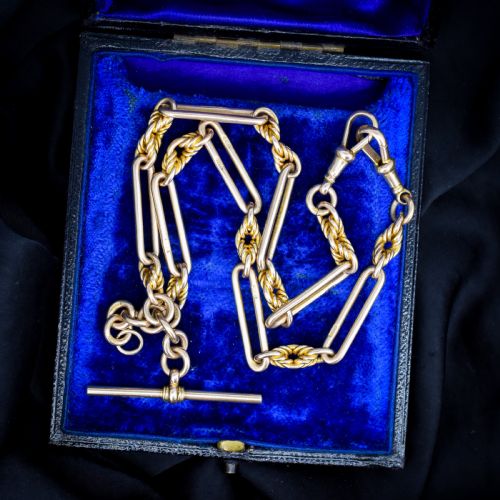
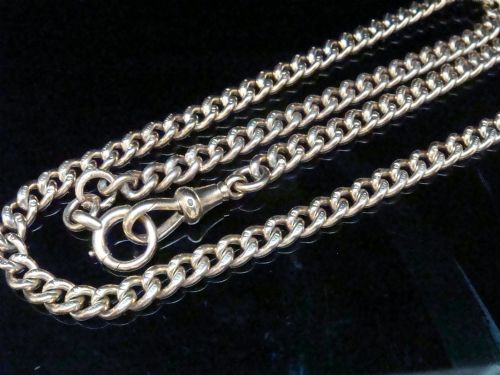
Link types such as the trombone or the love knot require specialised bench techniques to join individual components securely. Faceted curb links involve careful filing and polishing to catch the light from multiple angles.
Materials in this category span nine carat gold through to eighteen carat yellow gold.
What varies in quality
Quality rests upon the weight and gauge of the gold used in the links, alongside the crispness of the original ornamentation. Heavier gauge chains command attention for their substantial feel and the integrity of their construction.
The precision of the mechanical swivel clasp marks the distinction between standard production and superior work. A well-maintained mechanism moves freely without looseness, ensuring the security of whatever hangs from it.
The Gold Swivel Clasp Chain Glossary
- Albert chain
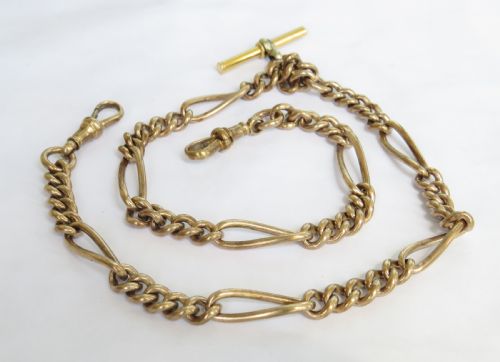
- A heavy watch chain designed to pass through a waistcoat buttonhole, named after the British prince consort. These pieces now find frequent use as necklaces.
- Trombone link
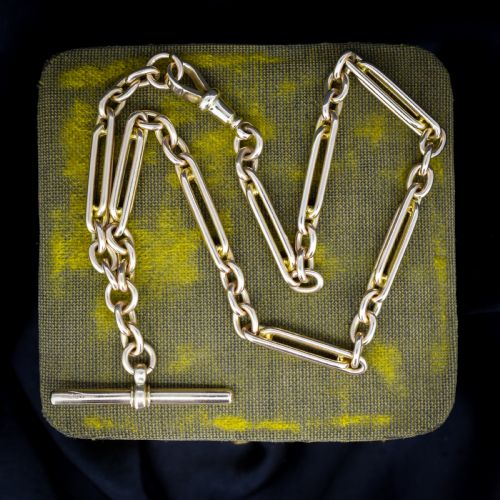
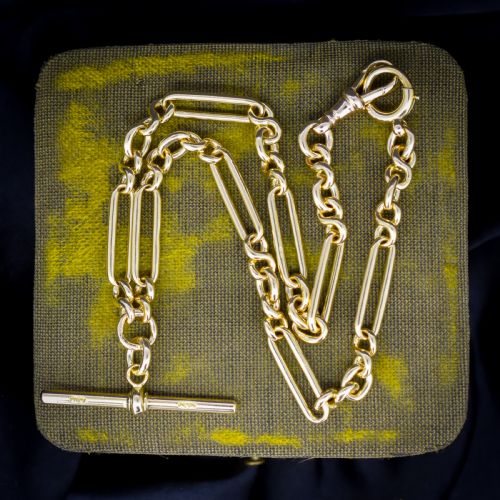
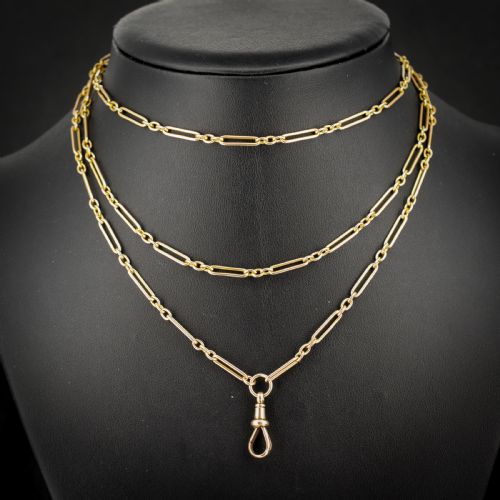
- A specific link shape resembling the elongated curves of a musical instrument. This geometric form provides both strength and visual rhythm to the chain.
- Swivel clasp
- A fastening mechanism featuring a rotating loop that prevents the chain from twisting. It allows pendants or watches to turn freely during wear.
- Curb link
- A series of interconnected flat links that lie relatively uniform and close together. Faceted variations reflect light through angled surfaces cut into the metal.
- Yellow gold
- The natural alloy colour produced by mixing gold with silver and copper. It dominates nineteenth-century and early twentieth-century watch chains.
Gold Swivel Clasp Chain: Frequently Asked Questions
How do I wear an antique watch chain?
These pieces function readily as necklaces when draped around the neck, often with the swivel clasp secured to a central ring or left dangling as a feature.
Wearers frequently attach small charms or lockets to the swivel clasp to personalise the piece for daily use.
What is an Albert chain?
An Albert chain is a specific style of pocket watch chain that includes a T-bar at one end and a swivel clasp at the other. Nineteenth-century gentlemen used them to secure pocket watches to waistcoats.
Today, collectors appreciate these robust chains for their intricate link work and historical utility.
How can I tell the gold purity?
Makers and assay offices typically stamped or punched purity marks directly onto the metal links or the swivel clasp itself. Common standards found in these pieces include nine carat and eighteen carat gold.
Examining these tiny hallmarks with a loupe reveals the specific alloy standard and often the date letter of manufacture.
What is a trombone link?
A trombone link is a distinctive geometric watch chain link featuring long rectangular bars connected by smaller circular or oval links. This design offers a balanced mix of visual lightness and structural strength.
Such links were particularly popular during the Victorian and Edwardian eras for watch chains.