



Gold Sentimental Jewellery
Gold sentimental jewellery holds private affection in precious metal, taking the form of rings, lockets and brooches designed to remember a person or a bond.
Gold Sentimental Jewellery
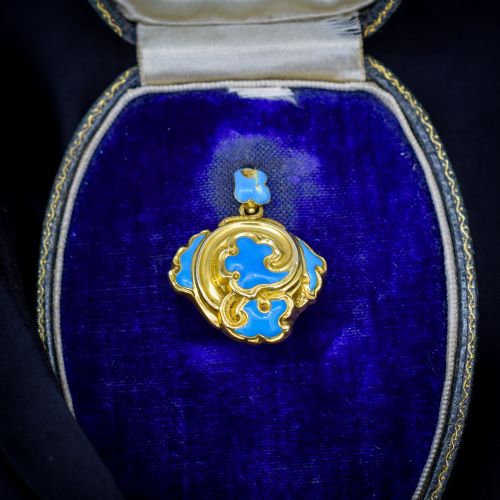
Gold sentimental jewellery encompasses personal tokens created to commemorate relationships, devotion and remembrance across the Georgian, Victorian and Edwardian eras. Pieces on this page appear as rings, brooches, lockets and pendants formed in yellow gold.
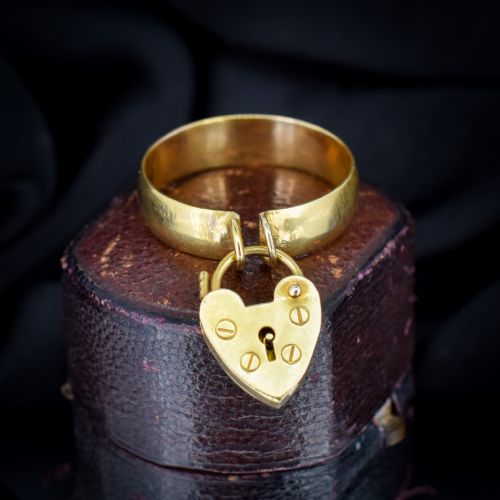
The most frequent examples found here include Victorian and 19th-century band rings bearing Mizpah inscriptions, alongside heart-shaped lockets and brooches incorporating turquoise, pearls and hair work. These forms reflect a distinct material language of affection developed across the nineteenth century.
Earrings, bracelets and framed miniature paintings also emerge within these periods, expanding the range of personal adornment beyond simple rings and pendants. Each object carries specific symbolic motifs such as forget-me-nots, doves and love knots to communicate private messages.
How they were made
Craftsmen built these pieces using high-carat yellow gold, frequently employing 15ct and 18ct alloys alongside 9ct variants. Metals were shaped into band rings, pierced heart frames and hinged locket cases designed to secure hidden compartments.
Decoration relied on precision hand techniques including blue enamel work, engine-turning, and the delicate arrangement of human hair beneath glass covers. Gemstones such as turquoise and seed pearls were set by hand to trace floral and symbolic patterns.
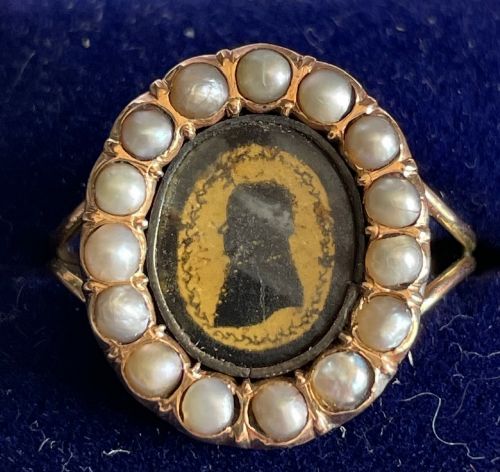
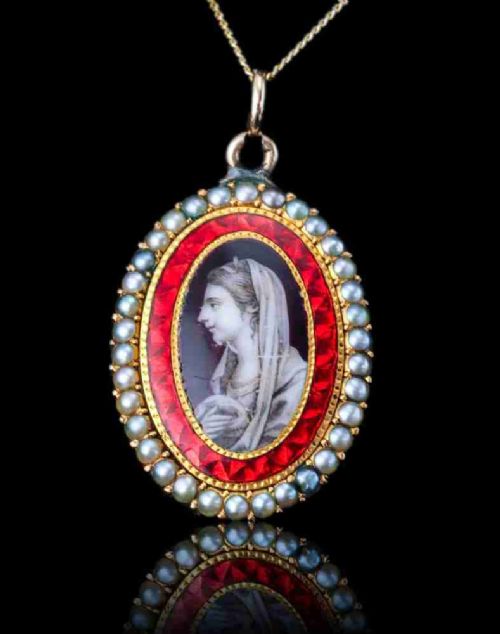
Specialist lapidary and goldsmithing skills united precious metals with miniature painted portraits in sepia, or glass panels preserving mourning hair work. These methods allowed jewellers to construct durable personal monuments meant to be worn daily.
Gold Sentimental Jewellery Retail Price Guide 2026
Typical asking prices for gold sentimental jewellery among the pieces listed under this phrase on Sellingantiques today, from the lower quarter to the upper quarter. They describe what is for sale here now, not the wider market.
Listings feature yellow gold, 18ct gold, and 15ct gold alongside pearls, turquoise, glass, and enamel across the Victorian and Georgian periods.
What varies in quality
Quality rests upon the crispness of the hand-engraving and the structural integrity of hinged elements like lockets and padlock drops. Finer examples maintain sharp lettering on Mizpah bands and secure bezels around delicate turquoise and pearl settings.
The sophistication of the internal contents dictates distinction, separating simple hollow gold work from intricate hair work braided by hand or finely executed sepia portraiture. Masterful execution in enamel and miniature painting elevates an ordinary token into a work of miniature art.
The Gold Sentimental Jewellery Glossary
- Mizpah
- A Hebrew watchword signifying an emotional bond between people separated by distance. These inscriptions frequently appear on Victorian yellow gold band rings and brooches.
- Hair work
- The Victorian practice of weaving human hair into intricate patterns to be placed behind glass within a locket or ring. This served as a tangible memorial for a loved one.
- Padlock drop
- A small fastening charm shaped like a padlock attached to rings or bracelets. It symbolised a heart locked away or security in a relationship.
- Sepia portrait
- A miniature painting executed in shades of brown pigment, common in Georgian memorial pendants. These often depicted symbolic scenes or eyes.
- Love token
- An object given to express affection, carrying conventional symbols such as knots, hearts or doves. They range from simple brooches to elaborate multi-gem pendants.
Gold Sentimental Jewellery: Frequently Asked Questions
What is a Mizpah ring?
A Mizpah ring is a piece of sentimental jewellery inscribed with the Hebrew word for an emotional watchword between absent friends. They appear frequently in 19th-century yellow gold bands.
These rings served as tokens of remembrance for couples or family members separated by distance. Their engraved bands remain a distinct marker of Victorian sentimental expression.
How do I care for antique gold hair work?
Antique hair work requires protection from moisture, chemical cleaners and direct sunlight to preserve the delicate strands sealed behind glass. Keeping the piece dry ensures the interior remains intact.
Because these locket panels are sealed rather than waterproof, immersion in water will damage the enclosed materials. Gentle surface cleaning with a soft cloth is the only appropriate maintenance.
What does a turquoise forget-me-not signify?
Turquoise forget-me-nots in Victorian jewellery symbolise faithful memory and enduring remembrance. The blue stones mimic the small garden flower of the same name.
Jewellers clustered these stones into hearts and floral sprays on lockets and brooches to communicate loyalty. This visual vocabulary was widely understood during the 19th century.
Are these pieces made of solid gold?
The listings on this page feature gold alloys varying from 9ct up to high-carat 15ct and 18ct yellow gold. Construction methods reflect the standards of their respective periods.
Solid gold formed the structural bands, lockets and mounts, often enclosing secondary materials like silver settings for gems or glass panels for hair. Hallmarks when present help confirm the metal standard and origin.