


Gold Sapphire Diamond Band
A gold sapphire diamond band combines rich yellow or white precious metal with deep blue corundum and sparkling diamonds in forms ranging from Victorian boat settings to sleek Art Deco clusters.
Gold Sapphire Diamond Band
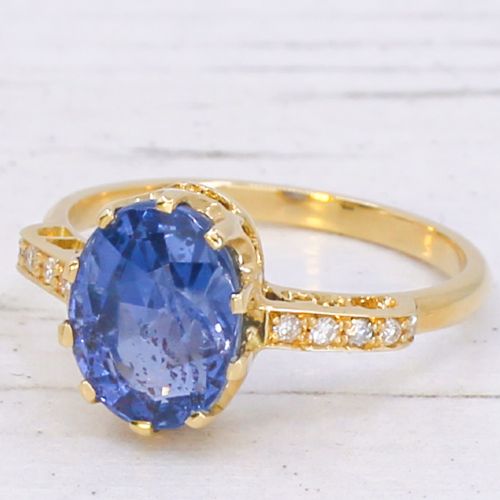
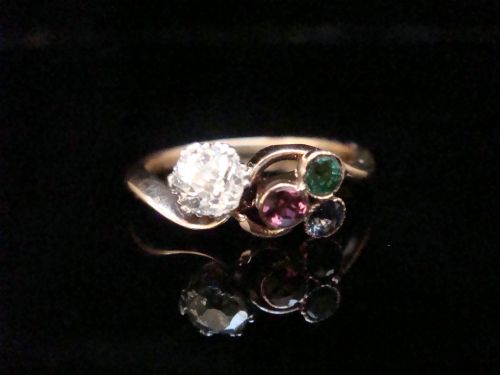
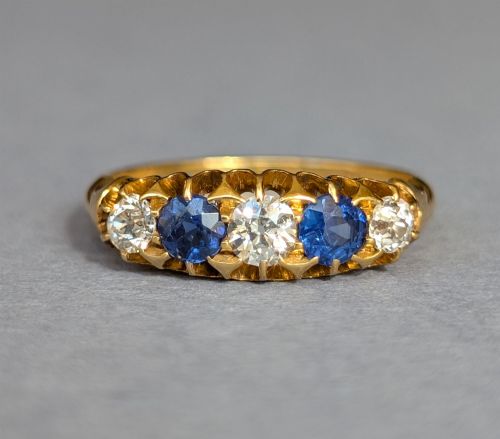
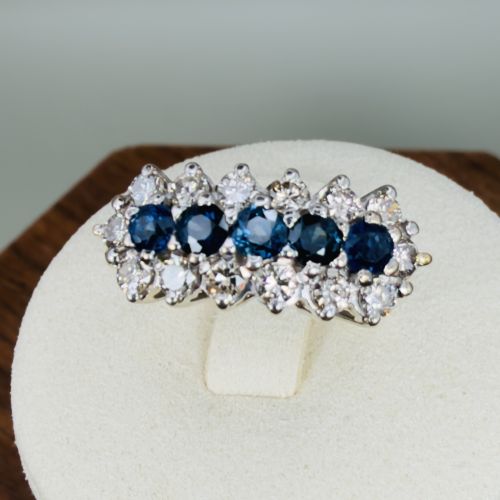
A gold sapphire diamond band is a ring that pairs blue sapphires and diamonds set into gold or platinum bases, appearing across multiple eras including Victorian, Edwardian, Art Deco, and mid-century designs. Buyers browsing this page frequently encounter traditional boat shapes, starburst gypsy settings, multi-stone trilogy layouts, and clean half-eternity rows.
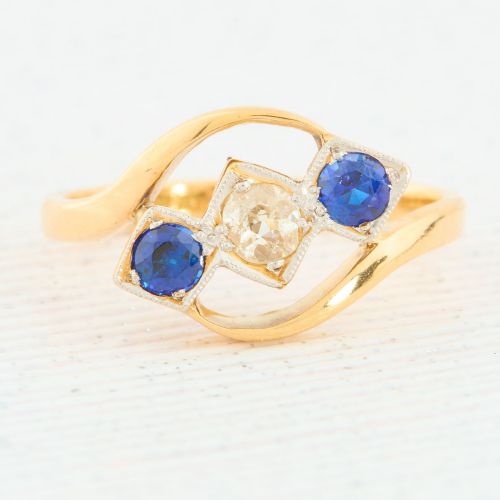
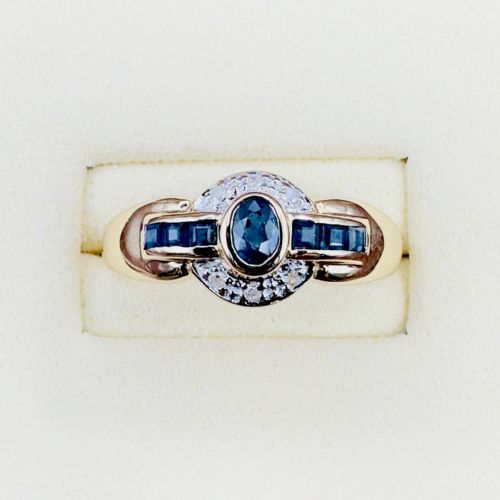
The pieces listed span from nineteenth-century antiques to vintage mid-century specimens, incorporating 18ct gold, 14ct gold, and platinum combinations. Cluster formations and five-stone rows dominate the selection, alongside distinctive serpent and double-band configurations.
How they were made
Goldsmiths utilised 18ct yellow gold, 14ct gold, and platinum to fabricate robust mountings that securely house sapphires and diamonds. Settings often integrate platinum top sections with yellow gold shanks, particularly in Edwardian and Art Deco pieces, to enhance the brilliance of old-cut diamonds.
Gemstones are secured using various techniques such as flush gypsy settings, claw clusters, and boat-shaped platforms. Jewelers hand-cut stones into old cuts, princess cuts, and oval shapes before mounting them into hallmarked precious metal bands.
Several pieces feature slithering twin serpents holding bright sapphire and diamond heads.
What varies in quality
Quality rests upon the natural origin and colour saturation of the sapphires, alongside the cut and clarity of the accompanying diamonds. Ceylon stones and unheated varieties command attention for their vivid saturation, whilst old-cut diamonds exhibit distinct hand-faceted charm.
The integrity of the precious metal mount and clear assay hallmarks indicating origins like London, Birmingham, or Chester contribute significantly to a piece's standing. Weight and carat distribution across cluster, trilogy, and half-eternity formats also shape the distinction between everyday vintage finds and finer antique examples.
The Gold Sapphire Diamond Band Glossary
- Boat ring
- A ring featuring a navette or boat-shaped setting that curves across the finger, typical of Georgian and Victorian designs. This silhouette allows multiple gems to sit horizontally.
- Gypsy ring
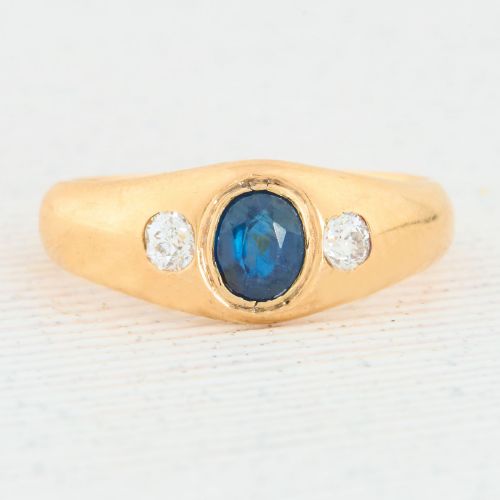
- A style where stones are flush-set directly into a thick, tapered metal band. This heavy gold setting was especially popular during the late Victorian and Edwardian periods.
- Trilogy ring
- A three-stone ring symbolising past, present, and future, often pairing a central sapphire flanked by two diamonds. Older examples frequently utilise old-cut diamonds.
- Half-eternity ring
- A band set with gemstones across the top half of the circle. This layout offers the look of a full eternity ring with greater comfort for daily wear.
- Old cut
- An early diamond cutting style predating the modern brilliant cut, characterised by a smaller table, higher crown, and open culet. These stones catch candlelight warmly.
Gold Sapphire Diamond Band: Frequently Asked Questions
How do I style a gold sapphire diamond band?
These rings pair easily with plain gold stacking bands or sit comfortably alone as a statement piece on the hand. Their low-profile cluster or boat settings make them practical for daily wear.
Mixing eras, such as wearing an Edwardian gypsy ring alongside a mid-century half-eternity band, creates a curated look that highlights different gold tones and stone cuts.
What is the difference between an Edwardian and a Victorian band?
Victorian rings often feature heavier yellow gold bands, starburst gypsy motifs, and rich boat settings. They lean towards robust craftsmanship and romantic symbolism.
Edwardian pieces frequently introduce platinum settings atop gold shanks, allowing for lighter, airier filigree work and lace-like designs that showcase old-cut diamonds alongside bright blue sapphires.
Are these rings suitable for everyday wear?
Sapphire and diamond are both exceptionally hard minerals, making them well-suited to regular use on the hand. However, antique and vintage pieces require thoughtful care to protect delicate claw settings and older gold shanks.
Removing the ring during heavy manual tasks preserves the integrity of the prongs and keeps the gold polished and secure.
How can I tell the age of my ring?
Assay office hallmarks stamped inside the metal band provide the most reliable date indicators, often pointing to specific towns like Birmingham, Chester, or London alongside date letters. Maker's marks further clarify the origin.
Stylistic clues such as stone-cutting techniques, including old mine cuts or transitional cuts, combined with the structural mount, help narrow down the decade of manufacture.