

Gold Sapphire Cluster
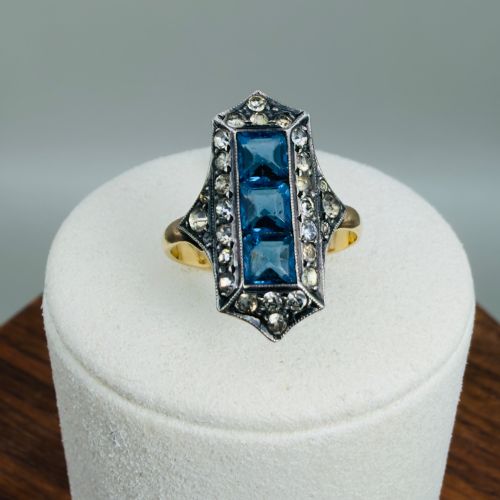
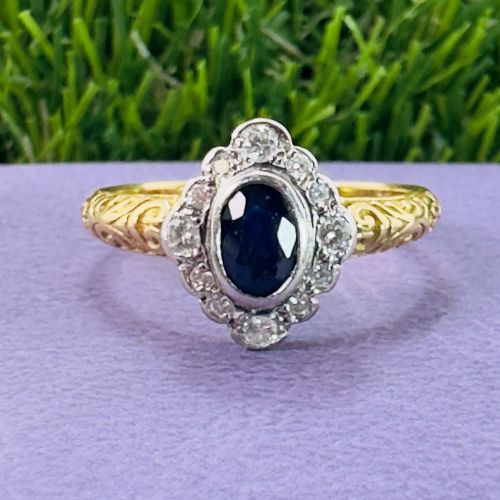
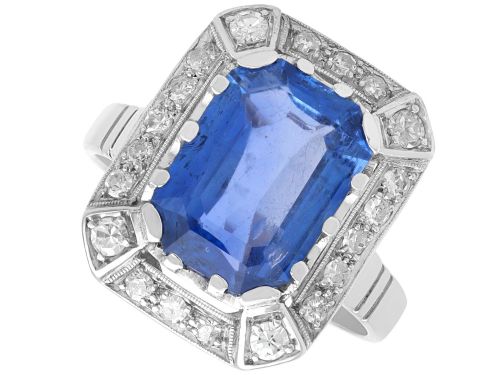
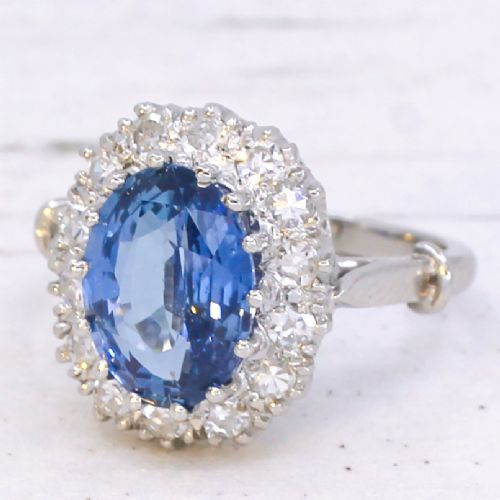
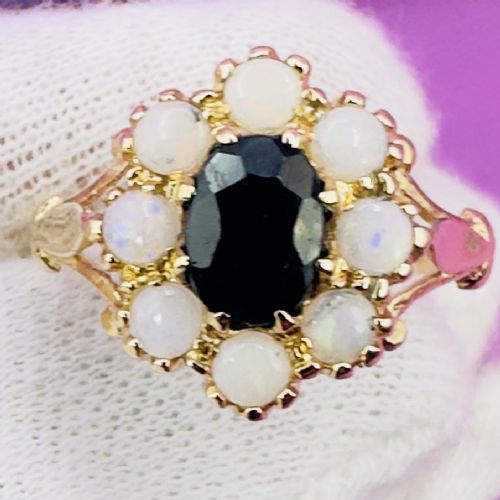
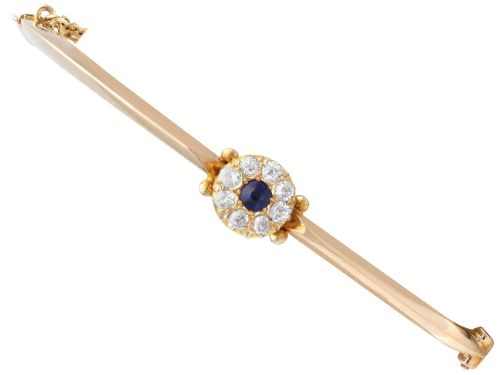
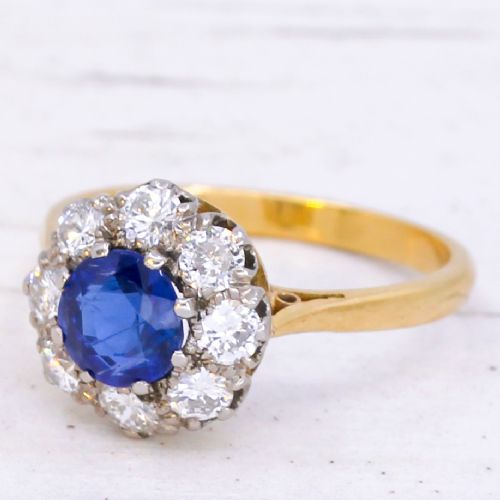
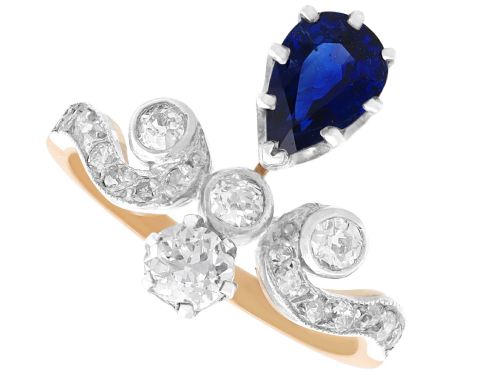
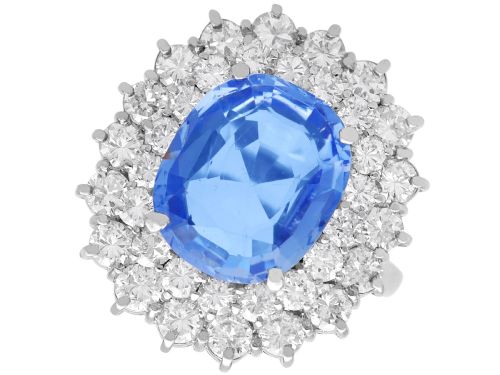
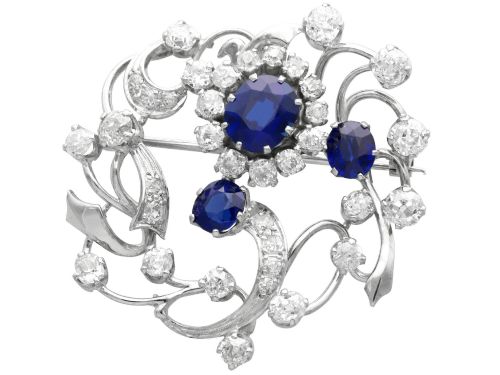
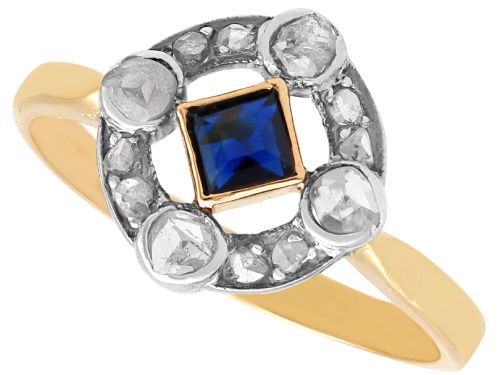
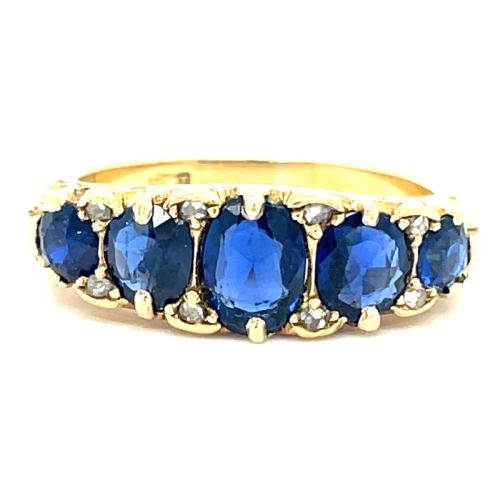
A gold sapphire cluster brings together a central corundum stone and a border of diamonds in a compact design built to catch the light from every angle.
Gold Sapphire Cluster
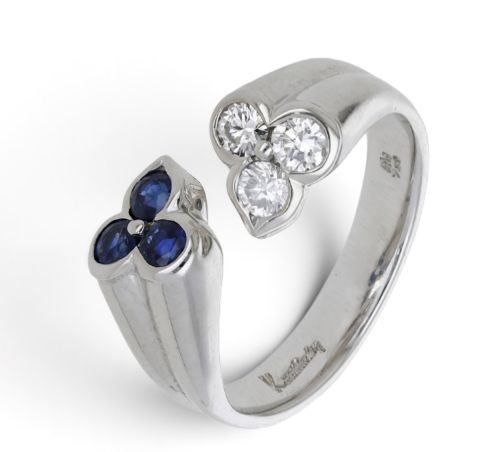
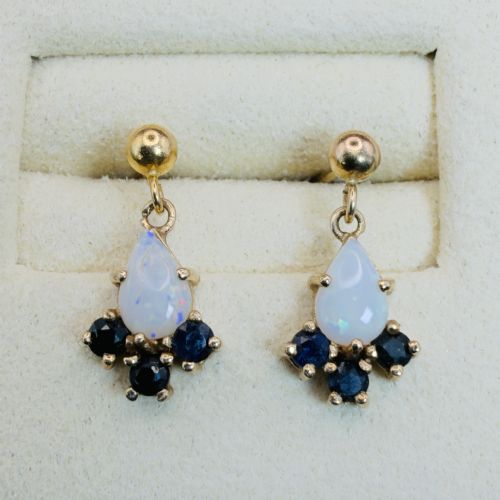
A gold sapphire cluster most frequently takes the shape of a finger ring, though bangles, brooches, earrings and bracelets also appear across the selection.
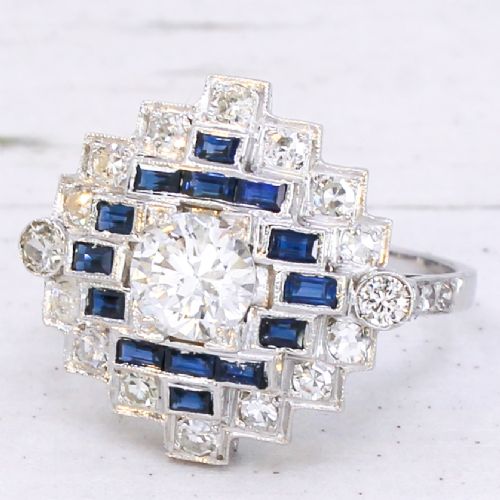
The periods represented span from the Victorian and Edwardian eras through Art Deco and Mid-Century designs up to the nineteen-seventies, showing shifts in mount architecture.
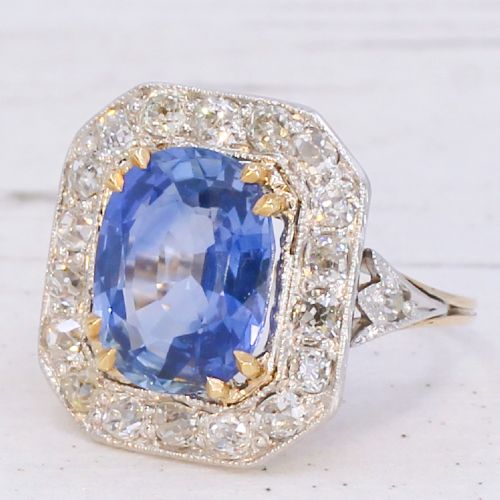
Early pieces favour yellow gold and silver-topped settings, while later twentieth-century examples often utilise white gold or higher carat yellow gold to support heavier stone weights.
Materials and construction
Goldsmiths set natural sapphires, frequently unheated stones originating from Ceylon or Burma, alongside old cut, princess cut or rose diamonds.
The precious metals employed include fourteen carat and eighteen carat yellow gold, eighteen carat white gold, platinum and occasionally lower carat alloys.
Mounts incorporate claw settings, bezel frames and pavé work, with older items frequently combining yellow gold shanks with silver collets to keep diamond sparkle bright.
Gold Sapphire Cluster Retail Price Guide 2026
Typical asking prices for gold sapphire cluster among the pieces listed under this phrase on Sellingantiques today, from the lower quarter to the upper quarter. They describe what is for sale here now, not the wider market.
One surviving presentation case still smells faintly of twentieth-century velvet dust.
Grading quality
The distinction between standard commercial pieces and finer examples rests upon the saturation and origin of the central sapphire, alongside the clarity and cut of the surrounding diamonds.
Mount construction reveals the maker's hand, where crisp claw work, balanced proportions and substantial metal gauge elevate an ornament far above mass production.
Original fitted presentation cases and verifiable geographic provenances add historical completeness to an individual jewel.
Kutchinsky
The Gold Sapphire Cluster Glossary
- Cluster
- A setting arrangement featuring a prominent central gemstone encircled by a border of smaller stones, typically diamonds.
- Navette
- A boat-shaped gemstone cut or mounting style with pointed ends, also known as a marquise shape.
- Old Cut
- A hand-faceted diamond cut predating modern brilliant standards, characterised by a smaller table, higher crown and open culet.
- Collet
- A band of metal that holds a gemstone in place by its girdle, common in antique silver-topped gold work.
- Unheated
- A sapphire that has undergone no thermal enhancement to improve its natural colour or clarity.
- Basaltic
- A descriptor for sapphires originating from alkali basalt terrains, typically displaying deep, saturated blue tones.
Gold Sapphire Cluster: Frequently Asked Questions
How do I care for a vintage gold sapphire cluster ring?
Sapphires measure nine on the Mohs hardness scale, making them durable for regular wear, but the surrounding gold or platinum mount requires gentle cleaning with warm soapy water.
Avoid ultrasonic cleaners if the piece contains older foil-backed stones or pearls, and store the jewel separately to prevent scratching softer metals.
Are these sapphires treated or natural?
The selection includes both unheated stones with certified geographic origins and traditional stones that display natural inclusions characteristic of antique mining.
Certificate documentation accompanying specific pieces details whether thermal enhancement has occurred.
What is the difference between Victorian and Art Deco clusters?
Victorian clusters often feature organic motifs, yellow gold bands and split pearls or old mined diamonds, leaning towards romantic or sentimental designs.
Art Deco examples introduce geometric symmetry, platinum settings and sharper lines that reflect the modernist movements of the nineteen-twenties and thirties.
Can these rings be resized easily?
Most gold and platinum mounts allow for professional resizing by a skilled bench jeweller, depending on the shoulder decoration and stone placement.
Intricate gallery work or stones running entirely around the band may limit how much the shank can be altered.