


Gold Portrait Cameo
A gold portrait cameo carries the weight of classical history carved into shell or hardstone, offering wearable art that collectors prize for miniature portraiture.
Gold Portrait Cameo
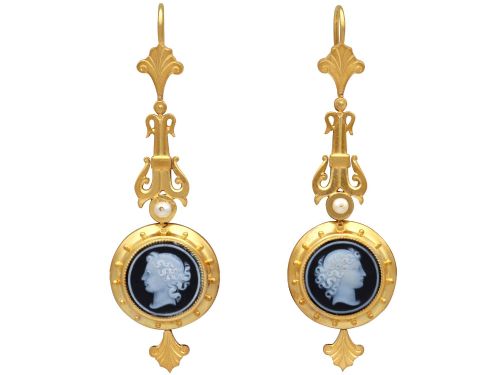
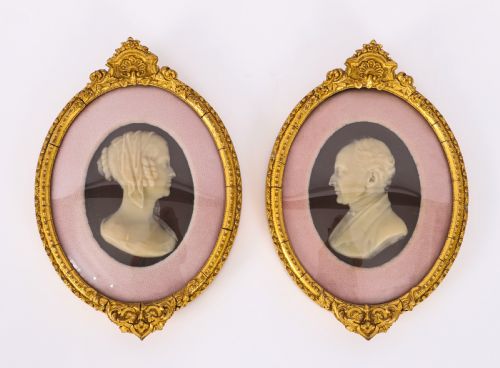
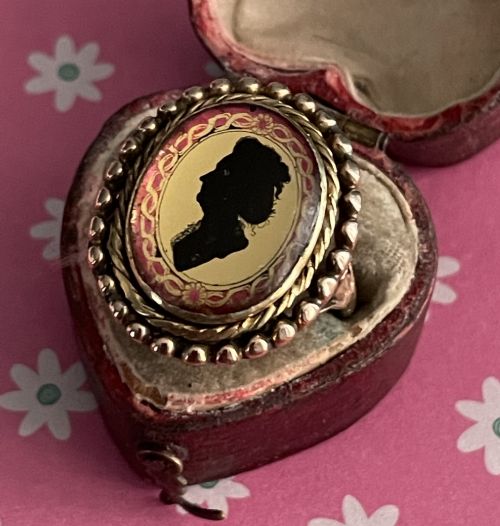
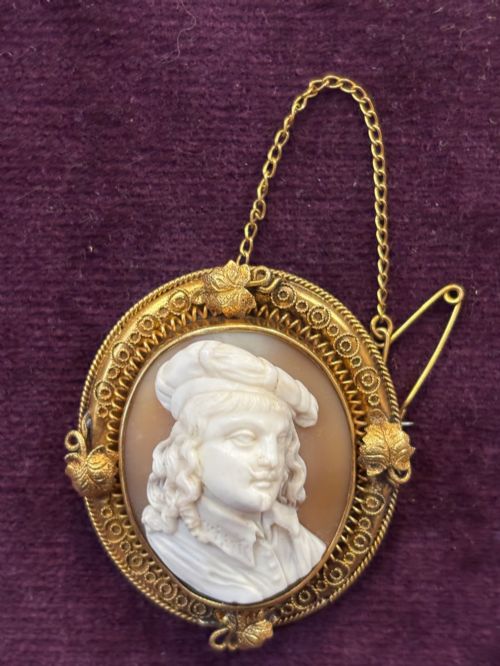
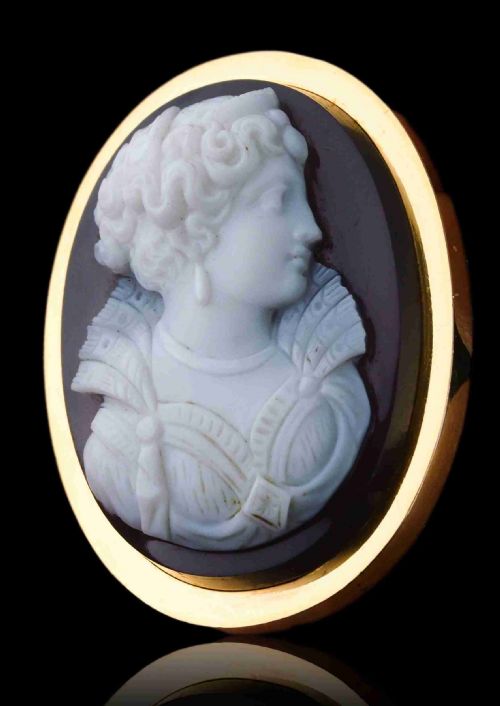
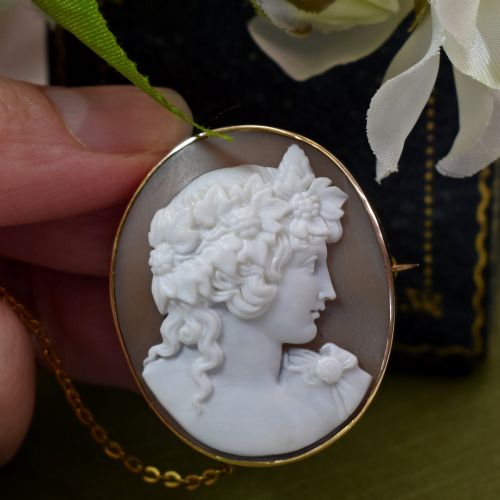
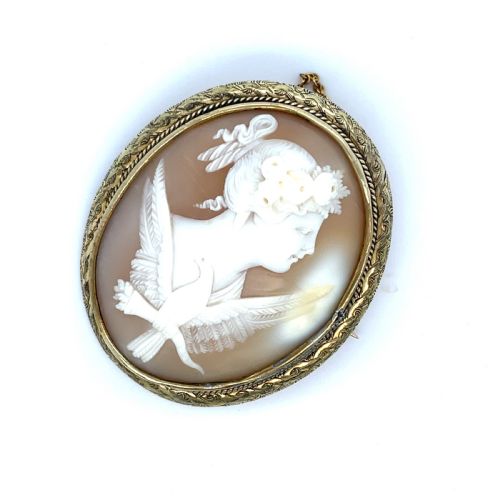
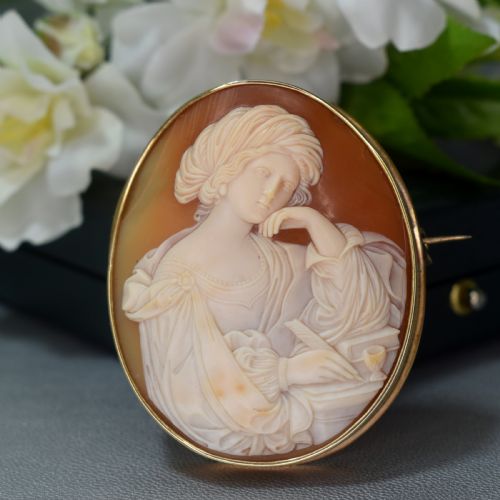
A gold portrait cameo represents a carved relief miniature set in gold, spanning periods from the Georgian era through the Victorian period and into the Edwardian age. These pieces appear frequently as brooches, rings, and earrings, often depicting classical figures, mythological subjects, or specific historical portraits.
The selection ranges from large Italian shell carvings mounted in elaborate gold frames to hardstone agate rings and pendant necklaces accented with pearls. Buyers encounter both delicate drop earrings and monumental tabletop ornaments framed in solid yellow or rose gold.
Materials and construction methods
Carvers utilised natural Mediterranean shell, banded agate, carnelian, and hardstone, working the upper strata to leave a pale relief against a darker contrasting background. These miniature carvings required exceptional skill to exploit the natural colour layers of the material without breaching the base.
Mounts were cast and fabricated in varying purities of gold, including 9ct, 14K, 15ct, 18ct, 20ct, and 22ct yellow and rose gold, frequently supplemented by pinchbeck frames, seed pearls, and intricate wirework filigree.
Listings feature items spanning the Georgian, Victorian, and Edwardian periods, constructed in shell, hardstone, agate, carnelian, and various purities of gold.
Evaluating the standard of execution
The quality of the metalwork also dictates value, with heavy, detailed gold mounts, closed or open-back bezels, and matching pearl surrounds elevating a piece above simpler mass-produced settings.
R. Pernice
The Gold Portrait Cameo Glossary
- Cameo
- A method of carving an object such as a engraved gem, item of jewellery, or vessel. In these pieces, it denotes a raised relief design carved from a layered medium.
- Hardstone
- A term for semi-precious stones used in glyptic art, including agate and carnelian. These minerals provided a durable surface for intricate, lasting portraits.
- Intaglio
- A gem carving technique opposite to a cameo, where the design is incised into the stone rather than raised. These served historically as personal wax seals.
- Pinchbeck
- An alloy of copper and zinc invented in the eighteenth century to imitate gold. It appears frequently in period frames and mounts.
Gold Portrait Cameo: Frequently Asked Questions
How do I wear a antique cameo safely?
Wear cameo brooches on sturdy fabrics like wool or heavy linen to support the weight of the gold mount. Avoid pinning them directly onto delicate silks or modern synthetics that might tear under pressure.
Store rings and earrings separately in padded velvet boxes to prevent the soft shell or hardstone surfaces from scratching against other metal jewellery.
How do I clean a shell cameo?
Clean shell cameos gently using a soft, damp cloth and lukewarm water without harsh detergents. Submerging shell pieces in liquid cleaner can strip their natural organic oils and ruin the finish.
Dry the piece immediately with a lint-free cloth and keep it away from direct sunlight and extreme heat to prevent the shell from drying out or cracking.
What is the difference between shell and hardstone?
Shell cameos utilise natural marine shells which offer softer carving properties and warmer, translucent background tones. They dominate nineteenth-century brooches and larger wearable ornaments.
Hardstone cameos use banded stones like agate and carnelian, which resist scratching and yield sharper, crisper details. They appear more often in rings and pendants from the Georgian and Victorian eras.
How can I date my gold cameo?
Examine the gold mount style, clasp mechanism, and frame construction alongside the subject matter. Georgian and early Victorian pieces often feature closed-back settings and high-carat gold, while late Victorian and Edwardian examples show machine-stamped galleries and lower gold purities.
Signatures on the edge of the carving or maker stamps on the reverse can occasionally narrow down the origin to specific mid-nineteenth-century Italian workshops.