




Gold Painted Chairs
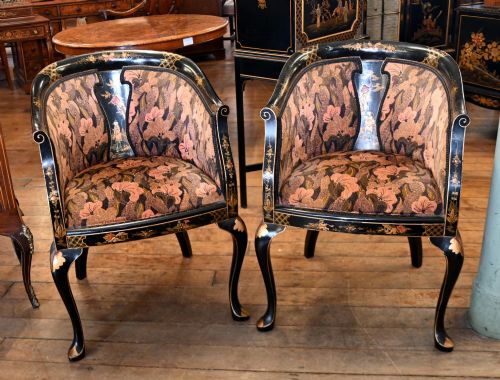
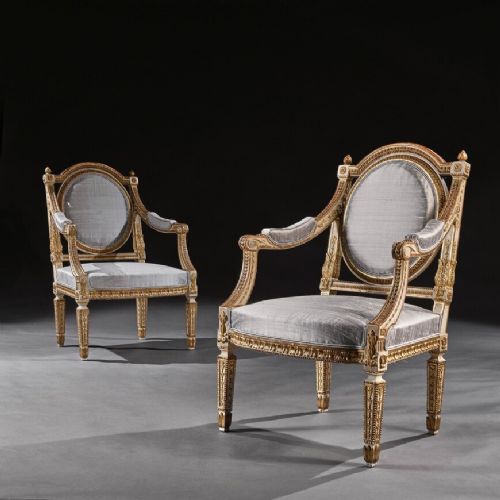
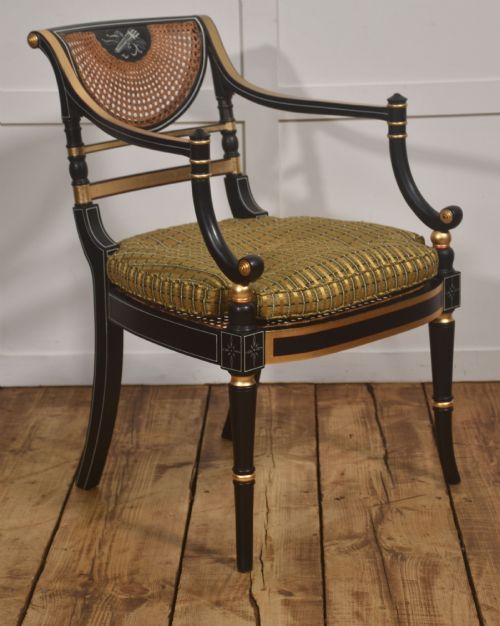
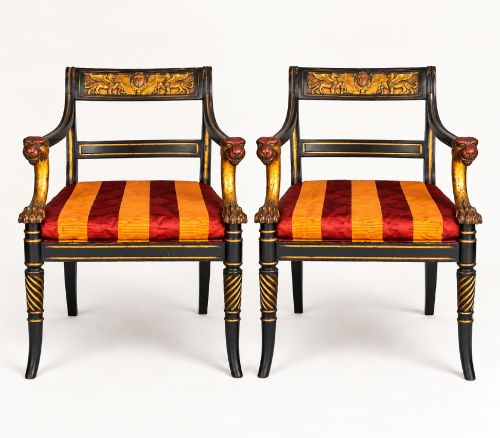
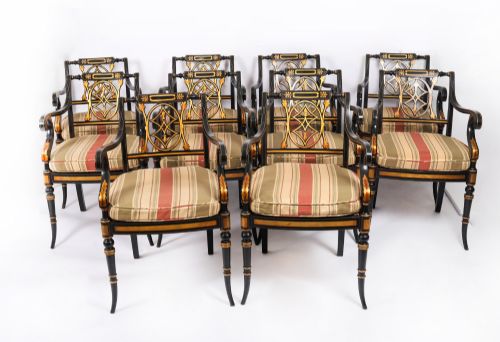
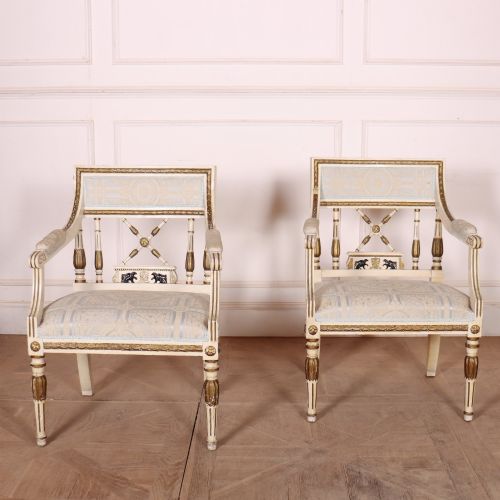
Gold painted chairs bring gilded elegance to a room, ranging from Regency revival styles to Swedish Empire seating.
Gold Painted Chairs
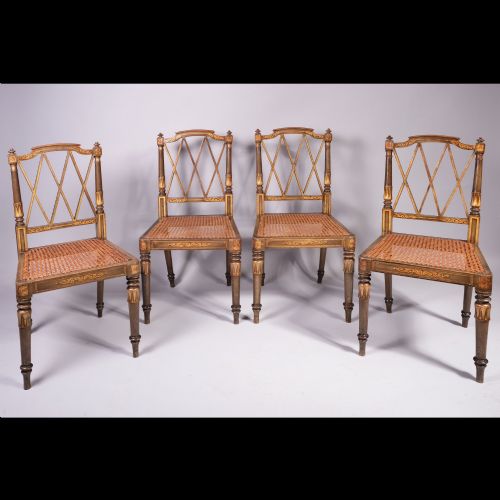
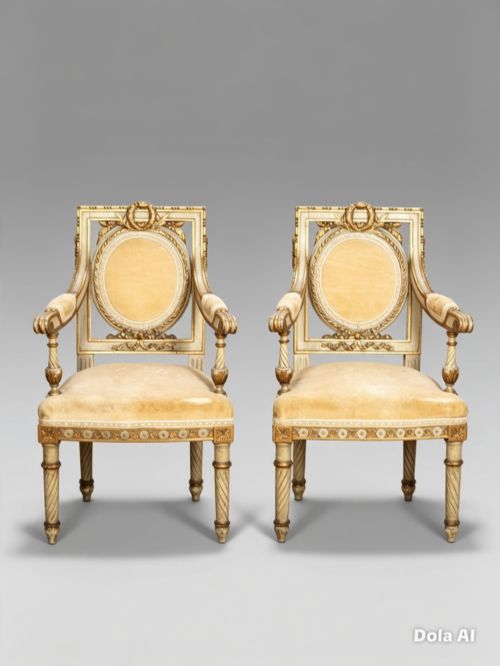
Gold painted chairs encompass a variety of seating forms designed with metallic finishes, spanning armchairs, dining chairs, and salon chairs. When buyers search for gold painted chairs, they encounter pieces that reflect historic revivals, notably Regency, Neoclassical, and Louis XVI styles.
Alongside standard seating, the listings include specialised forms such as piano stools, boudoir stools, and children's chairs. These objects demonstrate how decorative gilt finishes were applied across different domestic contexts over successive centuries.
How they were made
The construction of these pieces relies on wood frames, frequently utilising painted wood, parcel gilt, or gold leaf applications to create the characteristic metallic surface. Artisans shaped the frames into specific stylistic forms, incorporating pierced splats, curved armrests, and turned legs.
Upholstery materials such as silk are occasionally integrated into the design of seats and stools. The finishing layer typically involves paint combined with gold leaf or parcel gilding to highlight carved details and structural mouldings.
Gold Painted Chairs Retail Price Guide 2026
Typical asking prices for gold painted chairs among the pieces listed under this phrase on Sellingantiques today, from the lower quarter to the upper quarter. They describe what is for sale here now, not the wider market.
Listings span multiple decades, incorporating painted wood, fabric, gold leaf, parcel gilt, and silk upholstery across 19th-century and early 20th-century periods.
What varies in quality
Quality in these items is determined by the finesse of the wood carving and the precision of the gilt or painted surface application. Finer pieces exhibit crisp Neoclassical or Regency detailing on the frame, whereas simpler examples display more utilitarian construction.
The integrity of the original paint and gilding significantly influences the character of each piece. Retaining the authentic surface finish without heavy modern intervention distinguishes superior examples in this category.
The Gold Painted Chairs Glossary
- Parcel Gilt
- A technique where only specific portions of an object are gilded, leaving the underlying painted wood visible elsewhere. This method highlights carved details on the frame.
- Regency Revival
- A design style from the late 19th or early 20th century that imitates the architectural and furniture forms of the British Regency period. It frequently incorporates classical motifs and painted finishes.
- Louis XVI Revival
- A Neoclassical revival style popular in the 19th century, characterised by straight tapered legs, geometric symmetry, and classical ornamentation. Chairs in this style often feature painted and gilded frames.
- Splati
- The vertical central strip of wood in the back of a chair. Pierced splats feature openwork designs carved into the wood.
Gold Painted Chairs: Frequently Asked Questions
What rooms suit gold painted chairs?
These chairs fit well in formal drawing rooms, bedrooms, or dining spaces where decorative historic seating adds a distinct focal point.
They pair effectively with both traditional interiors and eclectic modern settings to introduce metallic warmth.
How do I identify a Regency style chair?
Regency style seating often incorporates classical motifs, sabre legs, and painted or parcel-gilt surfaces derived from 19th-century English designs.
Look for refined proportions and structural elements that reflect Neoclassical influence.
Are these chairs suitable for daily use?
Many of these chairs function as occasional seating or dining chairs, depending on their original purpose and structural sturdiness.
Care should be taken with antique frames and delicate silk upholstery during regular use.
What is the difference between giltwood and gold painted?
Giltwood involves the application of fine gold leaf directly to a prepared gesso and wood ground, creating a deep metallic sheen.
Gold painted surfaces rely on metallic or gold-coloured paint applied over a wooden base, offering a different visual texture.