
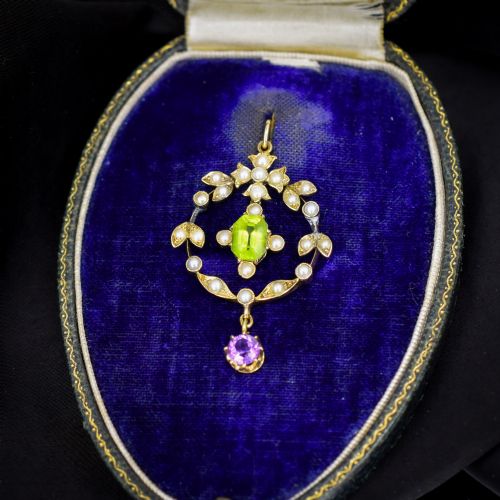
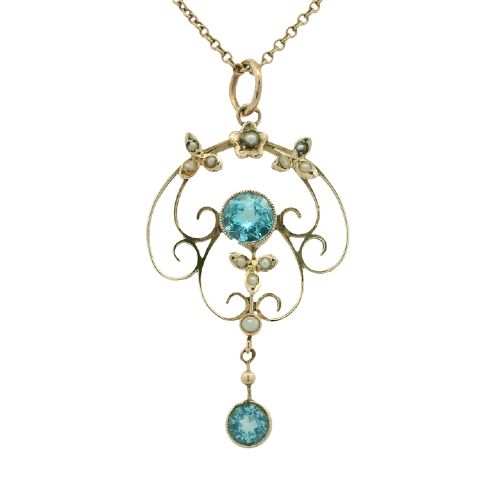
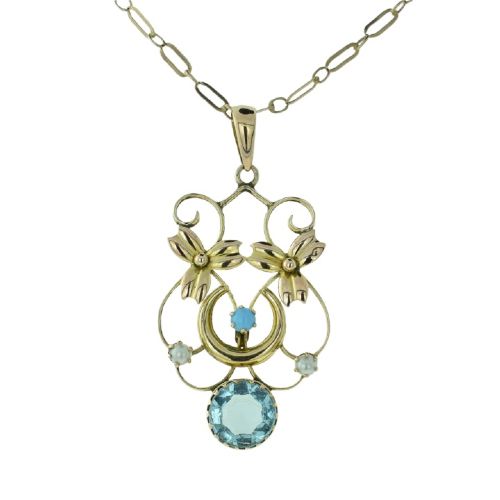
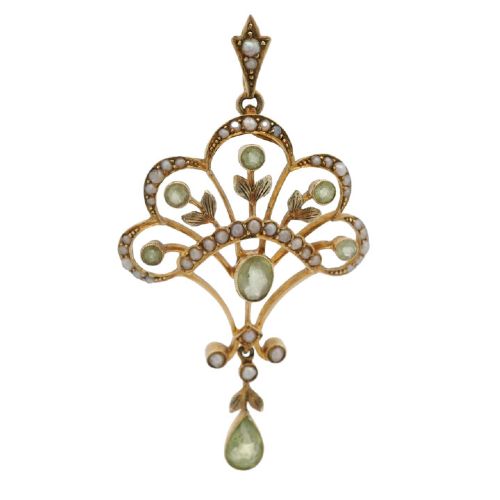
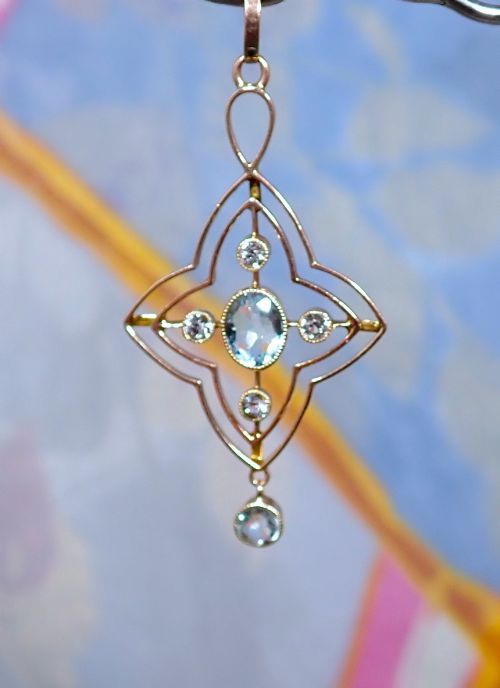
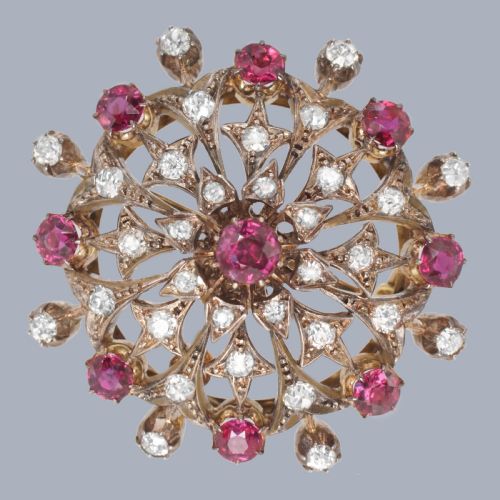


Gold Openwork Gemstone Pendant
A gold openwork gemstone pendant brings together intricate metalwork and vibrant stones, offering a delicate piece of history to wear.
Gold Openwork Gemstone Pendant
A gold openwork gemstone pendant is an ornamental piece of jewellery designed to suspend from a chain or collar, featuring pierced metalwork alongside coloured stones. When exploring a gold openwork gemstone pendant, buyers encounter forms that span Victorian, Edwardian, and Art Nouveau periods, often incorporating convertible brooch and pendant fittings.
The most common examples on this page date from the late nineteenth and early twentieth centuries, particularly the Edwardian era. These pieces frequently pair nine-carat or fifteen-carat gold with peridots, amethysts, garnets, aquamarines, and seed pearls in delicate, pierced frames.
Materials and construction
Goldsmiths constructed these pendants using nine-carat, fifteen-carat, and occasionally eighteen-carat yellow or rose gold, shaping the metal into intricate wirework and pierced frameworks known as openwork. This technique allowed light to pass through the setting, enhancing the brilliance of the central and subsidiary stones.
Gemstones such as peridot, amethyst, aquamarine, garnet, and tourmaline were meticulously hand-set alongside seed pearls or diamonds. Many pieces utilised claw or collet settings soldered directly to the pierced gold base, creating layered, dimensional designs typical of the period.
Factors of distinction
Quality in these pendants rests upon the crispness of the openwork soldering and the matching of the gemstones. Superior examples display balanced symmetry in their pierced gold wirework without visible solder overflow, while lesser pieces show heavier, coarser metal casting.
The selection and cut of the gemstones also dictate value. Finer items feature well-matched, clean stones with vibrant colour saturation, whereas lower grades rely on pale or heavily included stones that diminish the overall visual impact of the piece.
S. Blanckensee & Son
The Gold Openwork Gemstone Pendant Glossary
- Openwork
- Metalwork pierced or cut through to create a patterned, lace-like design. This technique reduces weight while allowing light to illuminate the mounted gemstones from behind.
- Lavalier
- A necklace featuring a pendant with dangling drops, popular during the Edwardian and Art Nouveau periods. These items typically incorporate pearls or coloured stones suspended at different lengths.
- Seed pearl
- Very small, naturally occurring pearls, often undrilled or half-drilled, used extensively in clusters and borders in Victorian and Edwardian jewellery. They provide a soft, creamy contrast to polished gold and faceted stones.
- Suffragette jewellery
- Pieces incorporating green, white, and violet stones, symbolising the women's suffrage movement. Common gemstone combinations include peridot, seed pearl, and amethyst.
- Collet setting
- A metal band or collar that tightly holds the girdle of a gemstone, securing it to the jewellery mount. It represents a traditional method of stone setting seen across antique gold work.
Gold Openwork Gemstone Pendant: Frequently Asked Questions
What periods do these pendants come from?
The pieces originate primarily from the Victorian, Edwardian, and Art Nouveau eras, spanning the late nineteenth and early twentieth centuries.
Craftsmanship from these periods often reflects distinct stylistic shifts, moving from heavier Victorian designs to lighter, lace-like Edwardian openwork.
Are these pendants also brooches?
Many examples feature dual-purpose fittings, incorporating both a suspension loop and a pin with a safety clasp on the reverse. This allowed Victorian and Edwardian wearers to pin the item to garments or suspend it from a chain.
Converting between a brooch and a pendant was a popular practical feature of the period.
What gold purity is typically used?
Antiques in this category are commonly found in nine-carat and fifteen-carat gold, reflecting the standards of the late Victorian and Edwardian periods.
Fifteen-carat gold offers a richer yellow hue due to its higher gold content compared to nine-carat variants.
How should I care for antique gemstone pendants?
Gentle handling is essential because seed pearls are organic and sensitive to harsh chemicals, cosmetics, and ultrasonic cleaning methods. Store the pendant separately to prevent the gold openwork from catching on other items.
Cleaning should be limited to a soft, dry cloth rather than liquid dips that might damage delicate pearl settings.
How do I identify a Suffragette pendant?
Suffragette pieces are identified by the specific colour triad of green, white, and violet, representing give women votes through emerald, peridot, white sapphire, pearl, and amethyst combinations. These stones are frequently set within Edwardian gold openwork frames.
The historical association makes these particular gemstone combinations highly sought after by collectors.