


Gold Opal Cluster
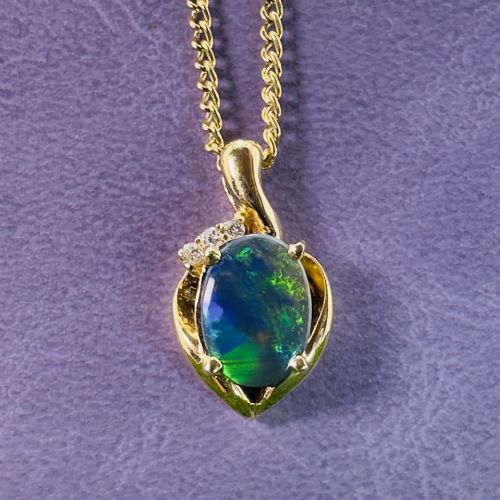
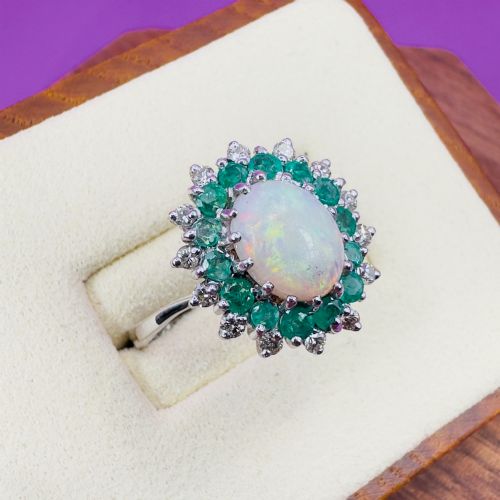
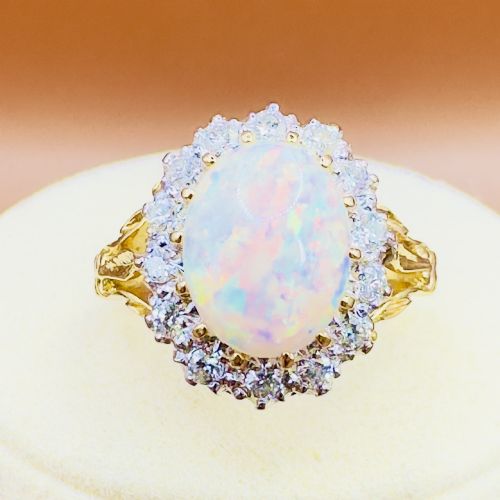
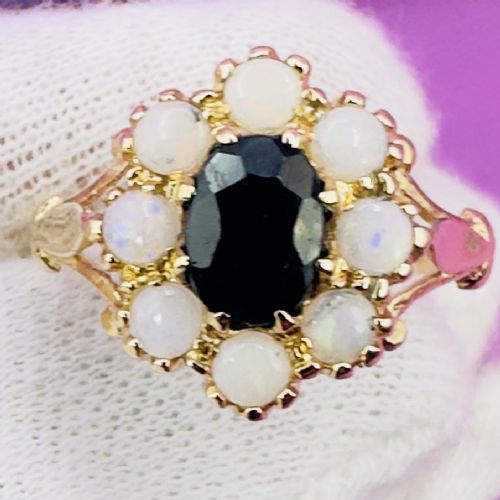
Gold opal cluster pieces bring together fiery cabochon stones and concentric frames of diamonds, rubies, or sapphires in rings, pendants, and brooches.
Gold Opal Cluster
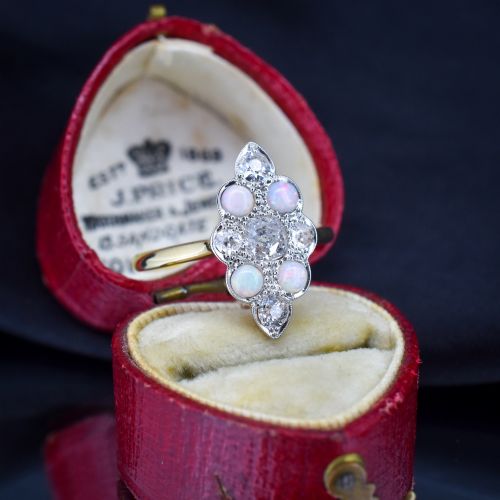
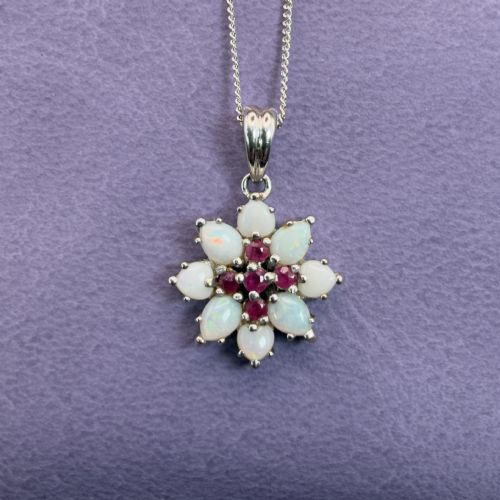
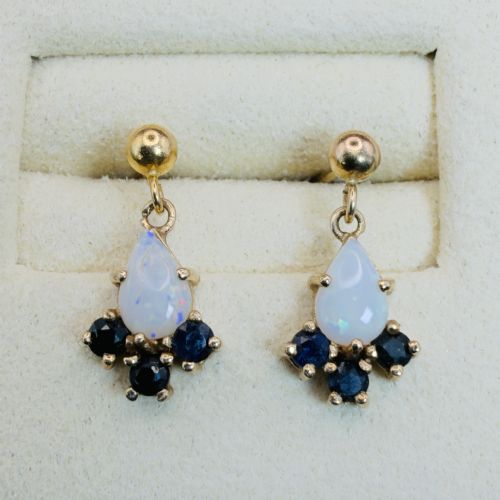
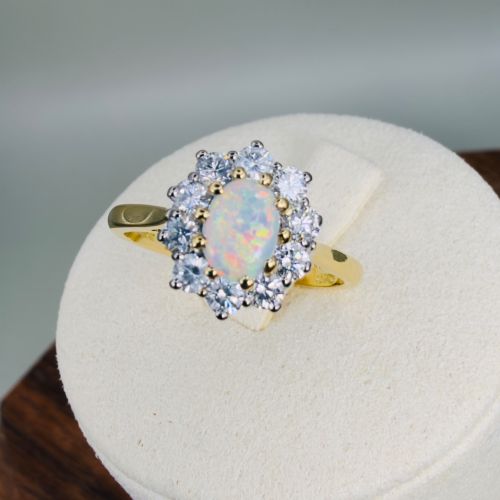
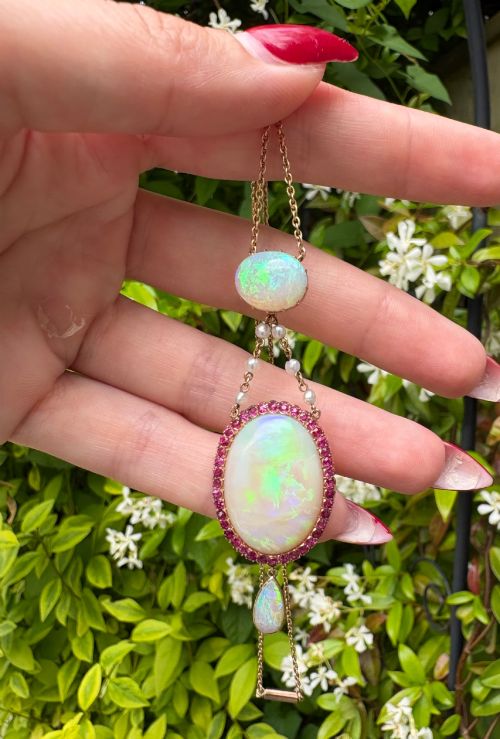
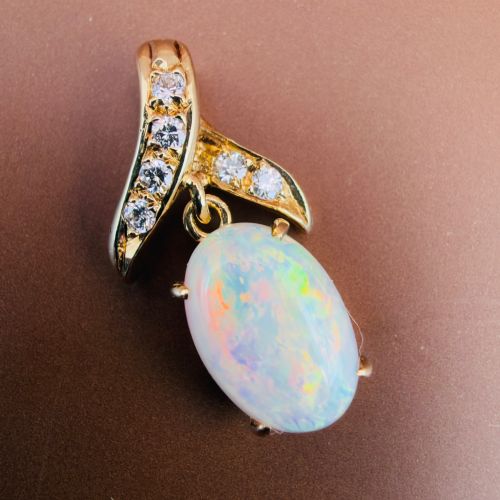
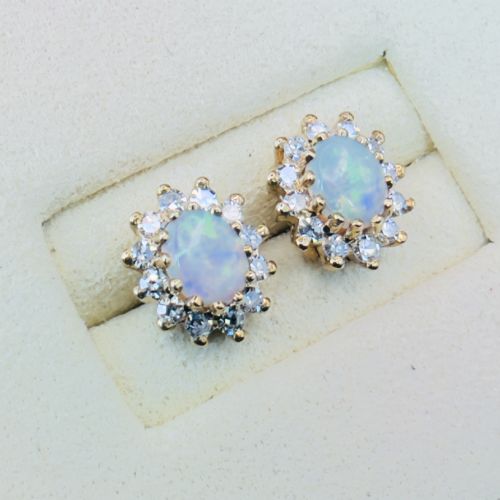
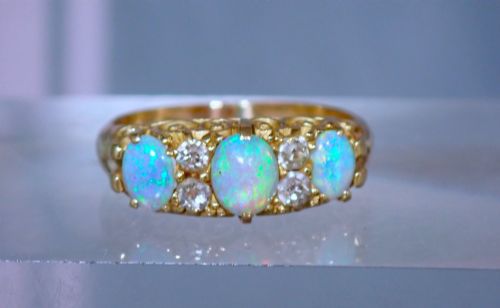
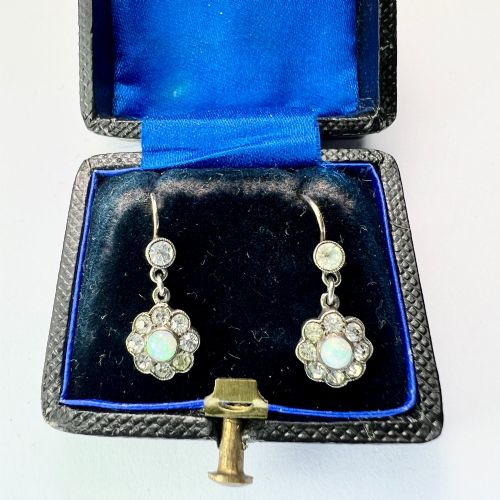
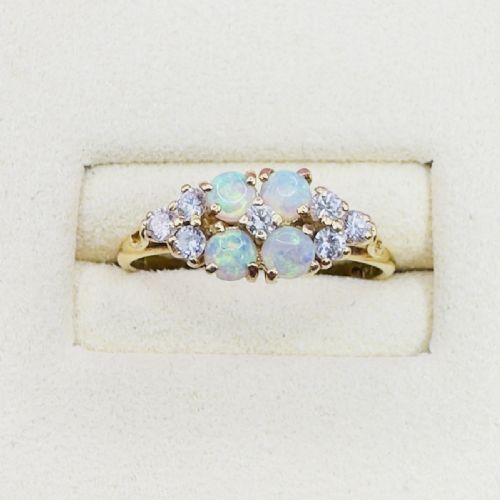
A gold opal cluster centres on a central opal surrounded by a border of smaller gemstones, most frequently diamonds, sapphires, rubies, or garnets. These pieces appear across various forms, including rings, pendant necklaces, earrings, and brooches.
The selection ranges from Victorian and Edwardian antiques to mid-century vintage designs from the nineteen-fifties and nineteen-sixties. Rings dominate the range, paired with drop earrings and cluster pendants set in yellow, white, or fifteen-carat gold.
Materials and construction
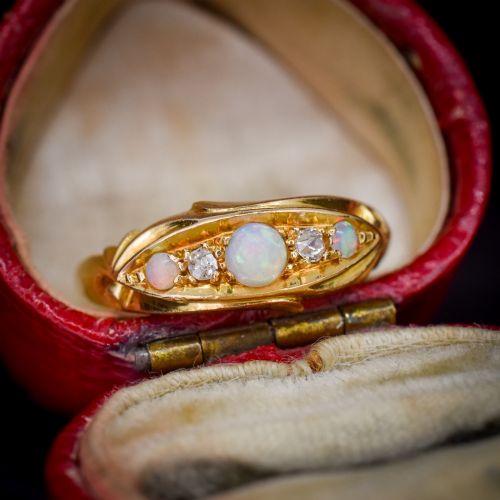
Craftsmen set natural opals - often oval or pear-cut cabochons displaying play-of-colour - into gold mounts alongside old-cut, rose-cut, or brilliant-cut diamonds. Metal choices span nine-carat, fourteen-carat, eighteen-carat, and silver-backed gold, reflecting the period of manufacture from the nineteenth century through the mid-twentieth century.
Structural designs utilise claw settings, flush borders, and halo arrangements to secure both the central opal and the surrounding gemstones. Brooches and pendants often feature integrated pin mechanisms or articulated drops with secure loops.
Gold Opal Cluster Retail Price Guide 2026
Typical asking prices for gold opal cluster among the pieces listed under this phrase on Sellingantiques today, from the lower quarter to the upper quarter. They describe what is for sale here now, not the wider market.
One tiny child-sized Edwardian ring proves that past generations took miniature jewellery very seriously indeed.
Evaluating quality and character
Quality rests primarily on the optical intensity and stability of the opal, alongside the matching and clarity of the surrounding diamonds or coloured gems. Strong play-of-colour across the cabochon face elevates a piece above stones with muted flashes.
The weight and integrity of the gold mount also distinguish the items, with heavier eighteen-carat or fifteen-carat gold settings demonstrating more substantial craftsmanship than lighter nine-carat alternatives.
Knoll and Pregizer
The Gold Opal Cluster Glossary
- Cabochon
- A gemstone shaped and polished with a smooth, rounded surface rather than faceted edges. This cut highlights the internal play-of-colour in opals.
- Halo cluster
- A central gemstone encircled by a ring of smaller stones. This layout is typical in ring and pendant designs.
- Rose-cut diamond
- A vintage diamond cut featuring a flat base and a domed crown with triangular facets. It produces a soft, translucent shimmer.
- Play-of-colour
- The optical phenomenon where internal flashes of spectral colours shift as the stone moves under the light. It defines the visual appeal of quality opals.
- Trilogy ring
- A ring featuring three primary stones set in a row. These often combine opals and diamonds in Victorian and later settings.
Gold Opal Cluster: Frequently Asked Questions
How do I care for a gold opal cluster ring?
Opals contain water and require gentle treatment, so avoid ultrasonic cleaners, harsh chemicals, and sudden temperature changes. Store them away from harder jewellery to prevent surface scratches on the softer stone.
Remove rings before washing hands, gardening, or engaging in heavy manual work. A soft, damp cloth is sufficient for routine cleaning of both the gold mount and the gems.
Are these pieces suitable for daily wear?
Many buyers wear these rings and pendants daily, provided they are treated with appropriate care. Because opals have a lower hardness than diamonds, daily wear works best with bezel or low-profile settings that protect the stone's edges.
Vintage and antique pieces benefit from an annual check by a professional to ensure the claws holding the cluster securely grip every stone.
How can I tell a Victorian cluster from a mid-century piece?
Victorian and Edwardian examples often utilise rose-cut or old-cut diamonds, closed-back settings in older periods, and distinct hallmarks such as city marks or crown stamps. Shank shapes tend to be hand-finished and tapered.
Mid-century pieces from the nineteen-fifties and sixties frequently introduce brilliant-cut diamonds, heavier eighteen-carat or nine-carat gold weights, and cleaner, streamlined gallery wirework beneath the cluster.
What is the difference between solid opal and doublets?
Solid opals consist of a single piece of natural opal material cut and polished from the rough stone. These display natural depth and varied play-of-colour through the entire body.
Listings specify solid natural opals, black opals, or water opals, distinguishing them from manufactured composite stones. Examine the side profile of the stone to verify the single, uniform layer.