




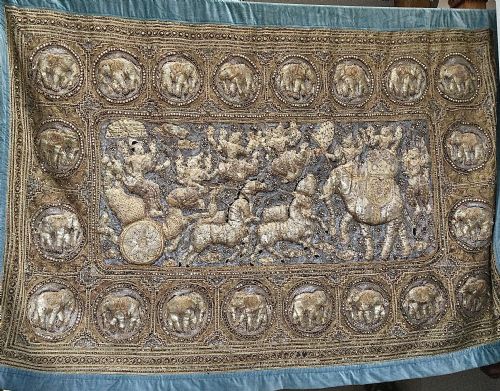

Gold Metallic Embroidery
Gold metallic embroidery pieces are richly worked historical textiles carrying metal threads upon silk, velvet, and wool.
Gold Metallic Embroidery
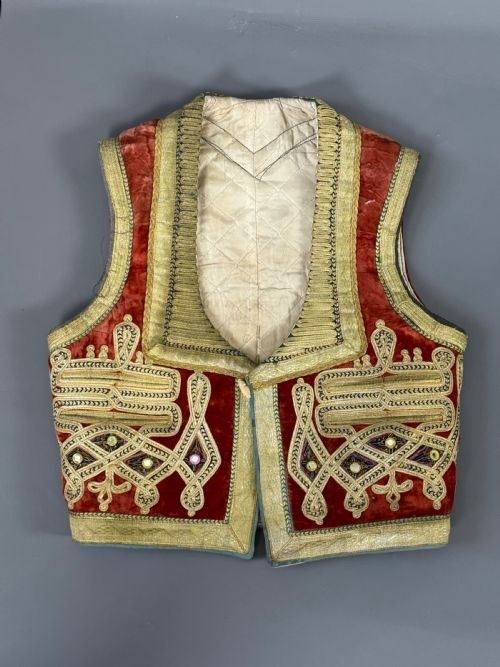
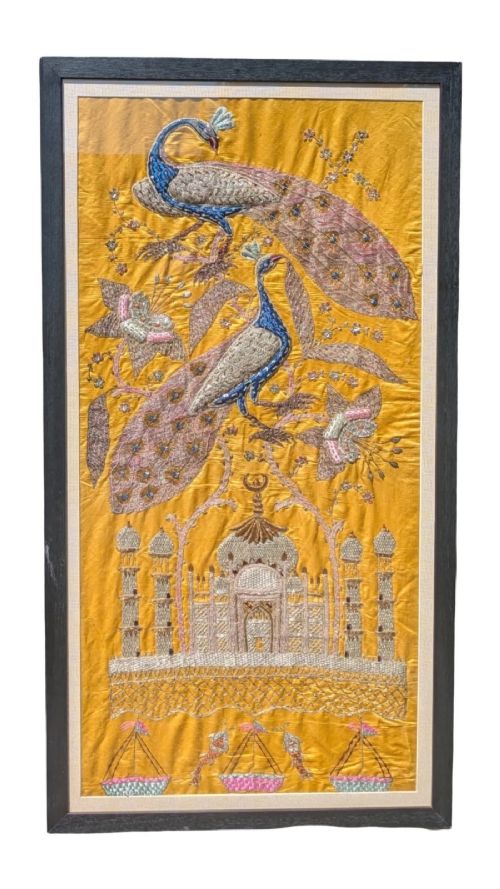
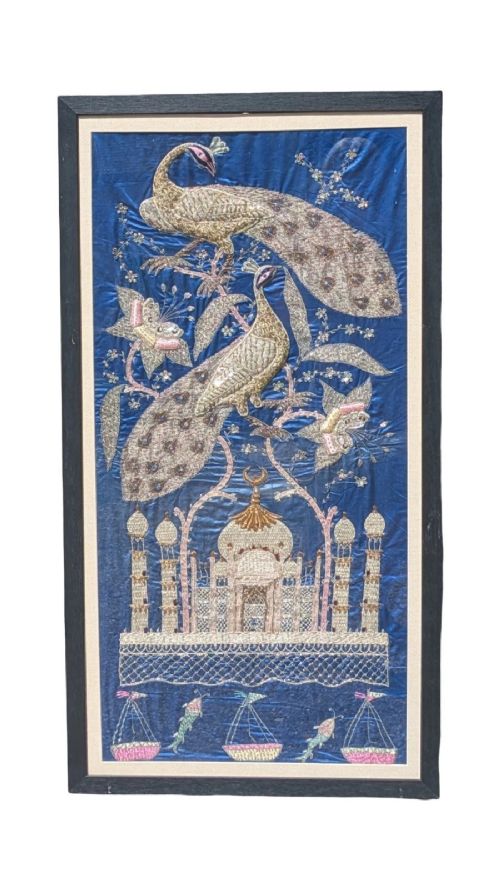
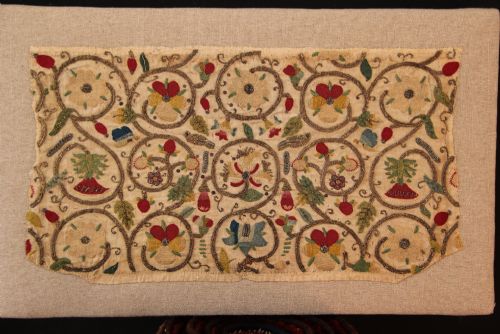
Buyers searching for gold metallic embroidery encounter a diverse array of historic textiles including framed wall art, garments, and domestic furnishings spanning several centuries.
The selections frequently feature Ottoman waistcoats, jackets, and covers alongside Indian depictions of monuments, alongside English coifs and Dutch framed panels.
These items originate from global textile traditions ranging from the seventeenth century through the early twentieth century, presenting varied cultural motifs.
How they were made
Artisans applied metallic thread, metal thread, and sometimes sequins directly onto textile grounds composed of silk, silk velvet, wool, and glass components.
Needleworkers combined these metallic elements with supportive fabrics like tülbent or structured wooden elements found in fire screens and frames.
Listings span from the seventeenth century to 1930, utilising materials like silk velvet, metal thread, wool, and glass.
What varies in quality
The density and intricacy of the metal thread work determine the visual weight and complexity of each surviving textile fragment or complete garment.
Preservation of the underlying silk or velvet ground alongside the security of the metallic threads dictates the physical integrity of the piece.
The Gold Metallic Embroidery Glossary
- Coif
- A close-fitting cap worn in earlier centuries. Early English examples often display meticulous metal thread embroidery.
- Tülbent
- A lightweight traditional Ottoman scarf material. These delicate fabrics frequently received elaborate metal thread embellishment.
- Abaya
- A traditional long outer garment or jacket. Qajar examples demonstrate notable metal thread and wool construction.
- Fire screen
- A domestic furnishing designed to shield occupants from fireplace heat. These often incorporate framed antique embroidered panels.
Gold Metallic Embroidery: Frequently Asked Questions
How should I display gold metallic embroidery?
Framed textile art and wall hangings require protection from direct sunlight to preserve the delicate metal threads and dyed silk grounds.
Keep pieces away from high humidity areas to prevent degradation of the historic fibres and metallic elements.
Are these textiles fragile?
Many items date back to the seventeenth through nineteenth centuries and possess inherent fragility due to their age.
Gentle handling and professional mounting help secure loose threads and prevent further strain on aged velvet or silk.
What origins are common?
The available pieces originate from various regions including Ottoman territories, India, England, the Netherlands, and Persia.
Each geographic region utilised distinct motifs such as architectural landmarks, fauna, or geometric patterns.
How do I identify the period?
Dating relies upon stylistic motifs, garment cuts, and the specific composition of the metal threads and base fabrics.
Examining the construction methods alongside documented regional designs assists in placing items within the seventeenth to twentieth-century spectrum.