


Gold Metal Umbrella Holder
These gold metal umbrella holder pieces bring practical order to a hallway while showing the warm tones of brass and cast iron.
Gold Metal Umbrella Holder
A gold metal umbrella holder generally takes the form of a brass or cast iron stick stand designed to hold walking sticks and wet umbrellas in an entrance hall. You encounter designs spanning the Victorian, Edwardian, and Art Nouveau periods, alongside early twentieth-century examples.
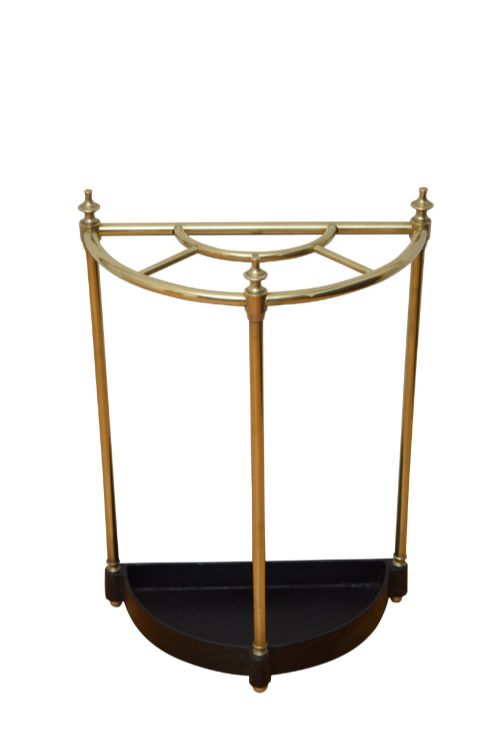
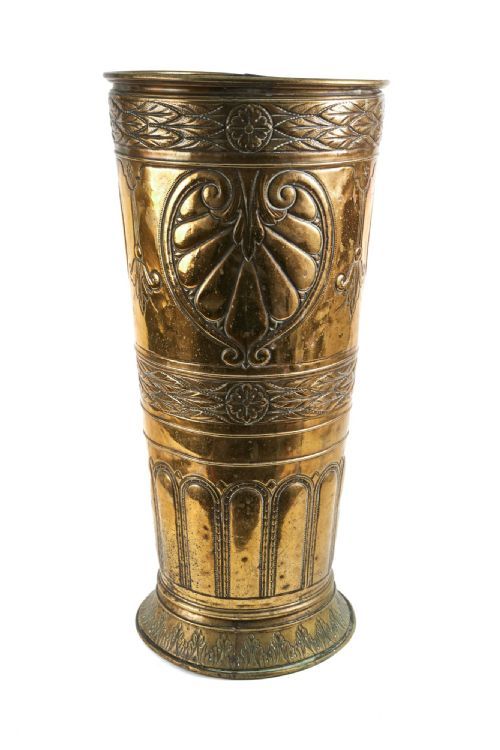
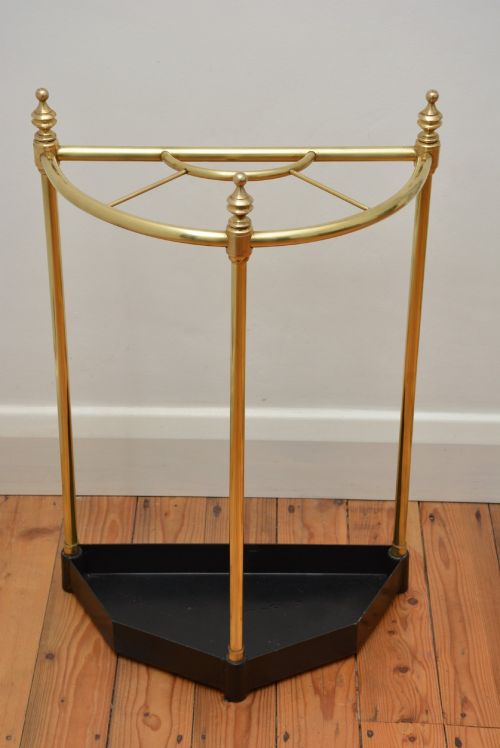
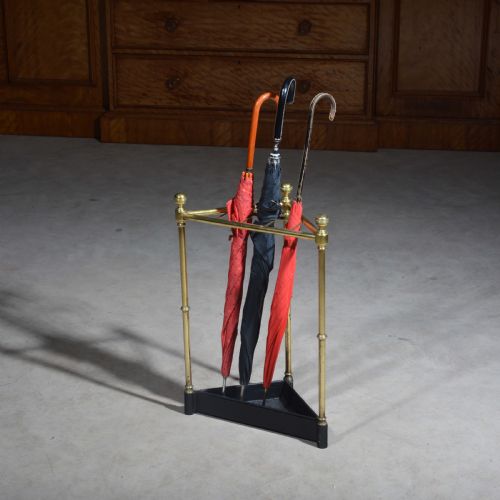
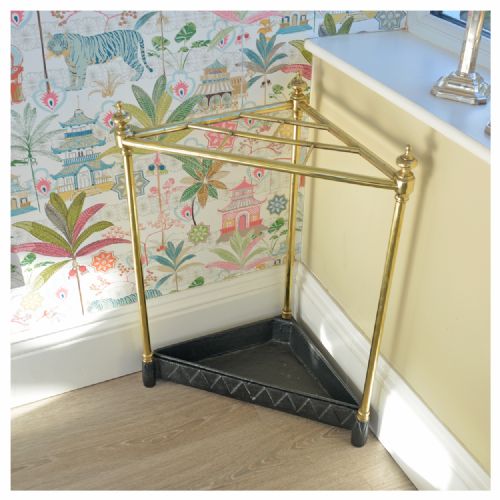
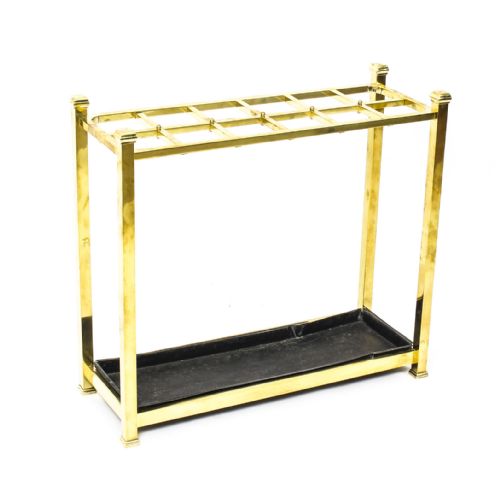
The most common formats on this page are demi lune and corner stands that fit neatly against a wall, as well as umbrella-shaped holders and pieces featuring multiple divisions. Many utilise brass construction, though cast iron examples also appear.
Originating largely from English workshops, these items serve both a decorative and a utilitarian purpose in domestic interiors. They reflect the shift in hallway furnishing tastes from the nineteenth century through the mid-century modern era.
How they were made
Makers utilised brass and cast iron to build these sturdy hallway accessories, often employing casting and sheet metal techniques to achieve the demi lune and corner shapes. Metal components were joined or cast to form rigid frames capable of supporting heavy walking sticks and dripping umbrellas.
Aesthetic Movement and Art Nouveau influences introduced organic lines and stylized floral motifs into the metalwork, distinguishing them from plainer utilitarian items. Surface finishes relied on the natural metallic sheen of brass or painted cast iron rather than complex polychrome decoration.
An umbrella-shaped brass stand literalises its own purpose before it ever holds a single raindrop.
What varies in quality
The integrity of the metal structure and the subtlety of period ornamentation, from Victorian severity to Art Nouveau curves, dictate the visual weight of the object in a room. Better examples balance robust construction with refined decorative detailing.
Falkirk Ironworks
The Gold Metal Umbrella Holder Glossary
- Demi lune
- Half-moon shape designed to sit flush against a hallway wall. This configuration maximises floor space in narrow corridors.
- Cast iron
- A strong, heavy alloy of iron and carbon poured into moulds to create rigid forms. It provides exceptional stability for weighty umbrella stands.
- Brass
- An alloy of copper and zinc valued for its bright golden appearance and corrosion resistance. It forms the primary material for the majority of these stands.
- Aesthetic Movement
- A nineteenth-century design current emphasising beauty and art for art's sake rather than narrative function. Pieces in this style often feature stylized natural forms.
Gold Metal Umbrella Holder: Frequently Asked Questions
What periods do these umbrella stands date from?
The pieces span from the nineteenth century through the Edwardian era and into the nineteen-thirties. Victorian and Art Nouveau examples sit alongside early twentieth-century designs.
Each period brings distinct stylistic traits to the metalwork, helping you date a particular hallway stand by its form and decorative motifs.
Where were these metal stands typically placed?
They were designed for entrance halls, vestibules, and boot rooms to catch rainwater from wet umbrellas and store walking sticks. Demi lune and corner shapes allowed them to fit snugly against walls.
This placement kept hallways tidy and protected wooden floors from dampness brought in from outside.
How do I identify an Art Nouveau stand?
Look for flowing, organic lines, stylized plant motifs, and asymmetrical curves in the brass framework. These design elements break away from stricter Victorian symmetry.
Makers adopted these shapes around the turn of the twentieth century to bring modern artistic flair into everyday hallway accessories.
Are these stands made of solid brass?
Many listings feature solid brass construction, while others incorporate cast iron elements for added weight and stability at the base. The choice of metal affects both the heft and the colour of the piece.
Heavier cast iron versions often handle umbrella drips differently than lighter brass wirework or sheet designs.