

Gold Metal Fire Guard
A gold metal fire guard combines practical hearth safety with the decorative presence of brass, ormolu and gilt bronze.
Gold Metal Fire Guard
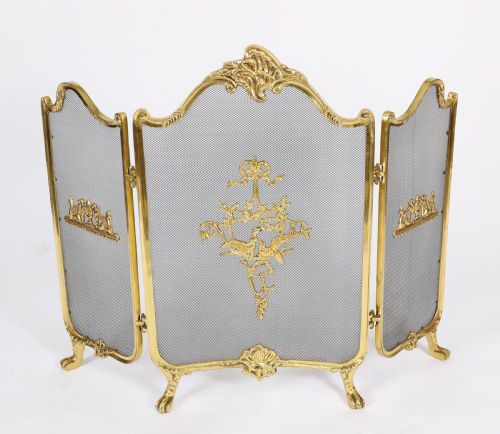
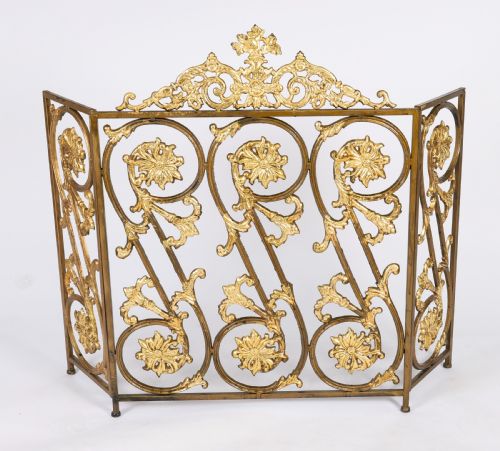
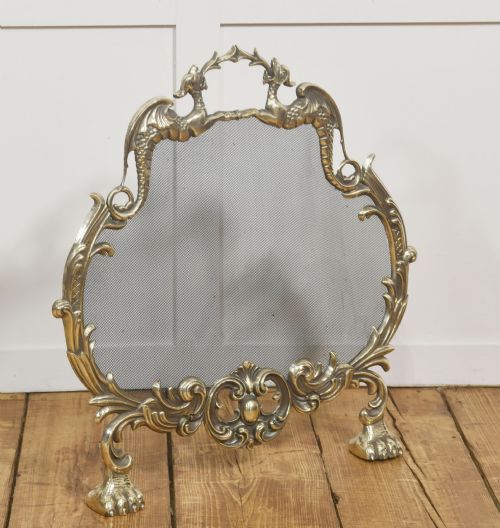
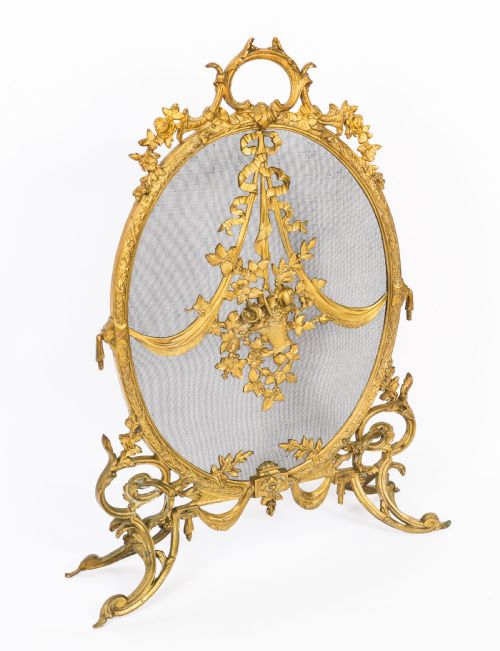
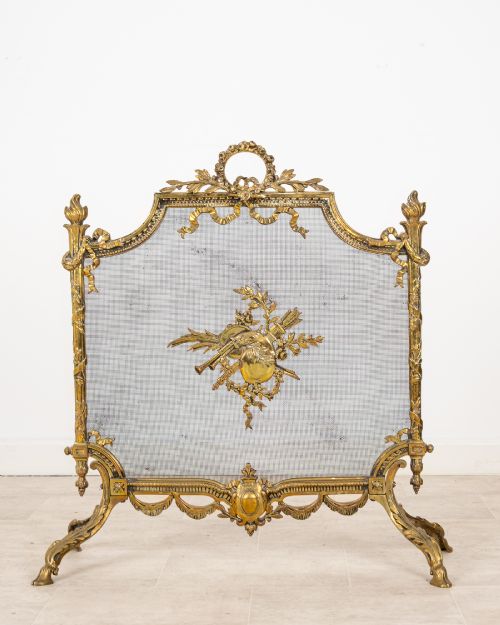
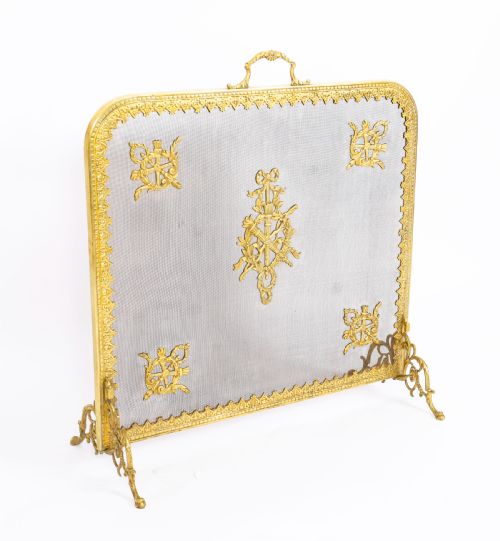
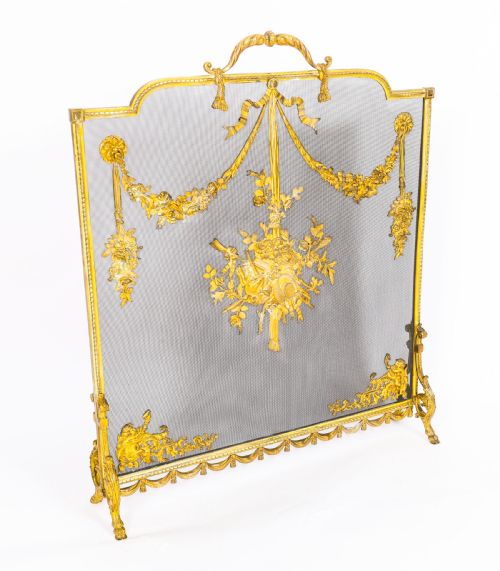
When you search for a gold metal fire guard, you encounter a selection of hearth accessories predominantly formed from brass, gilt bronze and ormolu. The pieces span the nineteenth century, including Victorian examples alongside French Rococo Revival and Louis XVI styles.
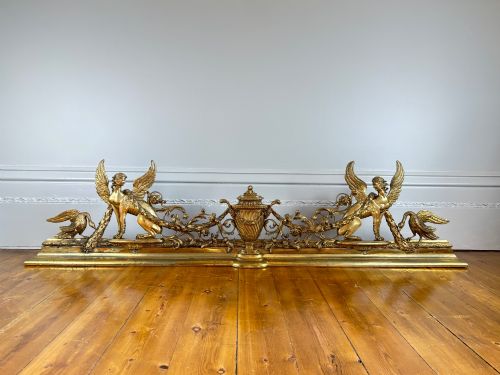
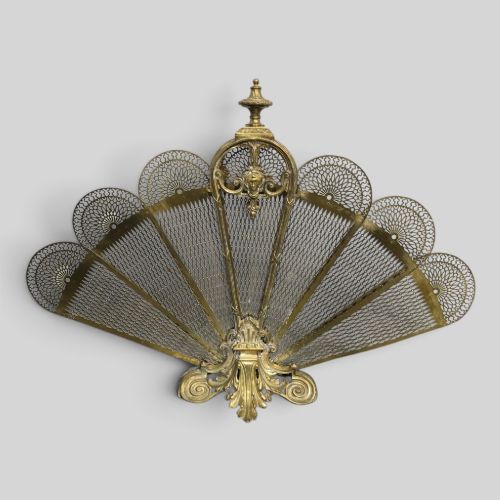
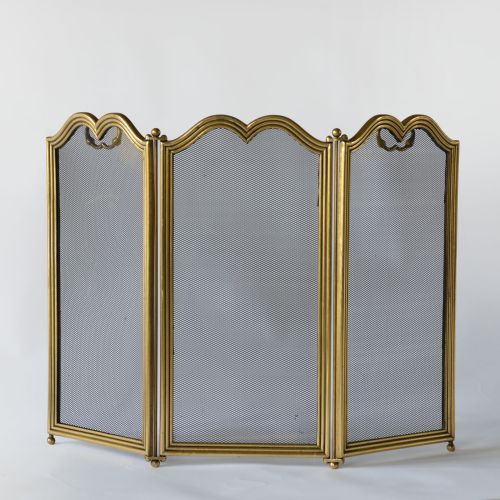
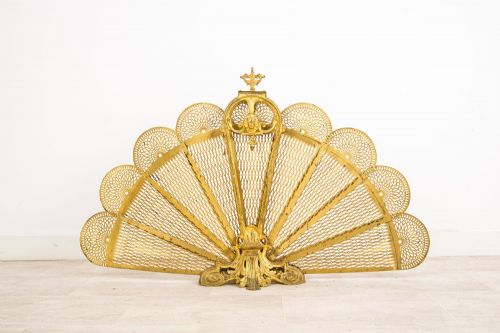
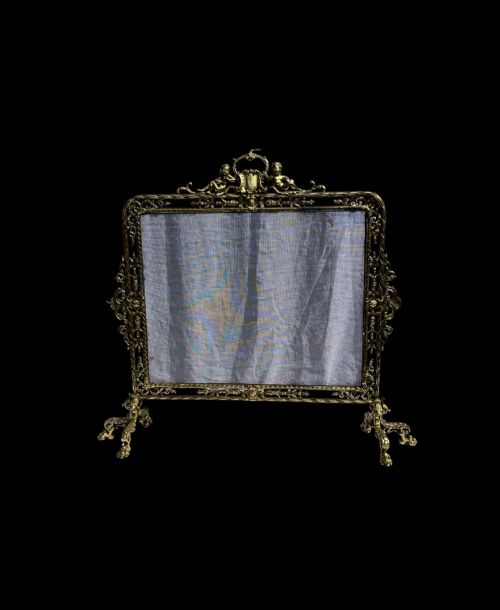
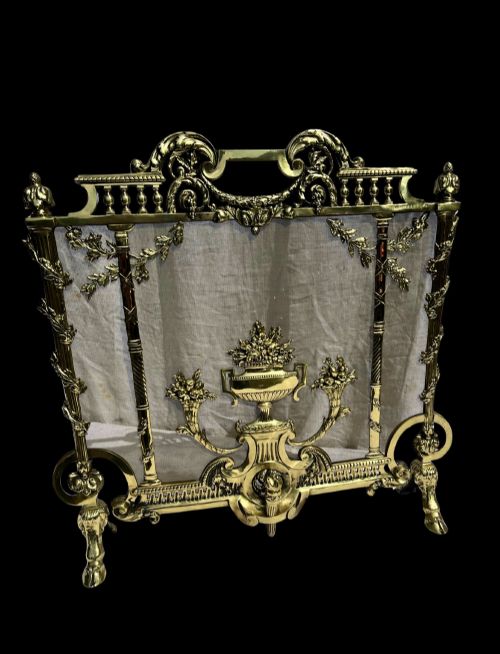
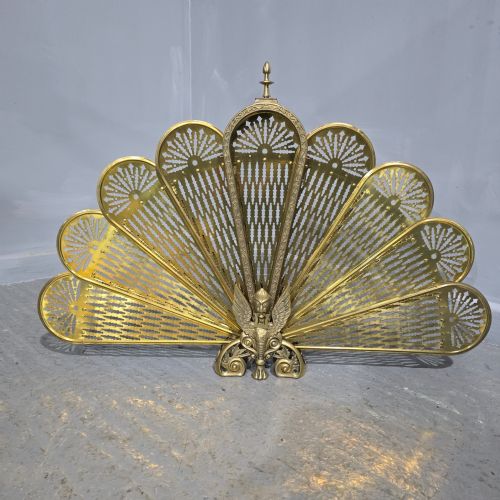
The most common forms on this page are fire screens, spark guards and peacock fan fire screens alongside fireplace fenders. These objects range from tripartite folding wire mesh guards to ornate pierced brass frames decorated with floral and musical trophies.
Originating largely from British and French workshops, these items served to shield rooms from sudden embers while displaying elaborate metalwork. A buyer typically chooses between solid extending curbs, mesh spark guards and decorative screens that remain in place during warmer months.
Materials and construction methods
Makers utilised cast brass, wrought iron mesh and fire-gilded bronze to build these guards, often combining rigid frames with delicate wire panels. Ormolu and gilt bronze components required careful casting and mercury gilding to achieve a deep, lasting lustre.
Pierced brass plates and wire mesh were integrated into structural frames to block stray sparks without obstructing the warmth of the fire. Folding hinges and extending mechanisms allowed screens and fenders to adapt to various hearth dimensions.
Peacock fan screens mimic the majestic spread of a real tail, keeping the hearth looking proud even in midsummer.
Distinguishing quality in period metalwork
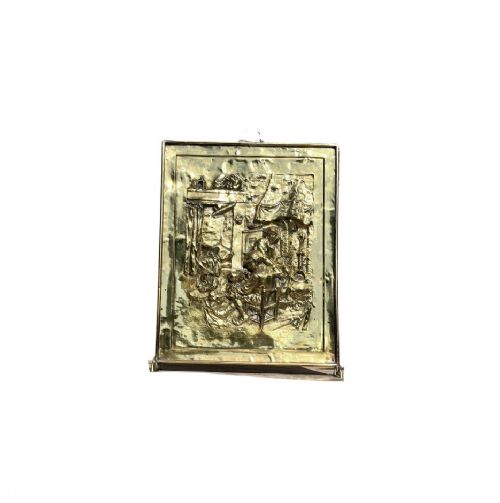
Quality rests upon the crispness of the cast ornamentation, such as the depth of the rococo scrolls or the precision of pierced floral motifs. Finer examples display meticulous hand-chasing on gilt bronze and ormolu surfaces, whereas standard pieces rely on simpler stamped brass sheets.
Structural integrity distinguishes superior guards, evident in the weight of the frame, the secure fixing of wire mesh panels, and the smooth operation of folding or extending joints.
E F Caldwell New York·George Bullock
The Gold Metal Fire Guard Glossary
- Ormolu
- Gilded bronze, where a layer of gold amalgam is applied to a bronze base through heat. This technique creates a rich, durable golden surface seen on French hearth accessories.
- Spark guard
- A protective screen, often constructed from wire mesh or pierced metal, placed before an open fireplace. It prevents embers from escaping into the room.
- Peacock fan screen
- A specific fire screen design featuring radiating metal blades that expand like a tail. These fold together when not in use.
- Fender
- A low metal guard placed on the floor around the hearth perimeter. It contains ash and keeps hearth furniture positioned correctly.
Gold Metal Fire Guard: Frequently Asked Questions
How do I clean a brass fire guard?
Dust the metal gently with a soft, dry cloth to remove surface soot and debris. Avoid harsh chemical polishes that strip historical patination from brass and gilt surfaces.
For stubborn residue, use a mild soapy solution on a damp cloth, drying the metal immediately afterwards to prevent tarnishing.
Can these guards be used with a real fire?
Many of these pieces were built for active hearths, featuring robust iron and wire mesh designed to contain sparks. Check that the mesh or panels remain securely fixed before exposing them to direct heat.
Delicate gilt bronze and ormolu items function primarily as decorative summer screens when the fireplace is not in use.
How do I date a nineteenth-century fire screen?
Examine the style of the metalwork, noting whether it follows Regency neoclassical lines or later French Rococo and Louis XIV revival tastes. Cast construction methods and screw types also offer clues to the manufacturing decade.
Victorian pieces frequently display floral piercing and heavy brass frames typical of mid to late nineteenth-century British production.
What is the difference between a fender and a screen?
A fender sits flat on the floor around the hearth boundary to contain logs and ashes. It creates a fixed perimeter for the fireplace.
A screen stands upright to block radiant heat and sparks from entering the room. Screens can be folded, moved, or expanded independently of the hearth floor.