



Gold Lustre Bowl
A gold lustre bowl brings brilliant metallic sheen and imaginative narratives to a room, catching the light with iridescent charm.
Gold Lustre Bowl
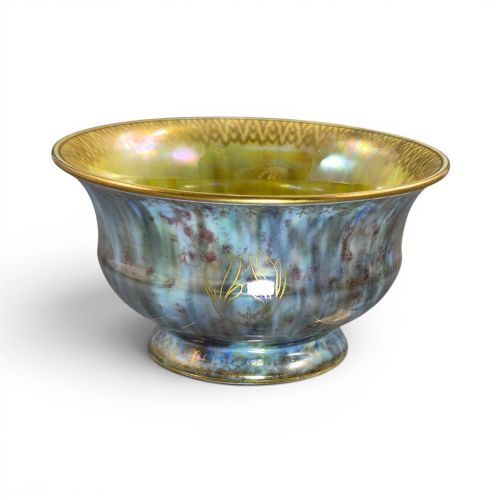
A gold lustre bowl is a decorative ceramic vessel finished with shimmering metallic and lustre glazes that create a distinctive iridescent sheen. When you search for a gold lustre bowl, you encounter striking Edwardian earthenware pieces shaped by notable imagination and technical skill.
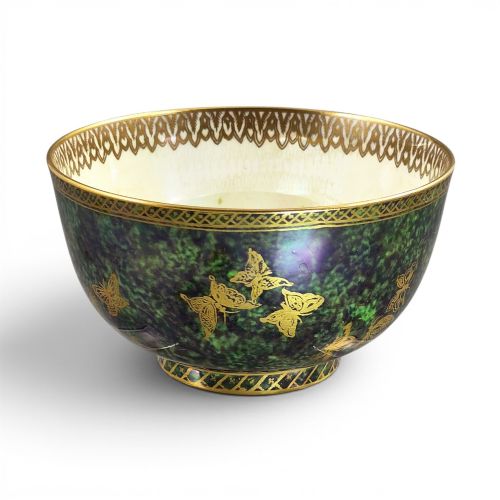
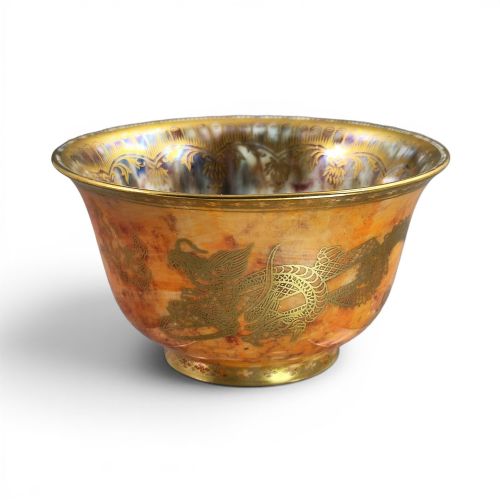
The selections on this page span the 1910s and 1920s, capturing both Art Nouveau and Art Deco sensibilities. Forms range from miniature vessels to large octagonal bowls, featuring imaginative subjects such as dragons, butterflies, and celestial themes.
Most examples originate from the Wedgwood factory and reflect the distinct design vision of the period. Buyers find both open decorative bowls and specialised lantern bowls designed to hold light or display intricate pattern work.
How they were made
Makers utilised ceramic, bone china, and porcelain bodies as the foundational canvas for these decorated vessels. Skilled artisans applied specialised lustre glazes alongside gold leaf and gold gilt to achieve the reflective, multicoloured surfaces.
The application of metallic glaze required precise kiln firing techniques to bond the lustrous metallic layer securely to the underlying ceramic body. This process yielded the signature iridescent effect that catches the light from every angle.
Gold Lustre Bowl Retail Price Guide 2026
Typical asking prices for gold lustre bowl among the pieces listed under this phrase on Sellingantiques today, from the lower quarter to the upper quarter. They describe what is for sale here now, not the wider market.
Fairyland dragons and fluttering green butterflies populate these Edwardian surfaces, proving that Edwardian teapots didn't have all the fun.
What varies in quality
The complexity of the narrative design and the richness of the lustre glaze separate standard production from exceptional pieces. Finely rendered motifs like dragons and butterflies demand superior hand-painting and careful glaze control.
The depth of the metallic iridescence and the preservation of the gold gilt define the visual success of each bowl. Stronger colour contrasts and intricate pattern work indicate a higher grade of artistic execution.
Wedgwood·Daisy Makeig-Jones
The Gold Lustre Bowl Glossary
- Lustre Glaze
- A ceramic finish containing metallic salts that produce an iridescent, rainbow-like sheen upon firing. It reflects light differently depending on the viewing angle.
- Gold Gilt
- A thin layer of gold applied to the ceramic surface to highlight rims, patterns, and borders. It provides a sharp contrast against colourful background glazes.
- Bone China
- A type of porcelain incorporating bone ash, known for its high strength, chip resistance, and ivory-white translucency. It forms a delicate base for detailed painting.
- Art Deco
- A design style from the early twentieth century characterised by sleek geometric shapes, stylised motifs, and modern elegance. It succeeded the flowing lines of Art Nouveau.
Gold Lustre Bowl: Frequently Asked Questions
What are gold lustre bowls made of?
These pieces consist of ceramic, porcelain, or bone china bodies finished with specialised metallic and lustre glazes. Artisans often added gold leaf and gold gilt to enhance the decorative surface.
The combination of traditional pottery materials and chemical lustre treatments gives each vessel its signature reflective quality.
When were these bowls produced?
The available selection dates primarily from the Edwardian era through the 1920s. This period saw a revival of imaginative ceramic decoration influenced by Art Nouveau and Art Deco styles.
Most items in this category originate from around the mid-1910s to 1920.
How do I care for a lustre bowl?
Handle the vessel gently and clean it with a soft, dry cloth to preserve the delicate metallic glazes and gold gilt. Avoid harsh chemical cleaners or abrasive scrubbing that might dull the iridescent surface.
Display the bowl away from direct, prolonged sunlight and areas of high moisture to protect the glaze over time.