
Gold Link Chain Necklace
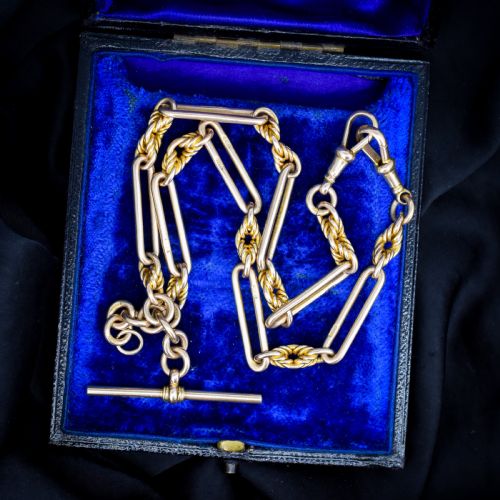
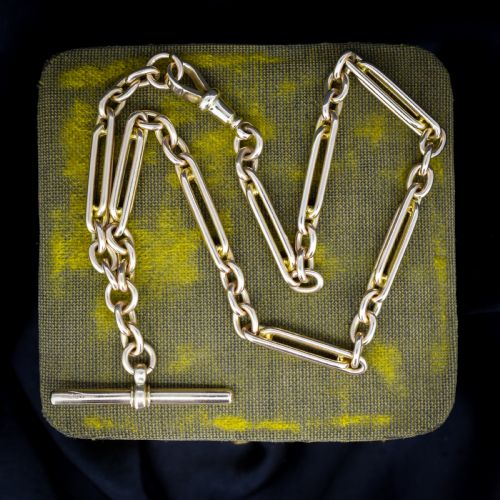
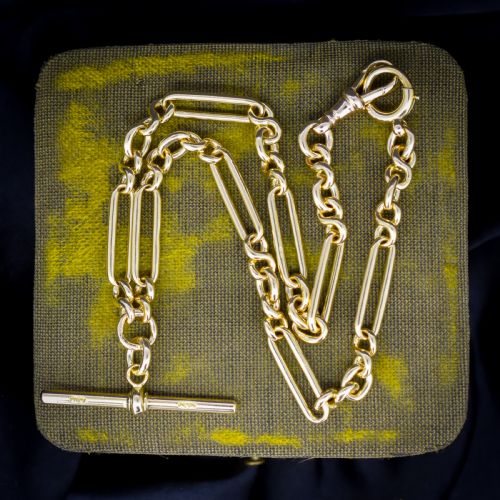
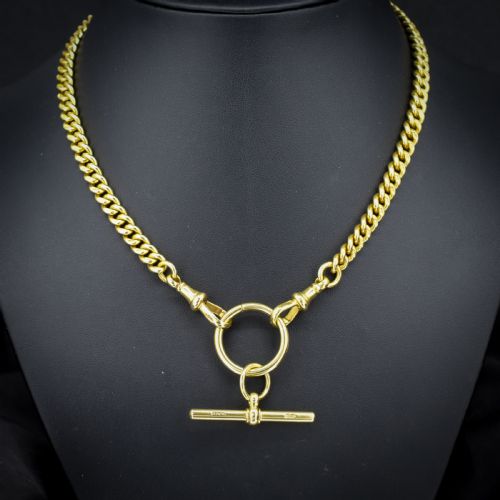
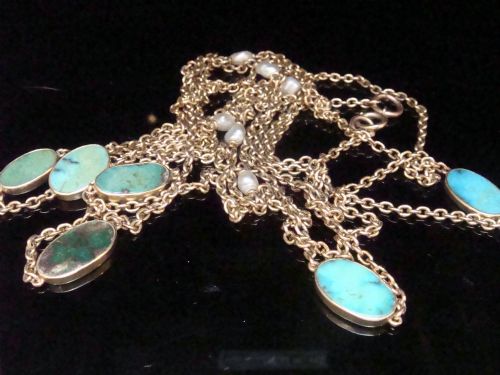
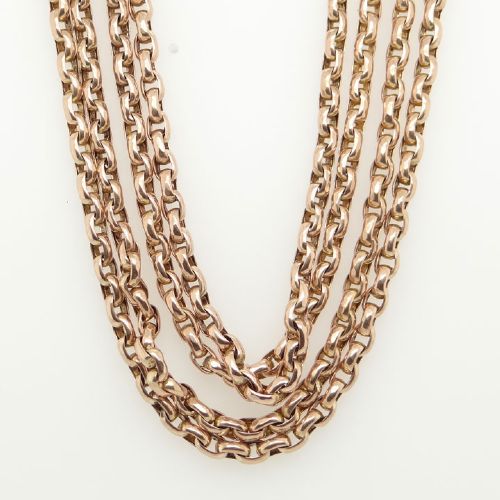
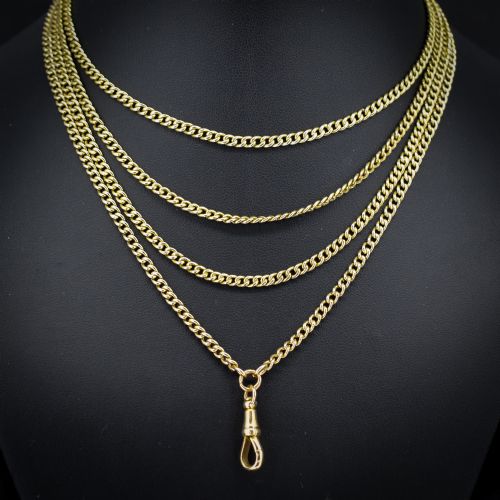
A gold link chain necklace offers substantial metalwork derived from pocket watch attachments and longguard designs of the Victorian and Edwardian eras.
Gold Link Chain Necklace
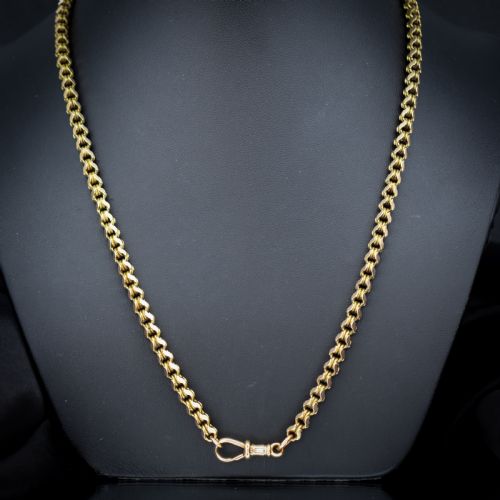
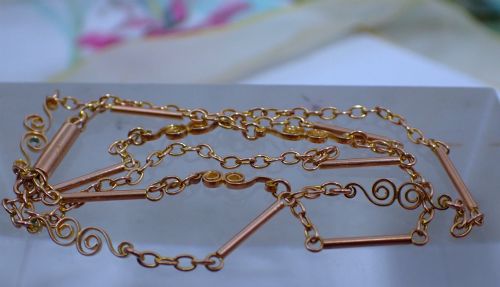
A gold link chain necklace spans substantial pocket watch albert chains, longguard chains, and shorter neck chains from the Victorian, Edwardian, and Art Deco periods.
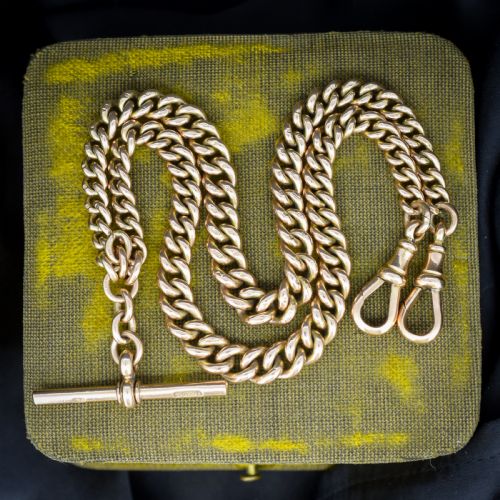
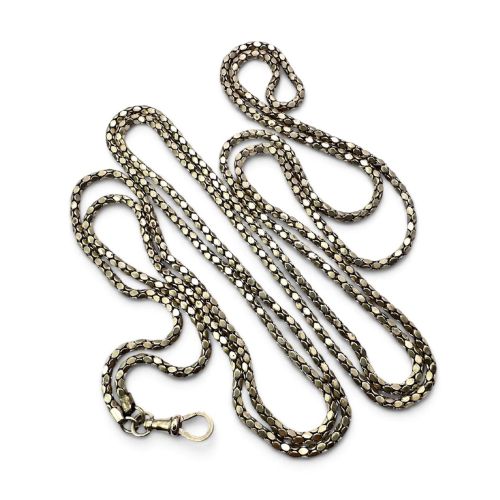
Many shorter pieces descend from heavy watch chains meant to span a waistcoat, while very long guard chains were originally designed to secure muff watches or spectacles.
Materials and Construction
These pieces utilise varying purities of yellow gold, rose gold, and white gold, alongside occasional platinum combinations and rolled gold iterations.
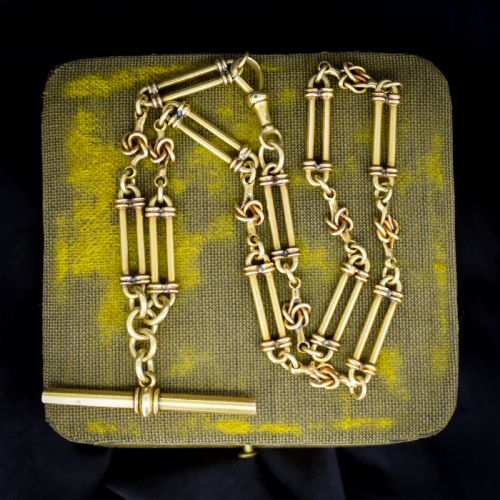
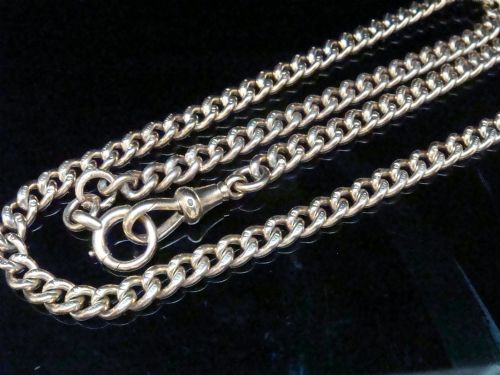
Makers constructed individual links by hand or machine stamping, frequently joining trombone, belcher, or curb segments with secure jump rings and fastening them with swivel dog clips.
Some guard chains measure over sixty inches long, originally intended to keep muff watches safe inside heavy winter hand warmers.
Defining Quality
Quality rests upon the weight of the metal, the crispness of the link stamping, and whether every individual link bears a clear hallmark.
Substantial gauge wire, tight clasp mechanisms, and intact original components like t-bars and dog clips elevate a piece above lighter, more uniform examples.
The Gold Link Chain Necklace Glossary
- Albert chain
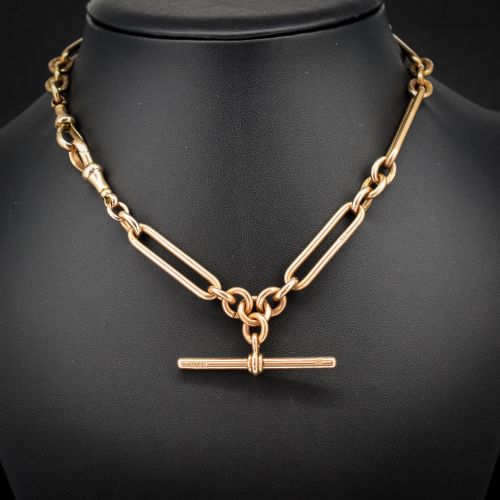
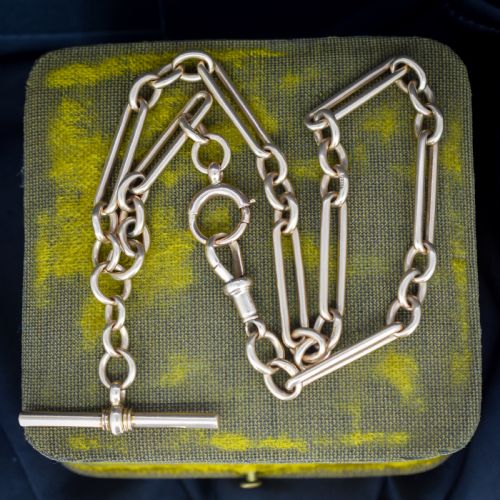
- A pocket watch chain designed to secure a timepiece in a pocket while attaching to a buttonhole via a t-bar. These often convert neatly into modern necklaces.
- Dog clip
- A spring-loaded swivel fastening commonly found on watch chains and guard chains. It allows the wearer to attach pendants, fobs, or secure the chain end.
- Longguard chain
- An extra-long necklace traditionally worn around the neck to secure pocket watches, lorgnettes, or muff watches. They often measure well over thirty inches.
- Trombone link
- A geometric link style featuring elongated rectangular bars interspersed with smaller circular or oval connecting links. It is characteristic of late nineteenth and early twentieth-century pieces.
- T-bar
- A short metal bar attached to the centre of an albert chain designed to pass through a waistcoat buttonhole. It now serves as a decorative pendant drop on converted necklaces.
Gold Link Chain Necklace: Frequently Asked Questions
How do I wear an albert chain as a necklace?
Many antique albert chains are designed with a swivel dog clip at one end and a t-bar near the other. You can attach the dog clip directly to any link or to a dedicated jump ring to wear the chain around the neck.
The decorative t-bar simply drops down the front as a pendant accent, exactly how it once hung from a waistcoat buttonhole.
How do I read gold hallmarks on these chains?
British gold hallmarks typically indicate the purity of the metal, such as nine carat, fifteen carat, or eighteen carat gold, alongside assay office marks like Chester or Birmingham. Many antique pieces are stamped on multiple individual links rather than just the clasp.
These tiny stamped letters and numbers help establish the exact decade of manufacture and the city where the metal was tested.
Can I attach a pendant to these chains?
Most pieces featuring a dog clip or bolt ring readily accommodate pendants, lockets, or charms without needing an additional jump ring. The original swivel mechanism opens easily to secure items directly.
Heavier chains with trombone or curb links provide enough structural weight to support substantial antique lockets and gold fobs.