



Gold Leaf Putti
Gold leaf putti bring classical warmth and sculptural presence into a room, taking the form of carved wall lights, brackets and mirrors.
Gold Leaf Putti
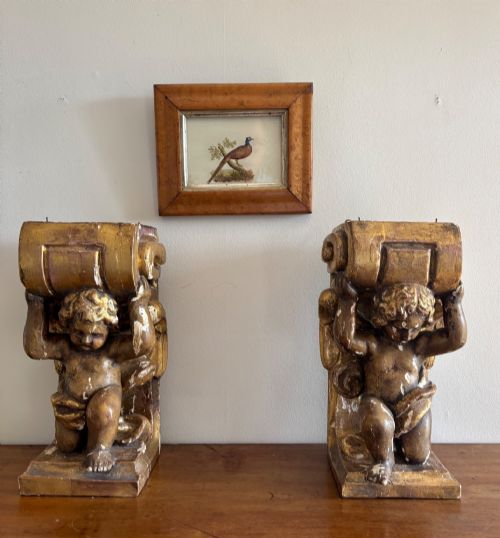
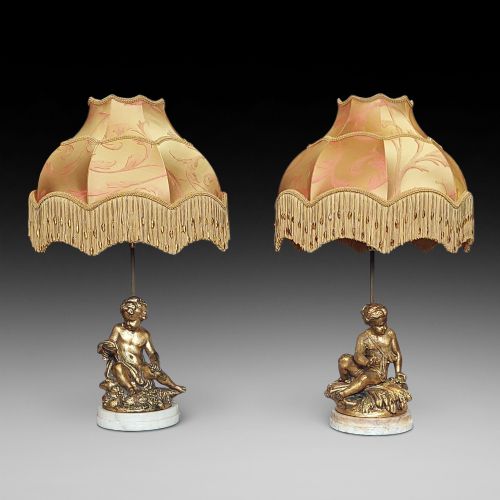
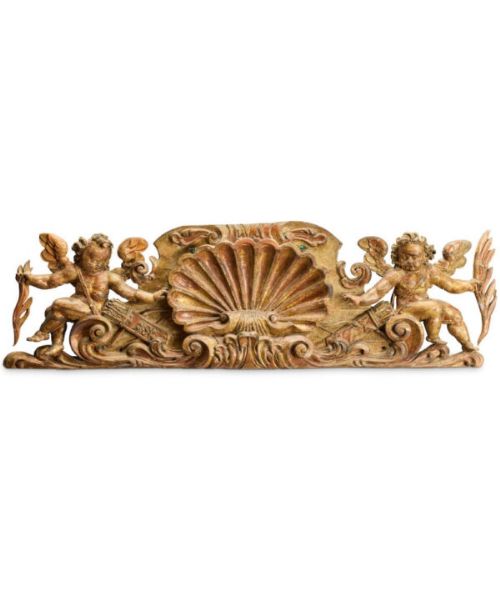
When you search for gold leaf putti, you encounter winged child figures rendered in carved wood, gesso, and gilt bronze across various periods. These pieces range from 18th-century architectural pediments to Victorian wall brackets and table lamps.
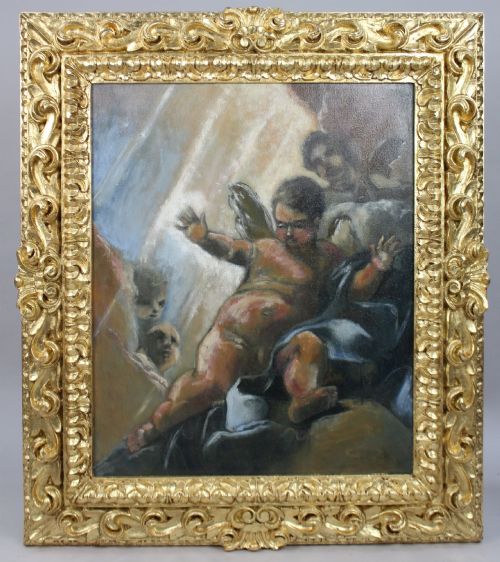
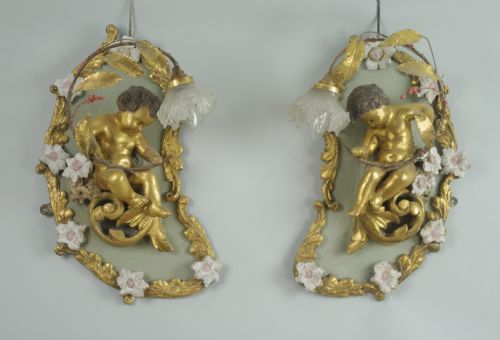
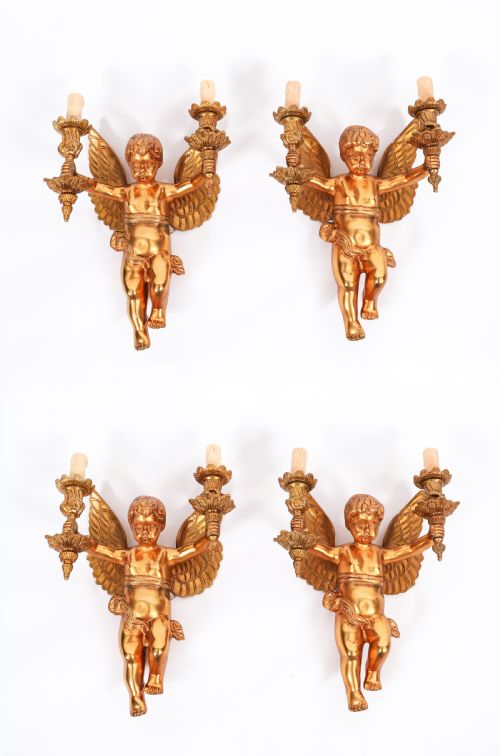
You are most likely to meet nineteenth-century French and Italian pairs of wall lights or brackets finished in giltwood and ormolu. The selection also includes mirrors, oil paintings in gilt frames, and porcelain figures representing cherubs and angels.
The forms span French Chateau, Rococo Revival, and Baroque Revival styles, reflecting European interior decorative traditions. Each piece serves either a functional lighting purpose or acts as an architectural wall ornament.
Materials and construction
Makers shaped these figures primarily from carved wood, gesso, and cast ormolu, applying delicate layers of gold leaf to the surfaces. Woodcarvers worked with timber to create the underlying bodies before gilding.
Bronze components utilise casting techniques for ormolu wall lights and lamps, while porcelain figures involve fired ceramic processes. Giltwood and gesso pieces combine traditional joinery with hand-applied surface metal leaf.
Gold Leaf Putti Retail Price Guide 2026
Typical asking prices for gold leaf putti among the pieces listed under this phrase on Sellingantiques today, from the lower quarter to the upper quarter. They describe what is for sale here now, not the wider market.
These gilded cherubs have spent centuries watching over grand drawing rooms, silently judging your interior design choices.
Evaluating craftsmanship and condition
Quality rests in the depth of the carving and the crispness of the gilt surface rather than mere age. Finer pieces display anatomical precision in the limbs and face of the putti, whereas simpler versions rely on heavier, less detailed gesso moulding.
The integrity of the original gilding and the weight of the underlying carved wood or bronze separate superior examples from standard decorative items. Preservation of the surface finish dictates the visual impact of the piece on the wall.
The Gold Leaf Putti Glossary
- Giltwood
- Wood that has been coated with gold leaf or gold paint. This finish provides the characteristic metallic sheen seen on antique frames and wall brackets.
- Putti
- Depictions of chubby male children, often winged, originating in classical art. They appear frequently in Renaissance and Baroque interior decoration.
- Gesso
- A paint mixture consisting of a binder mixed with chalk, gypsum, or pigment. It serves as a smooth base for the application of gold leaf on carved wooden objects.
- Architectural pediment
- A triangular or curved ornamental section above a door, window, or piece of furniture. These elements sometimes incorporate carved cherubs and parcel gilt surfaces.
Gold Leaf Putti: Frequently Asked Questions
How do I hang a heavy giltwood bracket safely?
Heavy carved wood and gilt pieces require secure wall anchors fixed directly into studwork or solid masonry rather than plaster alone. The weight of the timber and gesso demands robust weight-bearing fixings to prevent movement.
Position the bracket at a height that complements existing furniture or lighting fixtures, ensuring the backplate sits flush against the wall surface.
Can I use antique putti lamps with modern wiring?
Many nineteenth-century ormolu and alabaster lamps accept modern electrical components while retaining their original aesthetic. A qualified electrician can rewire the internal fittings safely.
Check that the lamp holders match contemporary safety standards without altering the external antique bronze or carved elements.
How do I clean gold leaf and giltwood safely?
Dust these surfaces gently using a soft, dry brush or a feather duster to remove particles without disturbing the delicate metallic leaf. Avoid liquid cleaners, damp cloths, and chemical sprays entirely, as moisture strips the gesso and gold.
Professional conservation is recommended for deep cleaning or repairing flaking areas of gilding.
What is the difference between putti and cherubs?
Art history generally uses putti to describe secular winged infant figures derived from classical mythology. Cherubs possess a more specific theological association with celestial beings in religious art.
In the context of nineteenth-century decorative antiques, the terms often describe similar winged child motifs found on wall lights and mirrors.