



Gold Lavaliere Necklace
A gold lavaliere necklace is a delicate drop pendant piece that brings fluid Edwardian movement and fine gem-setting to the neckline.
Gold Lavaliere Necklace
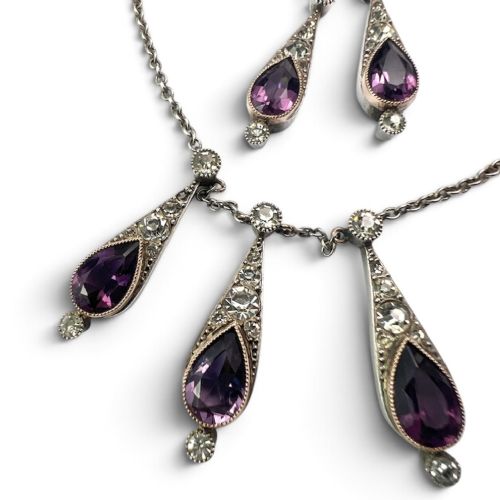
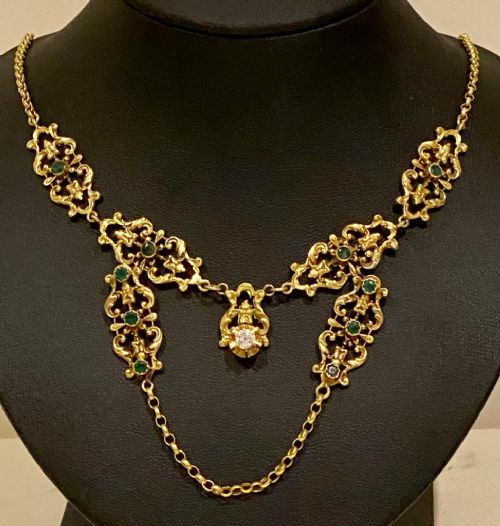
A gold lavaliere necklace centres on a suspended drop design that sways below a fine chain, frequently incorporating swinging fringe elements or articulated gemstone terminals. When searching for a gold lavaliere necklace, buyers encounter pieces spanning the Victorian, Edwardian, Art Nouveau and Art Deco periods, though Edwardian and Victorian iterations dominate the selection.
The characteristic silhouette relies on a central pendant hanging from a fixed bail or integrated chain link, often featuring secondary drops that hang below the main motif. These items emerge in both nine-carat and fifteen-carat yellow gold, alongside silver and gold combinations and occasional white gold or platinum-topped variations.
Materials and construction
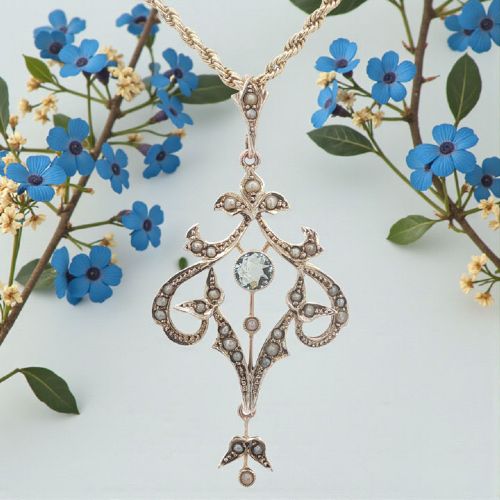
Goldsmiths constructed these items using cast and fabricated gold components, utilising nine-carat and fifteen-carat yellow gold alongside silver-gilt and white gold. Seed pearls, natural pearls and coloured gemstones were hand-set into delicate wirework frames and pierced galleries.
Artisans incorporated specialised techniques such as plique-à-jour enamel alongside traditional collet and claw settings to secure diamonds, amethysts, aquamarines, opals, garnets and peridots. Fine articulated jump rings allowed the characteristic drop elements to move freely without binding.
Assessing quality and craftsmanship
Superior examples distinguish themselves through the precision of their pierced gold wirework, the symmetry of their seed pearl alignment and the careful matching of coloured gemstones like amethysts, aquamarines and opals. The fineness of the articulation between pendant drops determines how fluidly the piece moves when worn.
Higher-tier pieces feature substantial fifteen-carat gold weights or precious stones such as diamonds and natural pearls rather than paste or cultured alternatives. The integration of specialised decorative techniques like plique-à-jour enamel also elevates the standing of an individual piece.
The Gold Lavaliere Necklace Glossary
- Lavaliere
- A pendant necklace featuring one or more suspended drops that hang below the main decorative section. This style gained widespread popularity during the late nineteenth and early twentieth centuries.
- Seed pearl
- A very small, naturally formed pearl, often half-drilled and glued or pegged onto tiny gold pins. These tiny pearls were clustered to form floral and geometric motifs in Edwardian jewellery.
- Plique-à-jour
- An enamelling technique where enamel is applied within a cellular framework without a backing, allowing light to shine through the transparent or translucent colour much like stained glass.
- Old cut diamond
- A hand-faceted diamond cut prior to the standardisation of the modern brilliant cut, typically featuring a small table, high crown and open culet.
Gold Lavaliere Necklace: Frequently Asked Questions
What is a gold lavaliere necklace?
A gold lavaliere necklace is a pendant piece characterised by a central drop design suspended from a chain, featuring swinging gemstone or pearl terminals.
These items originated primarily during the late Victorian and Edwardian eras, combining fluid ornamental lines with delicate precious metalwork.
How do I date my necklace?
Dating relies on examining the gold carat marks, gemstone cuts, and stylistic motifs such as flowing Art Nouveau tendrils or geometric Art Deco symmetry.
Edwardian pieces often utilise fifteen-carat gold paired with seed pearls and aquamarines, while Victorian versions frequently showcase garnets and opals in heavier yellow gold.
How were these necklaces worn?
Original owners wore these pieces as formal or semi-formal neck adornments, designed to catch the light and sway with the wearer's movement.
The extended drop construction was specifically intended to draw the eye downward along the neckline during evening wear.
Are pearls on these necklaces natural?
Many antique pieces incorporate natural seed pearls or saltwater pearls secured to tiny gold pins within the pierced pendant frame.
Examining the pearls under magnification reveals the subtle irregularities characteristic of pearls formed before the widespread availability of cultured varieties.
What stones are common in these?
Amethysts, aquamarines, opals, garnets and peridots frequently appear as the primary coloured stones, often accented by small diamonds and seed pearls.
These gems reflect the popular palette of the late nineteenth and early twentieth centuries.