


Gold Heart Necklace
A gold heart necklace carries centuries of sentiment in precious metal, spanning puffy Victorian lockets to delicate Edwardian gemstone drops.
Gold Heart Necklace
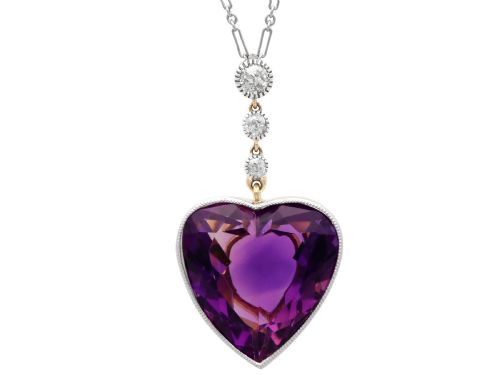
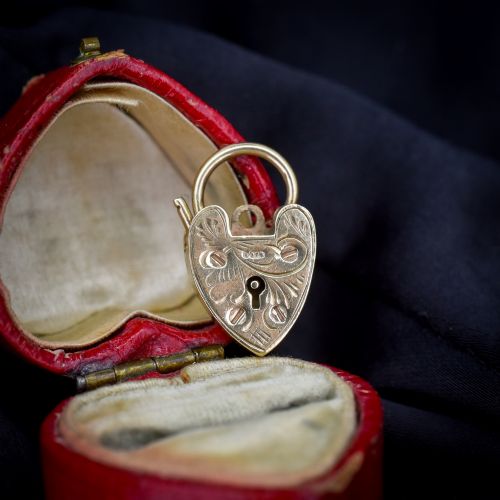
A gold heart necklace is a pendant or locket suspended from a chain, designed around the universal motif of affection. The pieces found here range from modest nine-carat yellow gold padlock charms to substantial fifteen-carat Victorian and Edwardian drops.
Most examples originate from the Victorian and Edwardian eras, alongside mid-century and later vintage pieces. These range from simple golden outlines to intricate double-heart designs intertwined with bows or crowns.
Buyers encounter various configurations, including standalone pendants, pendant brooches, and complete necklaces fitted with integral chains. The form adapts from flat stamped plates to hollow puffy hearts and gemstone clusters.
How they were made
Goldsmiths utilised yellow, rose, and white gold ranging from nine to eighteen carats, shaping the metal through casting, repousse work, and delicate wirework. Hollow puffy hearts were constructed from two stamped halves soldered together to provide volume without excessive weight.
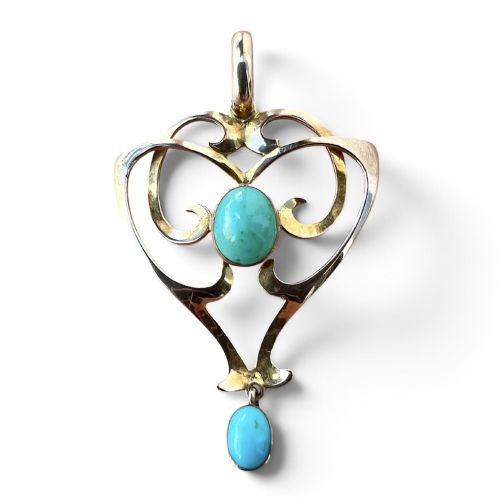
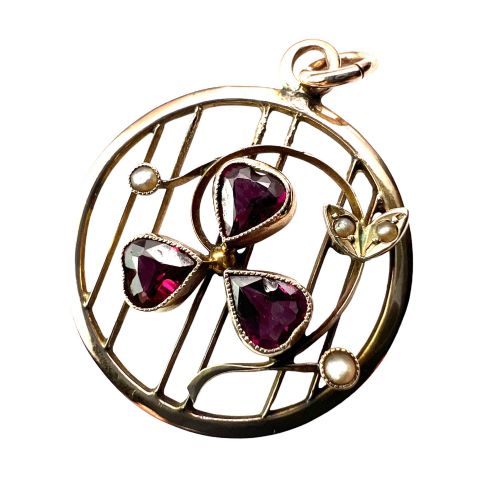
Gemstones such as seed pearls, diamonds, rubies, sapphires, amethyst, and turquoise are flush-set, bezel-set, or mounted in claw settings following the aesthetic of the period. Natural pearls and seed pearls were frequently stitched or glued onto backing plates or arranged in floral clover motifs.
Chain construction varies from simple trace links to elaborate lavaliere drops and collars, often featuring original barrel clasps, bolt rings, or spring rings appropriate to the manufacturing date.
Stones paired with the gold hearts include natural pearls, diamonds, rubies, amethysts, turquoise, chrysoprase, and opals.
What varies in quality
The distinction between ordinary and exceptional pieces lies in the crispness of the chasing, the depth of the metal work, and the integration of the stones. Finer examples display meticulous hand-engraving and well-matched natural gemstones rather than replacement paste stones.
Structural integrity in hollow or puffy forms separates superior items from compromised ones, as thinner gold is prone to dents and crushing at the seams. High-carat mountings in fifteen or eighteen-carat gold generally indicate a higher grade of overall craftsmanship than standard nine-carat equivalents.
Deakin & Francis·Arthur & Georgie Gaskin·Perriat
The Gold Heart Necklace Glossary
- Puffy heart
- A hollow, three-dimensional pendant formed from two convex pieces of gold joined at a seam. These items were popular tokens of romance during the Victorian period.
- Seed pearl
- A very small, natural or saltwater pearl, often undrilled or half-drilled, clustered to form floral or geometric patterns in antique jewellery. They require careful handling to prevent loss from their settings.
- Lavaliere
- A pendant necklace featuring a central drop suspended from a longer chain or bar, coming into fashion during the late nineteenth and early twentieth centuries. The design swings freely with movement.
- Witch's heart
- A heart pendant with a twisted or flicked tail at one side, historically given as a love token in Scotland and France. The asymmetrical swirl distinguishes it from standard symmetrical hearts.
- Padlock charm
- A small, functional or decorative padlock in the shape of a heart, frequently attached to charm bracelets or suspended from short chains as pendants.
Gold Heart Necklace: Frequently Asked Questions
How do I date a gold heart necklace?
Dating relies on hallmarks, metal purity standards, and the specific style of the setting and stones. Victorian and Edwardian pieces often display distinct motifs like seed pearl clover leaves or rose-cut diamonds.
Later vintage and mid-century examples show different clasp mechanisms and cleaner, more modern alloy stamps. Comparing the construction of the bail and the chain connection provides further clues to the decade of manufacture.
Are these necklaces supplied with chains?
Some pieces retain their original period chains, while others are sold as standalone pendants or with replacement chains added later. The listing details specify whether a chain is included and its approximate length.
Buyers wishing to swap chains can easily slide most pendants onto alternative gold necklaces of matching carat and colour. Checking the jump ring or bail size ensures compatibility with thicker or antique chains.
How should I care for antique gold jewellery?
Antique pieces with seed pearls or turquoise require gentle handling because these materials are porous and sensitive to moisture and chemicals. Cleaning should be limited to a soft, dry cloth rather than liquid immersion.
Storing each necklace separately in a lined box prevents the gold from scratching and protects delicate gemstone settings from impact.
What is the difference between nine-carat and fifteen-carat gold?
Fifteen-carat gold contains a higher proportion of pure gold than nine-carat gold, resulting in a richer, warmer colour that does not fade over time. British makers utilised fifteen-carat extensively during the Victorian and Edwardian periods before it was largely replaced by nine-carat and eighteen-carat standards.
Pieces made from higher carats generally indicate a more costly original commission and heavier metal weight.