





Gold Gypsy Band
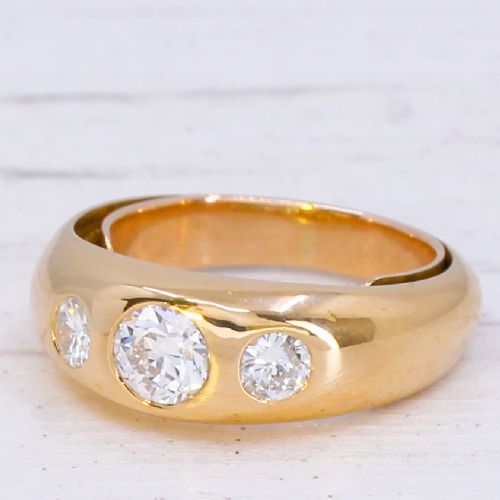
A gold gypsy band brings flush-set stones and smooth metal contours together, offering a durable everyday ring with distinct period character.
Gold Gypsy Band
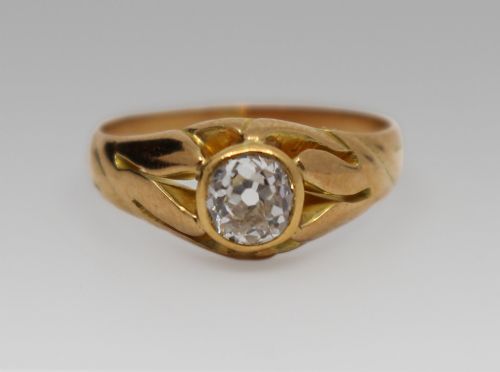
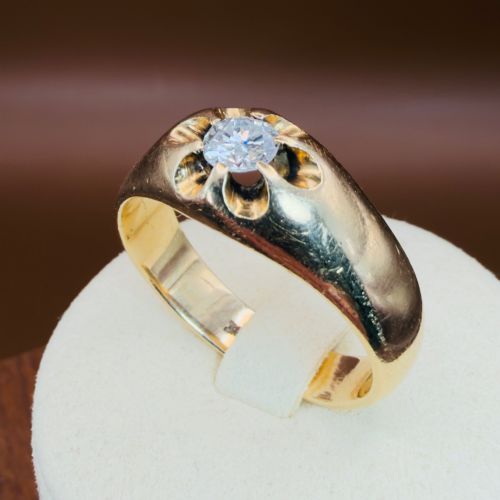
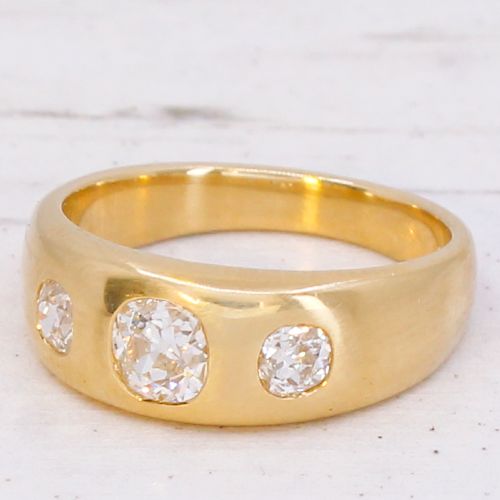
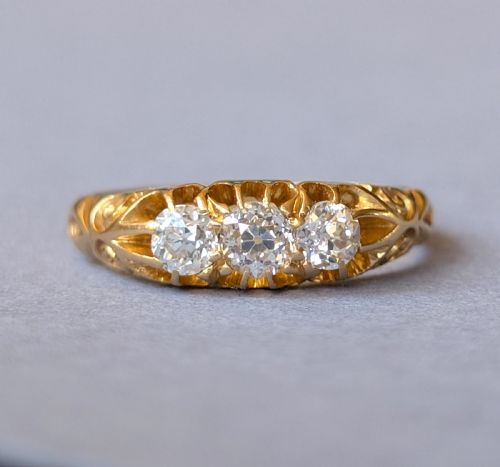
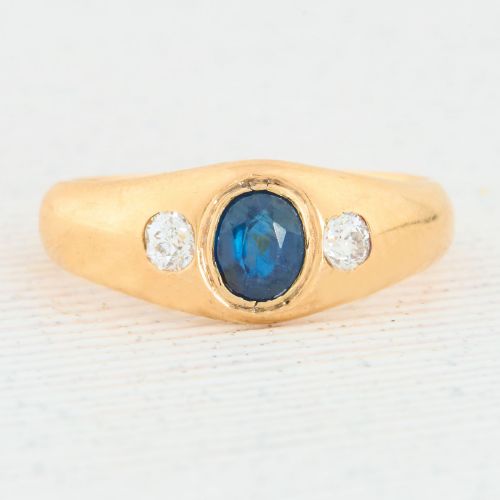
A gold gypsy band is a ring featuring stones flush-set directly into the metal band, creating a smooth, low-profile surface that sits level with the hoop. These rings span periods from the late nineteenth century through the Edwardian era and into the mid-twentieth century.
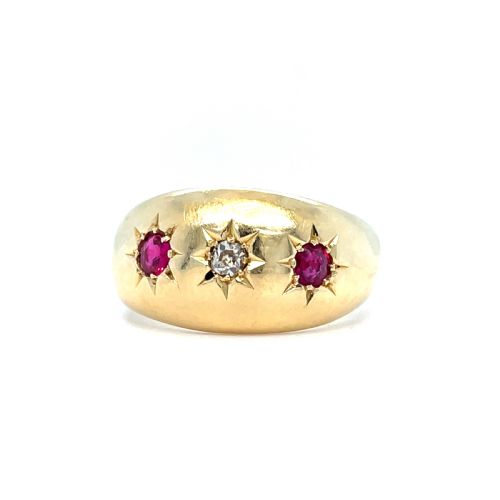
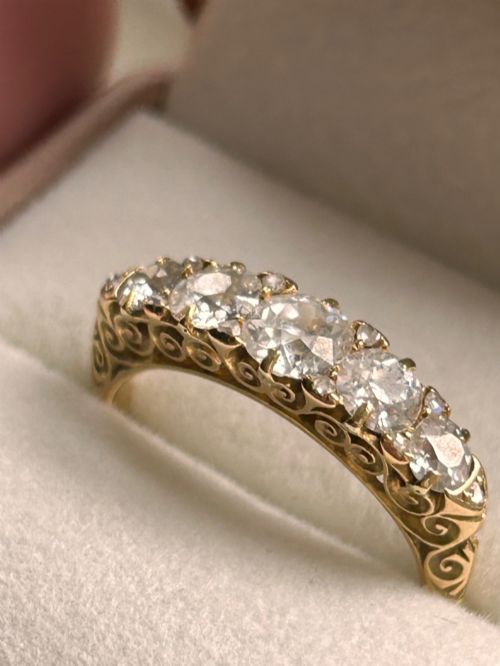
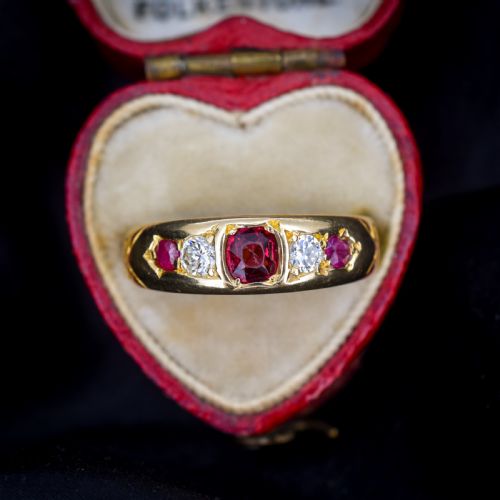
The most common examples encountered on this page date from the Victorian and Edwardian periods, often wrought in eighteen-carat yellow gold and set with old cut diamonds, rubies, or sapphires. Solitaire, trilogy, and starburst arrangements frequently appear among these listings.
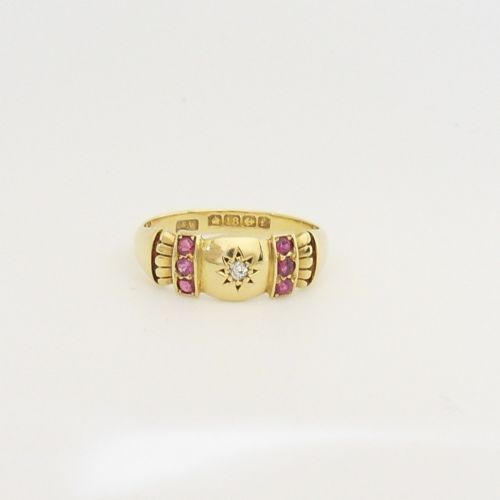
Makers designed these bands to be sturdy and practical for daily wear, avoiding the high prongs that catch on clothing. The heavy metal shoulders often feature star engravings or ornate chased work framing the flush-set gems.
Materials and construction
Goldsmiths constructed these rings primarily using nine-carat, fifteen-carat, and eighteen-carat yellow, rose, or white gold, hammered and cast into solid, substantial bands. The metal was pushed securely over the girdle of each stone in a gypsy setting, holding the gem flush without claws.
Stones were hand-selected old cut diamonds, table-cut diamonds, rubies, sapphires, garnets, and turquoise, shaped to fit snugly into the thick metal channel. Engravers then hand-chased starburst motifs and ornate borders directly into the gold surrounding the flush settings.
Listings feature yellow gold, rose gold, and multiple gold carats alongside diamonds, rubies, sapphires, garnets, turquoise, and coral across nineteenth- and twentieth-century periods.
Differences in quality
Quality in a gold gypsy band rests upon the weight and thickness of the gold band itself, as well as the precision of the flush setting. Finer examples retain deep, crisp starburst engravings and heavy metal walls that have not thinned from decades of wear.
The selection and cut of the gemstones also dictate worth, with larger, well-matched old cut diamonds or vibrant natural rubies and sapphires elevating the piece. Superior craftsmanship is visible where the metal meets the stone seamlessly without gaps or excess solder.
The Gold Gypsy Band Glossary
- Gypsy setting
- A mounting style where the gemstone is set flush into the metal band so that the surface of the stone sits level with the surrounding hoop. This technique became popular in the late nineteenth century for practical, snag-free everyday rings.
- Old cut
- A vintage diamond cutting style characterised by a small table, high crown, and a large open culet, hand-faceted before modern brilliant-cut standards. These stones display a softer, warmer scintillation under candlelight.
- Starburst
- An engraved motif of radiating lines surrounding a flush-set gemstone, resembling a twinkling star. This decorative carving is typical of Victorian and Edwardian gold bands.
- Trilogy ring
- A finger ring set with three stones, usually diamonds or a combination of diamonds and coloured gemstones representing the past, present, and future. They frequently appear in gypsy-set nineteenth-century designs.
- Belcher mounting
- A rounded, swelling ring setting where the metal rises up to hold a gemstone securely in a heavy collar. This form provides robust support to single stones in antique bands.
Gold Gypsy Band: Frequently Asked Questions
Can I wear a gold gypsy band every day?
These rings were originally built for daily wear because their flush settings lack high prongs that catch on fabrics. The solid gold bands withstand regular use remarkably well.
However, fragile stones like turquoise or very thin antique bands require gentle care to preserve their original structure over time.
How do I tell a Victorian gypsy band from an Edwardian one?
Victorian examples often feature heavier, wider yellow or rose gold bands with deep starburst engravings and rich ruby or sapphire accents. They sometimes carry hallmarks from assay offices like Birmingham or Chester.
Edwardian bands tend to incorporate brighter yellow or white gold with delicate ornamentation, frequently highlighting old cut diamond solitaires or multi-stone arrangements.
What is an old cut diamond?
An old cut diamond is a hand-faceted stone shaped by artisans before the invention of modern machinery. These diamonds feature distinctive proportions, including a smaller top table and an open culet at the base.
They produce a deep, chunky pattern of light rather than the precise brilliance of contemporary brilliant-cut stones.
Are these rings usually hallmarked?
Many antique gold bands bear British hallmarks stamped inside the hoop, indicating the gold purity, assay office, and date letter. Common assay locations include Birmingham and Chester during the nineteenth and early twentieth centuries.
Some pieces lose their marks over decades of resizing or polishing, which is standard for older jewellery.