



Gold Gilt Teacup
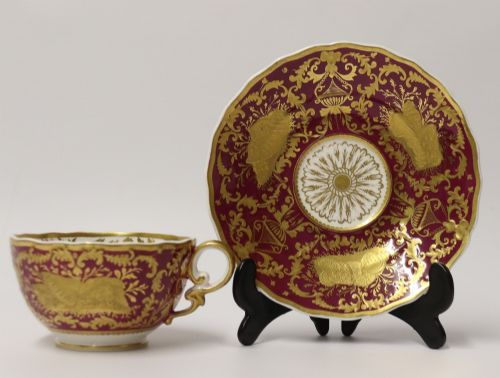
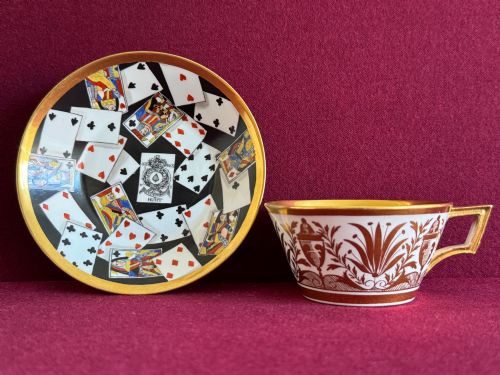
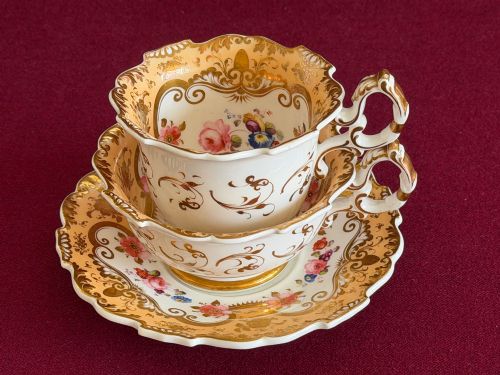
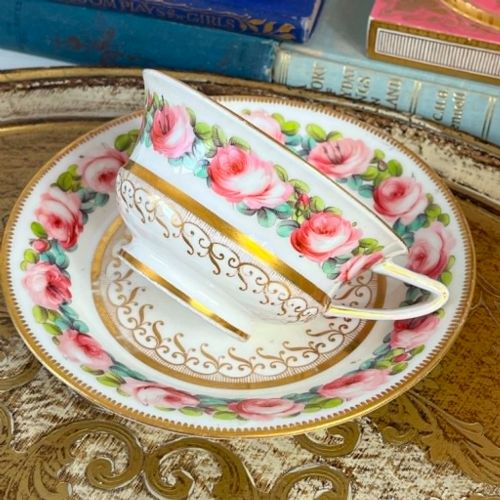
A gold gilt teacup brings brilliant metallic shine and painted decoration to the table, offering a tangible connection to the ceramic arts of the Georgian, Regency, and Victorian eras.
Gold Gilt Teacup
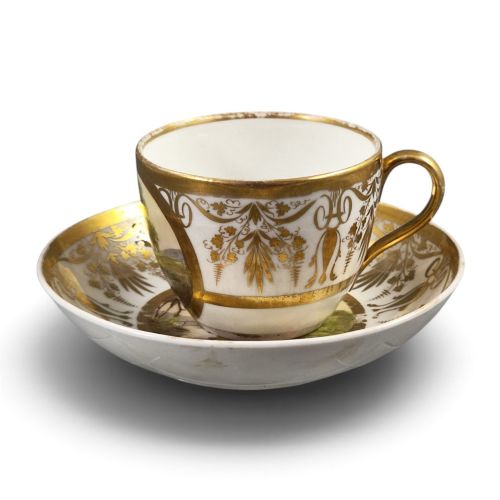
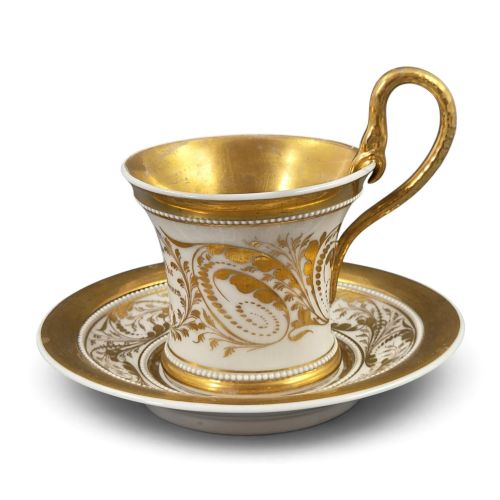
When searching for a gold gilt teacup, collectors encounter a variety of forms ranging from standard tea and coffee sets to individual cabinet cups, demitasse cups, and miniature pieces. These items span multiple periods including the Georgian and Regency eras, the Victorian age, and the early twentieth century.
The pieces on this page include trios with matching saucers and side plates, as well as duos and lidded cups with stands. Makers from England, Germany, Russia, and Japan created these vessels to serve hot beverages or to be displayed in cabinets as works of art.
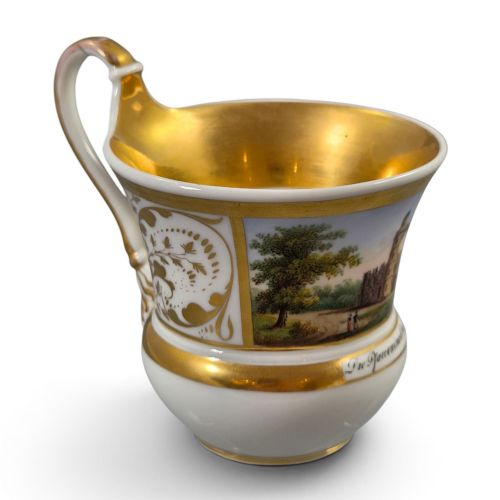
The most common representations date from the early nineteenth century onward, often featuring handpainted landscapes, floral motifs, or armorial designs alongside generous applications of metallic leaf. Each object reflects the prevailing aesthetic of its decade, from classical neoclassical lines to ornate revival styles.
Materials and methods of manufacture
Makers utilised fine white clay bodies, producing hard-paste porcelain, soft-paste porcelain, and bone china to form the body of each vessel. These ceramic bases were shaped on the wheel or cast in moulds before receiving an initial high-temperature kiln firing.
Artisans applied enamel colours and gold leaf or liquid gilding by hand, frequently fixing the metallic decoration during a subsequent low-temperature firing. This technique ensured the lustrous finish adhered securely to the glazed ceramic surface.
Gold Gilt Teacup Retail Price Guide 2026
Typical asking prices for gold gilt teacup among the pieces listed under this phrase on Sellingantiques today, from the lower quarter to the upper quarter. They describe what is for sale here now, not the wider market.
A tiny miniature cup and saucer proves that even nineteenth-century porcelain makers occasionally indulged a fondness for working on a microscopic scale.
Standards of craftsmanship and preservation
Quality depends upon the precision of the handpainting and the purity of the ceramic body, where finely potted walls and crisp moulding distinguish superior examples from standard production wares. The thickness of the porcelain and the delicacy of the handle formation reveal the skill of the original maker.
The preservation of the metallic decoration also dictates worth, as heavy rubbing or loss of the gold leaf diminishes the visual impact of the piece. Intricate topographical scenes, armorial bearings, or carefully rendered botanicals indicate higher artistic ambition than simple patterned borders.
A H & R Daniel·Davenport·KPM Berlin·Derby Porcelain·Kusnetzoff·Flight Barr and Barr·Royal Albert Crown China·Taniguchi·Duesbury and Kean·Barr Flight and Barr·Hutschenreuther
The Gold Gilt Teacup Glossary
- Cabinet cup
- A decorative ceramic cup intended primarily for display in a cabinet rather than for active use at the tea table. These pieces often feature detailed topographical paintings or historical scenes.
- Demitasse
- A small cup used for serving strong black coffee or espresso. They frequently appear paired with a matching saucer and sometimes form part of larger tea and coffee sets.
- Trio
- A matching set consisting of a teacup, a saucer, and a corresponding side or tea plate. They gained popularity in the nineteenth century for formal tea service.
- Armorial
- A ceramic design decorated with a coat of arms or heraldic crest. These commissions were often bespoke and painted for specific families.
- Hard-paste porcelain
- A durable ceramic material composed of kaolin and petuntse fired at very high temperatures. It produces a dense, bright white body that resists scratching.
Gold Gilt Teacup: Frequently Asked Questions
How do I identify a Georgian teacup?
Georgian pieces typically date from the late eighteenth century to the eighteen-thirties, showing classical shapes and handpainted botanical or abstract motifs. They frequently lack factory marks, relying instead on distinct paste characteristics and hand-lettered pattern numbers.
Examine the weight of the porcelain and the style of the handle, as earlier British makers favoured simplified loop or kick handles before the more ornate Regency and Victorian variations emerged.
Can I use antique tea sets daily?
While these items were originally created for practical dining use, age and delicate handpainted gilding make cautious handling advisable today. Hand washing in warm water without harsh detergents preserves the fragile enamel colours and gold leaf.
Avoid thermal shock by not exposing old porcelain to sudden temperature changes, which can cause historical ceramic bodies to fracture.
What is a cabinet cup?
A cabinet cup is an ornamental vessel produced for display in a glass-fronted piece of furniture rather than for drinking tea. They often feature intricate handpainted scenes, such as German landscapes or botanical studies, combined with heavy gilding.
These pieces are typically larger or more elaborately decorated than standard teacups and frequently rest on dedicated saucers or stands.
How do I distinguish German from English porcelain?
Continental factories like KPM Berlin often utilised hard-paste porcelain with crisp underglaze blue sceptre marks and impressed numbers. English makers of the same period more commonly worked with bone china or soft-paste porcelain, occasionally using painted iron-red or gilt factory ciphers.
The tone of the white body and the texture of the glaze also differ noticeably between European and British kilns of the nineteenth century.