

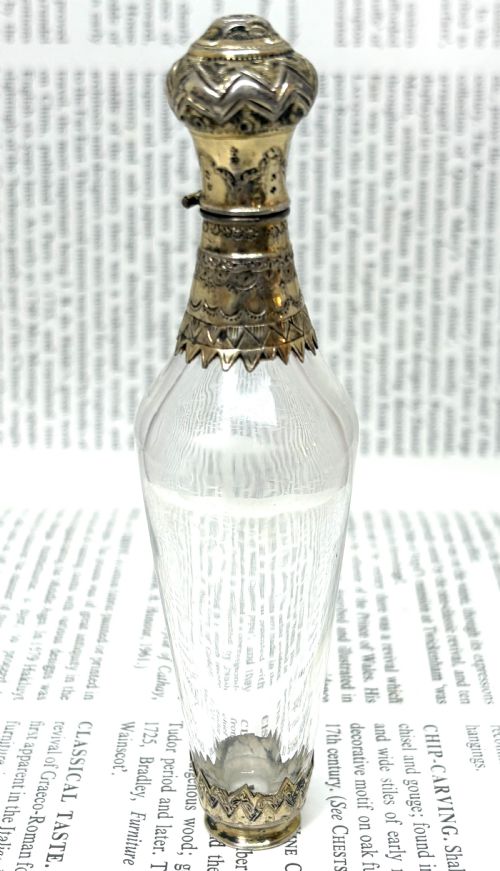


Gold Gilt Perfume Bottle
A gold gilt perfume bottle is a small, precious vessel designed to hold scent, combining decorative metalwork with glass or porcelain.
Gold Gilt Perfume Bottle
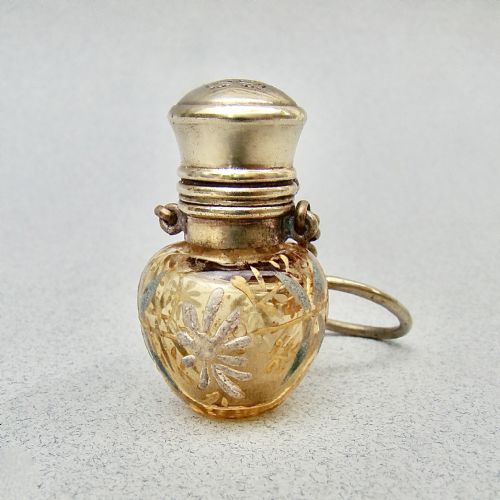
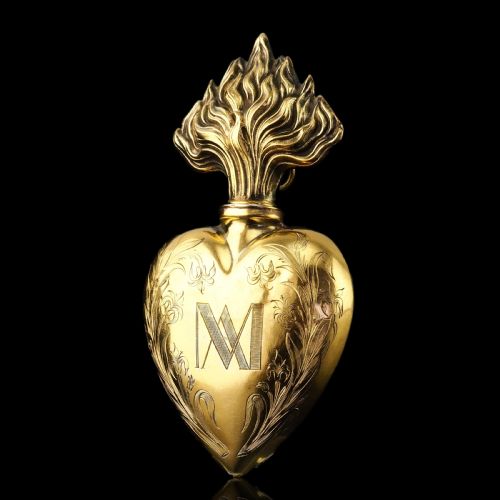
When searching for a gold gilt perfume bottle, a buyer encounters a diverse group of small scent containers spanning the seventeenth, eighteenth, nineteenth, and early twentieth centuries. These pieces originate from English, French, and other European makers, reflecting distinct historical periods from the Georgian era through to Art Deco.
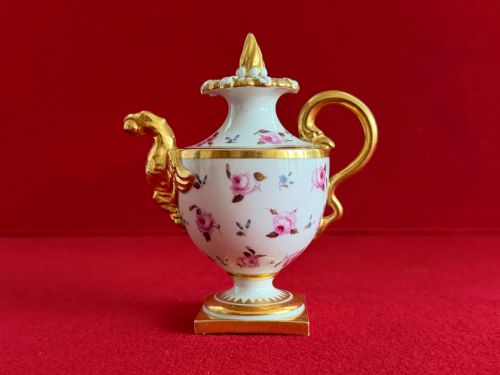
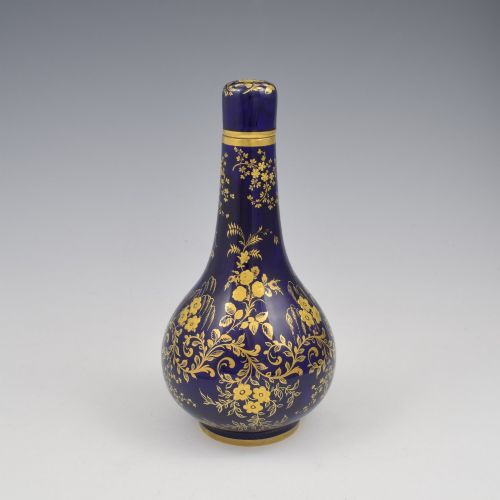
The forms vary widely across the selection, ranging from scent flasks and chatelaine bottles to porcelain rose water sprinklers and novelty fish vinaigrettes. Glass and porcelain bodies frequently appear alongside metal mounts, providing both decorative appeal and functional storage for perfume.
French examples from the nineteenth century are particularly common on this page, often featuring Moser glass or silver gilt mounts. Buyers also find English porcelain from factories like Worcester and Derby, alongside pieces utilising parian ware and enamel.
How they were made
Materials span precious and semi-precious substances, utilising silver gilt, gold leaf, and gilded metal alongside moulded glass and painted porcelain. Glaze and enamel provide colour and surface decoration on the ceramic and metal bodies.
Mounts and fittings require careful metalworking techniques, such as engraving coronets onto silver gilt flasks or articulating novelty fish vinaigrettes. Glass vessels incorporate hand-blown or moulded bodies, while porcelain pieces rely on high-temperature firing and hand-applied gilt decoration.
Gold Gilt Perfume Bottle Retail Price Guide 2026
Typical asking prices for gold gilt perfume bottle among the pieces listed under this phrase on Sellingantiques today, from the lower quarter to the upper quarter. They describe what is for sale here now, not the wider market.
Object forms include scent bottles, perfume atomisers, decorative ceramics, vases, and vinaigrettes across various European origins.
What varies in quality
Quality depends upon the fineness of the chasing and engraving on the metal mounts, alongside the precision of the gilding applied to the silver, metal, glass, or porcelain. Early examples with intricate coronet engravings or detailed articulation demonstrate superior craftsmanship compared to simpler production pieces.
The execution of the body material also dictates overall standard, whether through the clarity and colour of Moser glass, the hand-painted detail on Worcester and Derby porcelain, or the moulding quality of parian ware and enamel.
Flight Barr And Barr·S Morden And Co
The Gold Gilt Perfume Bottle Glossary
- Silver gilt
- Silver that has been coated with a thin layer of gold. This technique combines the durability of silver with the rich appearance of solid gold.
- Vermeil
- A high-quality grade of sterling silver that is plated with gold. It provides a warm, lasting golden sheen on decorative items.
- Parian ware
- A type of fine biscuit porcelain developed in the nineteenth century that resembles white marble. It was frequently utilised for sculptural scent bottles.
- Vinaigrette
- A small ornamental box or bottle containing a sponge soaked in aromatic vinegar. These pieces often feature hinged lids and intricate metalwork.
- Chatelaine scent bottle
- A small perfume container suspended from a chatelaine, a decorative belt hook worn at the waist. They allowed owners to carry scent conveniently.
Gold Gilt Perfume Bottle: Frequently Asked Questions
How were antique scent bottles used?
Antique scent bottles served to store personal fragrances for daily use or social occasions. Owners carried them in pockets, handbags, or suspended from chatelaines at the waist.
Some specialised forms, such as vinaigrettes, held aromatic vinegars used to refresh the user or mask unpleasant odours in crowded environments.
How do I care for a gilt bottle?
Caring for a gilt bottle requires gentle handling to preserve the delicate gold leaf or silver gilt surface. Cleaning should be done with a dry or very soft cloth, avoiding abrasive polishes that might wear away the gilding.
Glass and porcelain bodies benefit from careful dusting, while metal mounts should be kept away from moisture and harsh chemicals to prevent tarnishing.
How do I identify the period?
Identifying the period of a scent bottle involves examining the materials, manufacturing techniques, and stylistic markers. Pieces from the seventeenth and eighteenth centuries often display hand-engraved details and distinct metalwork styles.
Nineteenth-century examples frequently feature specific regional characteristics, such as French Moser glass or English porcelain factories like Worcester and Derby, while early twentieth-century items reflect movements like Art Deco.