



Gold Gilt Ewer
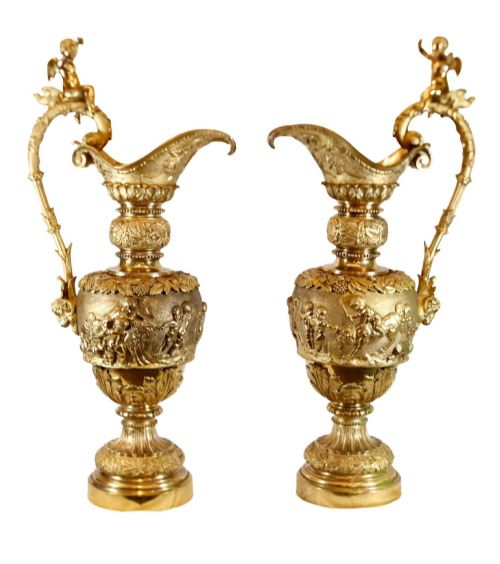
These gold gilt ewer pieces bring classical poured vessel forms into nineteenth and early twentieth century display, offering rich metallic surfaces that command attention in any room.
Gold Gilt Ewer
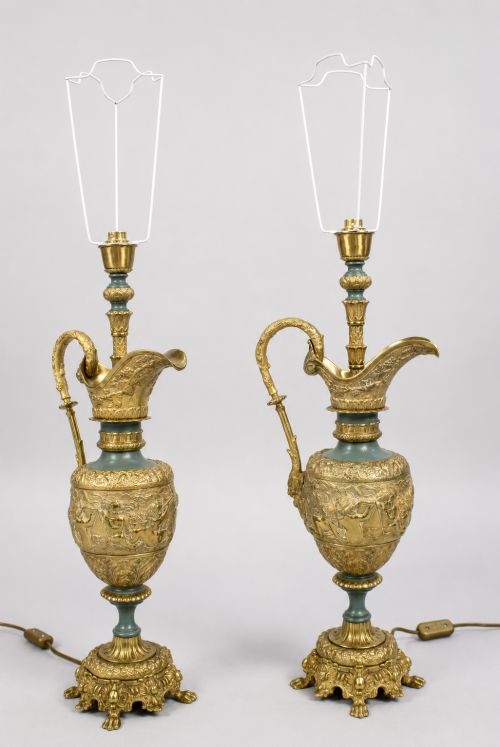
A gold gilt ewer serves primarily as a decorative vessel, drawing on classical pitcher shapes that evolved from functional water and wine carriers into ornamental art objects. Buyers exploring this category encounter pieces designed for visual impact rather than domestic service, often displayed on mantelpieces, sideboards or converted into table lamps.
The selections span the nineteenth century into the Edwardian period, capturing Victorian revivals alongside continental European craftsmanship. French rococo and neoclassical styles predominate, frequently paired with materials like porcelain, bronze, and glass to create ornate silhouettes.
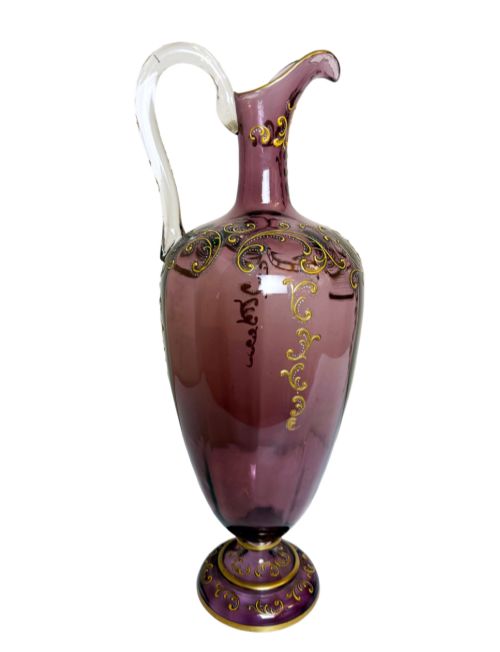
Forms range from monumental sculptural jugs featuring mythological motifs to delicate ceramic and glass pitchers adorned with hand-painted highlights. Whether housed in matched pairs or presented as single statement objects, these items reflect the decorative ambitions of past interiors.
Materials and construction
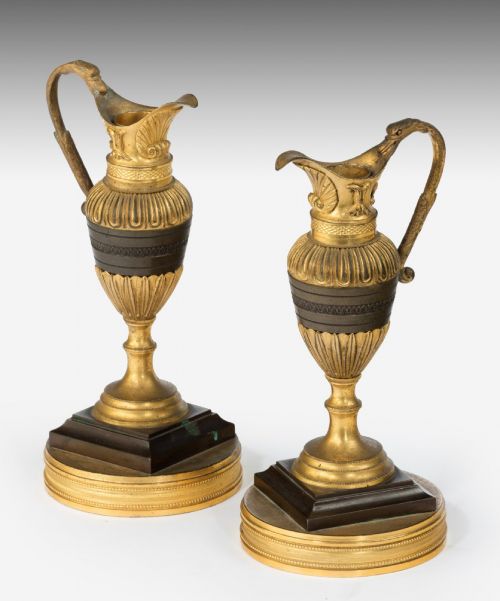
Metalwork pieces rely heavily on cast bronze or brass treated with ormolu and gilding, achieving deep metallic lustre through traditional mercury or gold leaf application techniques. These methods allow intricate relief work depicting figures, foliage, and classical scrollwork to catch the light effectively.
Ceramic and glass examples incorporate specialised manufacturing processes, from reticulated porcelain and earthenware bodies to blown glass enhanced with hand-painted gilt applique. Factories utilised enamel decoration and latticinio glasswork to add texture and contrasting colour beneath the surface gilding.
Gold Gilt Ewer Retail Price Guide 2026
Typical asking prices for gold gilt ewer among the pieces listed under this phrase on Sellingantiques today, from the lower quarter to the upper quarter. They describe what is for sale here now, not the wider market.
Listings feature nineteenth and early twentieth century pieces spanning Victorian, Edwardian, and Neoclassical periods, utilising bronze, porcelain, glass, and earthenware.
Distinctions in quality
The standard of a piece rests in the crispness of its chased or moulded detail and the integrity of its gilded surface. Finer examples display sharp definition in sculptural figures and ornament, whereas lesser items show softened edges from worn moulds.
Material selection and artistic execution further separate the tiers, distinguishing factory-marked porcelain and hand-finished bronze mounts from simpler commercial wares. The weight, balance, and integration of mixed materials dictate the overall presence of the object.
Grainger Worcester·Doulton Burslem·Baccarat·Vienna·Coalport·Royal Worcester
The Gold Gilt Ewer Glossary
- Ormolu
- Finely ground high-carat gold applied to a bronze base using a mercury amalgam technique. This historical process creates a rich, durable golden finish characteristic of decorative French metalwork.
- Ewer
- A large pitcher with a wide spout and elaborate handle, historically used for pouring water. In decorative contexts, it functions as a sculptural display piece rather than tableware.
- Reticulated
- A pierced or openwork ceramic design resembling a net or lattice. This technique demonstrates high technical skill in shaping the clay before firing.
- Latticinio
- White or coloured glass threads embedded within clear blown glass to form delicate linear patterns. It is frequently seen in nineteenth century European glassware.
- Gilding
- The application of gold leaf, powder, or liquid to surfaces such as wood, metal, porcelain, or glass. It enhances ornamental objects by simulating solid gold construction.
Gold Gilt Ewer: Frequently Asked Questions
What was the original purpose of a gold gilt ewer?
These vessels originated as functional containers for water or wine during dining or washing rituals, designed to be held by an ornate handle and poured from a curved spout.
Over the nineteenth century, their purpose shifted entirely toward interior decoration, where they served as ornamental centerpieces reflecting classical tastes.
How should I display a decorative ewer at home?
Display these pieces on sturdy surfaces like mantelpieces, sideboards, or dedicated display tables where their height and sculptural handles can be appreciated from multiple angles.
Keep them away from direct sunlight and high-traffic areas to protect delicate gilding, painted enamel, and glass components from accidental damage.
How can I tell the period of a gilt metal ewer?
Dating relies on stylistic clues such as the heavy ornamentation of Victorian revival pieces, the symmetrical restraint of neoclassical designs, or the softer palettes of Edwardian items.
Maker marks, factory stamps, and the specific casting quality of bronze or brass mounts provide further chronological indicators.
Are ewer form table lamps period conversions?
Many decorative ewers were adapted into table lamps either during their original production era or later in the twentieth century to suit changing domestic lighting needs.
Converters typically routed wiring through the central vertical axis while preserving the exterior handle, spout, and gilded body.