

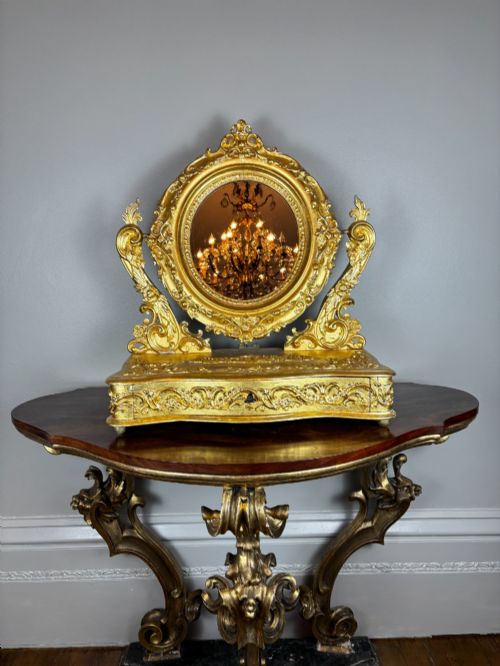


Gold Gilt Cheval Mirror
These gold gilt cheval mirror pieces bring vertical presence and polished reflection to a room, offering the full-length view collectors seek.
Gold Gilt Cheval Mirror
When you search for a gold gilt cheval mirror, you encounter tall, standing dressing glasses designed to tilt within a freestanding frame or secure console. The pieces recorded here span the nineteenth century, including Victorian, Edwardian, and Regency periods alongside French Rococo Revival and Louis Philippe designs.
You meet both full-length floor-standing dressing mirrors and table-top variations, constructed to assist with attire and illuminate period interiors. The forms range from ornate carved frames to simpler architectural proportions originating from English and French workshops.
Materials and construction
The construction of these pieces relies heavily on giltwood and gesso applied over a pine carcass, finished with gold leaf or water gilding techniques. Ormolu and gilt bronze frequently appear on French examples, adding metallic weight and decorative mountings to the overall structure.
Makers shaped the timber frames with carved ornamentation before applying the gold leaf layers, securing glass mirror plates within the rebates. Enamel plaques, such as Limoges panels, occasionally decorate the smaller table mirrors alongside cast metal details.
Gold Gilt Cheval Mirror Retail Price Guide 2026
Typical asking prices for gold gilt cheval mirror among the pieces listed under this phrase on Sellingantiques today, from the lower quarter to the upper quarter. They describe what is for sale here now, not the wider market.
Listings feature items from the nineteenth century, incorporating French Rococo Revival, Louis Philippe, and Regency styles built from giltwood and gesso.
Judging quality
Quality in these mirrors rests upon the crispness of the gesso carving and the integrity of the original gold leaf finish. Pieces featuring water gilding demonstrate superior reflective depth compared to later bronze-paint restorations.
The proportion of the frame relative to the glass plate dictates the visual balance, with high-quality examples showing harmonious joinery and original glass plates retaining authentic foxing.
The Gold Gilt Cheval Mirror Glossary
- Giltwood
- Timber that has been coated with gold leaf or gold paint. This surface treatment defines the bright, metallic appearance of nineteenth-century frames.
- Gesso
- A plaster-like mixture applied to wood frames as a base for gilding. Skilled artisans carved intricate scrollwork and motifs into this layer before applying gold leaf.
- Ormolu
- Cast bronze that has been mercury gilded to produce a rich gold finish. It appears frequently on French nineteenth-century pieces to accent corners and crests.
- Cheval mirror
- A large dressing glass suspended on a freestanding frame with pivots that allow the mirror to swing. The term originates from the French word for horse, referencing the four legs of the original support stands.
- Water gilding
- A traditional technique using liquid size and Armenian bole to adhere gold leaf to a prepared surface. This method allows the gold to be burnished to a high gloss.
Gold Gilt Cheval Mirror: Frequently Asked Questions
What is a cheval mirror?
A cheval mirror is a full-length dressing glass designed to hang on vertical pivots within a freestanding wooden frame. This allows the user to tilt the glass angle easily for checking attire.
Such pieces gained popularity during the nineteenth century in bedrooms and dressing rooms, combining practical utility with decorative presence.
How do I date an antique gilt mirror?
Dating relies on examining the construction materials, the style of the gesso carving, and the composition of the wood frame. Periods like Regency or Victorian feature distinct decorative motifs that correspond to cabinetmaking trends of those decades.
Backboards, screw types, and the method of silvering on the glass plate also provide reliable clues to the age of the piece.
What is water gilding?
Water gilding is a historical technique where thin gold leaf is applied to a prepared gesso and bole surface using water as the adhesive. Artisans then burnish the metal with an agate stone to create a brilliant, reflective sheen.
This method differs from oil gilding by offering a deeper lustre that responds well to traditional cleaning and gentle ageing.
Where should I place a floor mirror?
Floor-standing mirrors suit bedrooms, dressing rooms, and hallways where they can reflect natural light and create an impression of depth. Placing them opposite a window maximises illumination throughout the space.
Ensure the floor surface is level to keep the pivoting frame stable during daily use.
How do I clean a gilt frame?
Cleaning requires a soft, dry brush to gently remove dust from the carved gesso and gold leaf details without disturbing the surface. Moisture and chemical solvents must be avoided to protect the historic finish.
Regular, gentle dusting preserves the integrity of the gold leaf over time.