


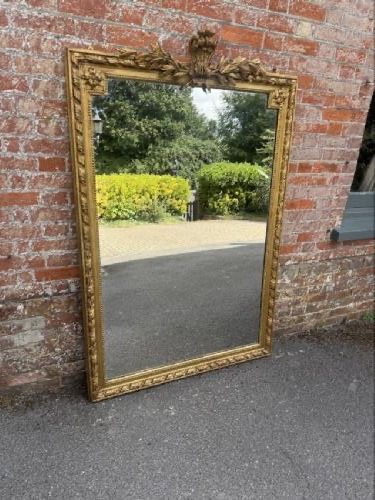
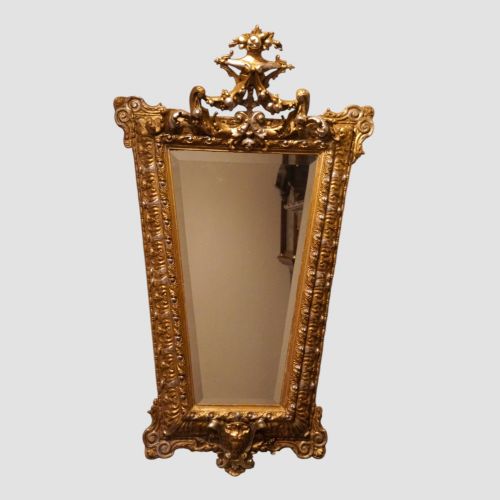
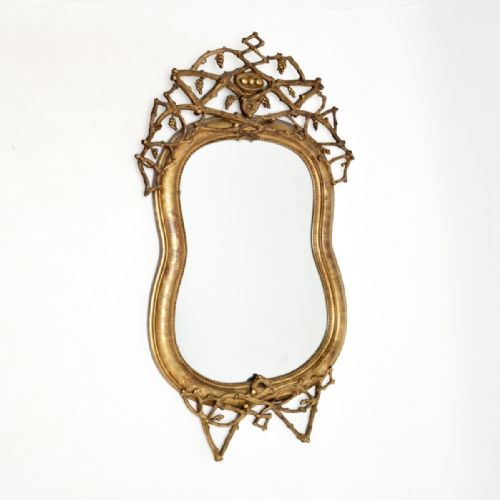
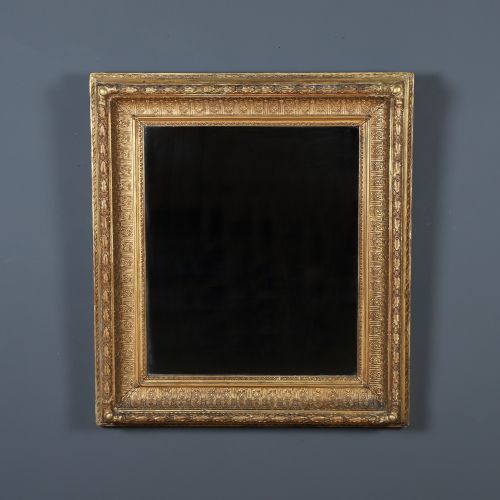

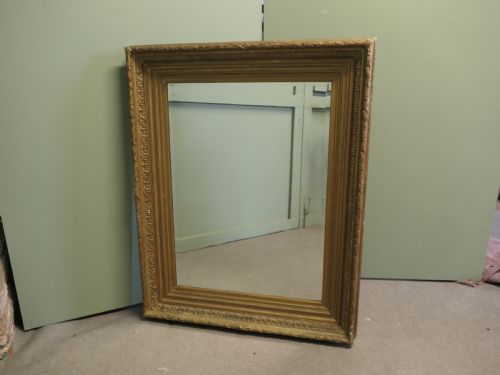

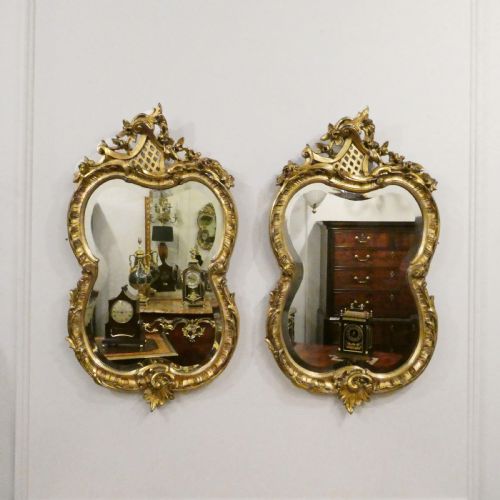


Gold Gilded Accent Mirror
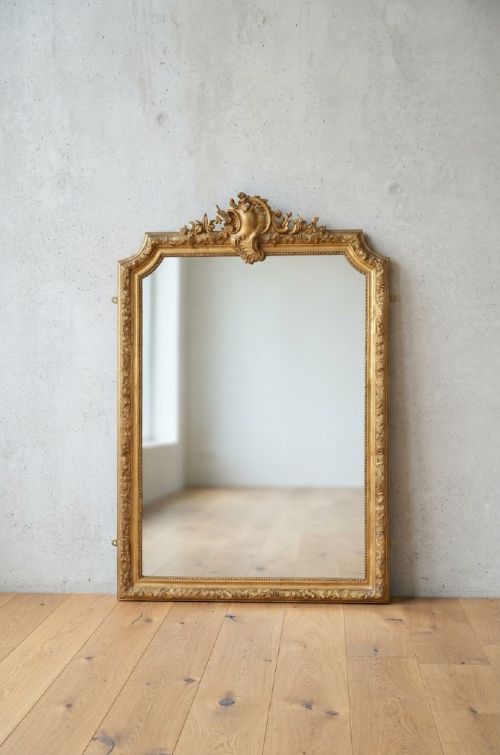
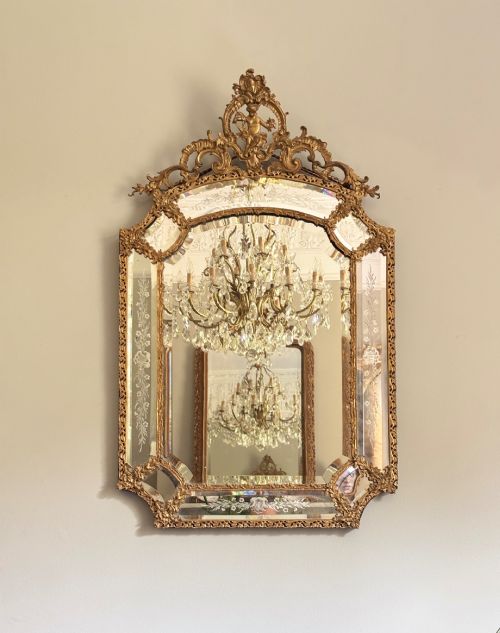
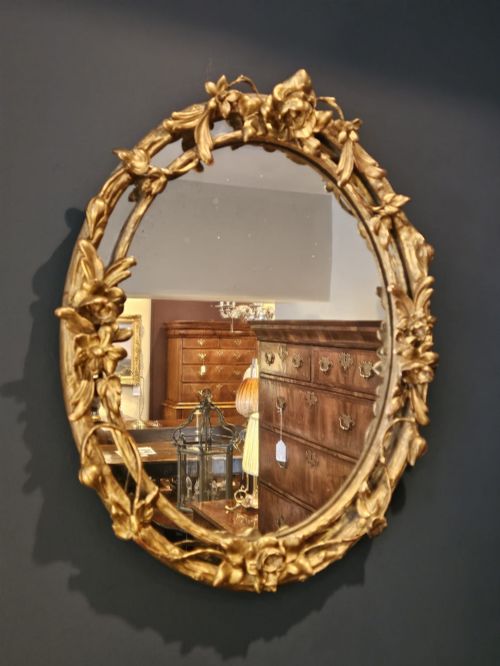
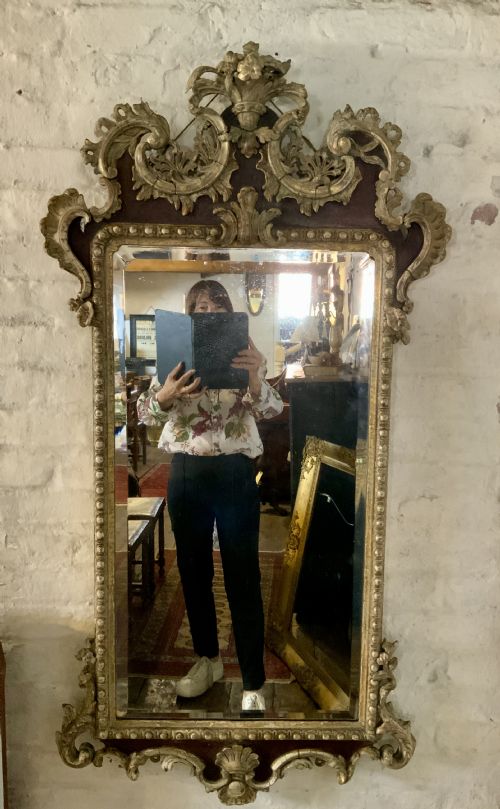
A gold gilded accent mirror brings rich texture and bright reflection to a room, drawing the eye with carved detail and gleaming leaf.
Gold Gilded Accent Mirror
A gold gilded accent mirror takes many forms across this selection, including large overmantel pieces, smaller wall mirrors, and pier glasses designed for specific interior spaces. These items span periods from the 18th century through to the mid-20th century, capturing shifts in design from restrained early Georgian work to exuberant Victorian revivalism.
The most common items encountered here are 19th-century French and Italian wall mirrors shaped in the Rococo style, featuring elaborate scrollwork and carved frames. Alongside these, British Victorian and Regency examples appear regularly, offering convex plates, architectural mouldings, and rectangular or arched timber frames.
Makers and designers drew upon historical patterns, producing pieces in the manner of earlier eras such as the George I period or Louis XV style. Whether Italian Florentine, French château, or English Adam revival, each gold gilded accent mirror reflects the prevailing decorative tastes of its time of production.
Materials and Construction
Makers constructed these frames primarily from wood, utilising carved timber or applying gesso layers over a wooden base to build up intricate relief ornaments. Gilding was then achieved using gold leaf, silver-gilt, or giltwood finishes that created a luminous surface layer over the carved details.
Glass plates within these frames vary from standard mirror glass to specialist engraved plates and convex round mirrors. Timber species such as walnut and general wood framing provide the structural support beneath the gesso and gilt surface coatings.
The inventory spans Victorian, Rococo, Regency, and Baroque revival styles.
Assessing Quality
Quality rests heavily on the depth and crispness of the carving within the wood and gesso, where sharper detail and undercut relief separate superior items from softer, pressed alternatives. The application of gold leaf also dictates the finish, with hand-gilded surfaces showing subtle variations compared to uniform modern coatings.
The preservation of the original mirror plate and the integrity of the gilt surface matter significantly. Frames that retain their original gilding without excessive over-painting or structural timber splitting command greater appreciation among those who study period decorative arts.
John Belchier
The Gold Gilded Accent Mirror Glossary
- Giltwood
- Wood that has been coated with gold leaf or a gold-coloured finish. This technique creates a bright, reflective surface popular in frame manufacture.
- Gesso
- A plaster-like mixture applied to wood frames to provide a smooth base for carving and gilding. It allows makers to fashion intricate relief details.
- Overmantel Mirror
- A large mirror designed to hang specifically above a fireplace mantel. These pieces often feature horizontal proportions and ornate arched or rectangular frames.
- Pier Glass
- A tall, narrow mirror traditionally hung on the pier wall between two windows. They often sat above small console tables in formal reception rooms.
- Convex Mirror
- A round mirror with a curved outward glass plate that provides a wide, distorted panoramic reflection of the room. These frequently appeared in Regency interiors.
Gold Gilded Accent Mirror: Frequently Asked Questions
Where should I hang an overmantel mirror?
These large mirrors traditionally anchor the wall directly above a fireplace, reflecting light and the room's lower furnishings.
Ensure secure wall fixings support the considerable weight of the timber and gesso frame.
How do I identify a Rococo style mirror?
Look for asymmetrical scrolls, C-curves, naturalistic leaf motifs, and shell shapes carved into the giltwood frame.
Originating in 18th-century France, this design vocabulary returned frequently during the 19th century.
What is the difference between giltwood and gesso?
Giltwood refers to the underlying or solid wood covered in gold leaf, whereas gesso is the plaster ground applied to the wood before gilding.
Gesso allows artisans to carve intricate three-dimensional decorative patterns that solid wood alone cannot easily sustain.
Are convex mirrors period pieces?
Convex mirrors gained widespread popularity during the Regency era in the early 19th century.
Their curved glass plates served both a practical lighting function and a decorative purpose in fashionable homes.