

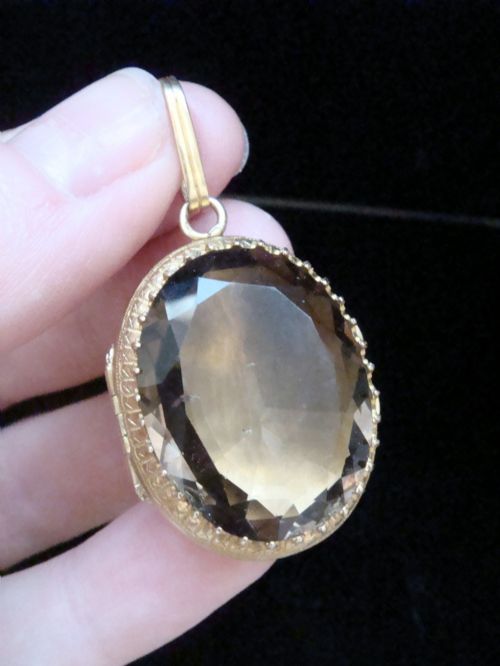


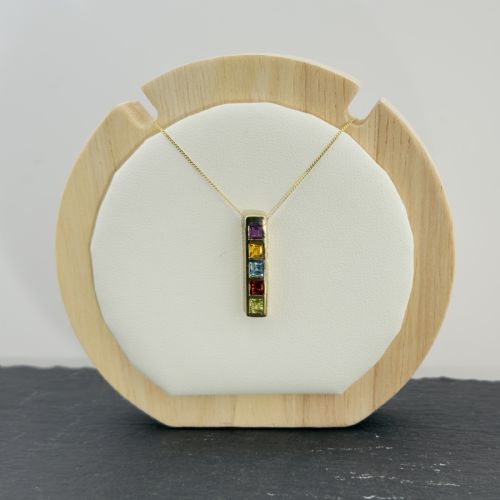


Gold Gem Pendant
A gold gem pendant is a small ornamental jewel suspended from a neck chain, bringing together precious metal and coloured stones across several centuries of design.
Gold Gem Pendant
A gold gem pendant unites precious metals with stones such as diamond, ruby, sapphire, emerald, citrine, garnet, and aquamarine. When searching for a gold gem pendant, a buyer encounters pieces ranging from early Georgian and Victorian examples to Edwardian, Arts and Crafts, mid-century, and contemporary styles.
The forms vary significantly, including locket pendants, intaglio fobs, cluster necklaces, multi-gem crosses, and whimsical conversions like butterfly brooches adapted for chains. Most options utilise yellow gold, white gold, or platinum, frequently paired with seed pearls or diamonds to frame the central coloured stones.
Victorian and Edwardian versions often display rich floral or classical motifs, whilst pieces from the nineteen-fifties and nineteen-sixties favour geometric clusters and brighter colour combinations. Buyers typically find these items presented either alone or attached to matching necklaces.
How they were made
Craftsmen built these jewels using yellow gold, white gold, and platinum, frequently combining distinct carat weights such as nine-carat, fourteen-carat, and eighteen-carat gold. Silver also appears in conjunction with gold, particularly in earlier work where stones were set against a white metal backing.
Stones are secured through various cutting and setting methods, including marquis cuts, oval cuts, trillion cuts, and carved gems like intaglios or flower vases. Seed pearls and diamonds are often integrated as accents alongside larger rubies, sapphires, emeralds, and topazes.
Gold Gem Pendant Retail Price Guide 2026
Typical asking prices for gold gem pendant among the pieces listed under this phrase on Sellingantiques today, from the lower quarter to the upper quarter. They describe what is for sale here now, not the wider market.
Materials paired with gold include diamonds, rubies, sapphires, emeralds, citrines, garnets, aquamarines, topazes, and seed pearls.
What varies in quality
Quality in a gold gem pendant rests upon the depth of the metalwork, the clarity and saturation of the gemstones, and the integrity of the original setting. Superior examples demonstrate precise stone matching, secure claw or collet settings, and well-executed hand-finished details.
Pieces by identified makers or those adhering to specific design movements, such as Arts and Crafts, generally command greater interest due to their distinct artistic vision and skilled fabrication. The overall condition of the stones and the purity of the gold alloy further distinguish the finest items from standard commercial production.
Dorrie Nossiter·C'est Laudier
The Gold Gem Pendant Glossary
- Carat
- A unit of measurement for the fineness of gold alloys, where twenty-four carats represents pure gold. Lower carats indicate a higher proportion of alloy metals added for strength and durability.
- Intaglio
- A gem or stone carved with a depressed design, allowing it to leave a raised impression when pressed into sealing wax. These were commonly utilised in fobs and signet jewellery.
- Seed pearl
- A very small, naturally occurring pearl, often drilled and threaded onto silk or wire. They are frequently used as delicate borders in Victorian and Edwardian cluster designs.
- Collet setting
- A metal collar or band that encircles the girdle of a gemstone to hold it securely in place. This technique was widely practiced before modern prong settings became standard.
Gold Gem Pendant: Frequently Asked Questions
How do I clean a gold gem pendant?
Most gold and gemstone combinations tolerate gentle cleaning with warm soapy water and a soft brush. Care must be taken with organic materials like pearls or softer stones such as opals, which require milder treatment.
Harsh chemical dips and ultrasonic cleaners can damage certain gems and weaken foil backs or delicate settings. Rinsing thoroughly and drying with a soft cloth preserves the polished surface of the gold.
Can I wear a gold gem pendant every day?
Daily wear is suitable for sturdy gold and diamond or sapphire pieces, provided the settings remain secure and robust. Regular inspection by a jeweller helps prevent the loss of smaller accent stones.
Victorian and Edwardian items with seed pearls or softer coloured stones benefit from more careful handling. Removing jewellery during strenuous activities protects fragile prongs and ancient mountings from accidental impact.
How do I identify the period of a pendant?
Dating relies on examining the metal hallmarks, the style of the stone cutting, and the construction techniques used in the reverse of the mount. Georgian and early Victorian pieces often feature closed-back settings and hand-cut stones.
Later Victorian and Edwardian items introduce open-backed claw settings and refined platinum work. Mid-century pieces typically display bolder geometric clusters and distinct standard alloy marks.