



Gold Framed Silhouette
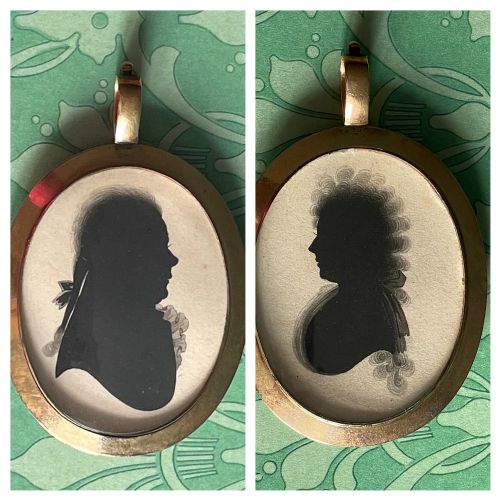
A gold framed silhouette distils personal likeness down to sharp shadow and profile, offering a direct window into Georgian and Victorian parlours.
Gold Framed Silhouette
These pieces are small portrait profiles rendered in ink, pigment, or hand-cut paper, mounted within metallic or gilded wooden borders. When buyers search for a gold framed silhouette, they encounter works spanning the Georgian and Victorian eras, alongside mid-century and reverse glass variants.
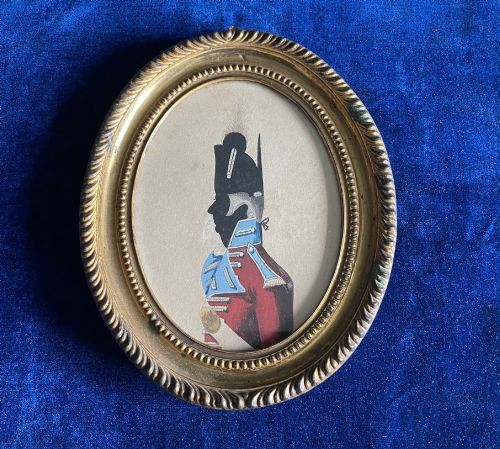
The subjects range from named military figures and ladies to anonymous gentlemen and equestrian scenes. Most examples on this page date from the eighteenth and nineteenth centuries, capturing individual likenesses through hollow-cut paper, painted plaster, or delicate glass painting.
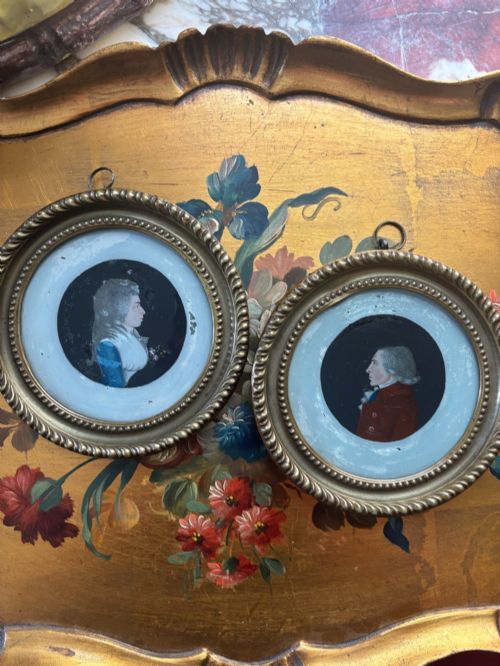
Forms vary from single framed profiles to paired marriage portraits and panoramic marine oils sharing similar framing contexts. The unifying thread across these objects is the interplay between the dark, distinct silhouette and its surrounding gilt enclosure.
How they were made
Makers utilised paper, card, and plaster as a base for the dark profiles, often applying ink or pigment by hand. Artists like John Miers worked with specialised plaster surfaces to achieve fine detail within the shadow.
Reverse painting on glass required the artist to render the image directly onto the glass panel in reverse, creating depth when viewed from the front. Frames were fashioned from gilt wood, gilded metal, and polished timber to complement the miniature scale of the portraits.
Gold Framed Silhouette Retail Price Guide 2026
Typical asking prices for gold framed silhouette among the pieces listed under this phrase on Sellingantiques today, from the lower quarter to the upper quarter. They describe what is for sale here now, not the wider market.
Several profiles immortalize stiff-collared gentlemen who apparently possessed extremely pointy noses.
What varies in quality
Quality rests in the precision of the cutting or brushwork, separating swift mechanical output from the nuanced hand of a skilled practitioner. Signed works by established profilists command greater interest than anonymous studio pieces.
The preservation of the original gilt frame and protective glass contributes significantly to the integrity of the piece. Subtle details, such as delicate pencilled highlights on the clothing or hair, elevate the sophistication of the profile.
John Miers·John Smith of Edinburgh
The Gold Framed Silhouette Glossary
- Silhouette
- A portrait profile filled in with a solid dark colour, typically black, against a pale background. The style originated from shadow tracing before developing into a distinct portrait miniature medium.
- Reverse glass painting
- An artwork technique where the image is painted on the reverse side of a glass sheet and viewed through the front. This method protects the pigment from dust and fading.
- Hollow-cut
- A paper silhouette technique where the profile is cut out from a sheet of paper, which is then laid over a dark background to reveal the likeness. This method allowed for crisp edges and delicate detail.
- Giltwood
- Wood that has been coated with gold leaf or a gold-coloured finish. It provides the bright, reflective border characteristic of these frames.
Gold Framed Silhouette: Frequently Asked Questions
How do I date a silhouette?
Dating relies on the style of dress, hair, and framing materials, as many earlier pieces include inscribed dates or maker trade labels on the reverse. Georgian examples often feature slender convex frames and hollow-cut paper, while Victorian pieces tend towards heavier wooden or gilt metal surrounds.
Examining the backing paper, glass type, and fastening pins can also provide clues to the decade of manufacture.
Where should I hang these?
Because of their small scale, these pieces suit intimate spaces, narrow wall panels, or grouped arrangements alongside other miniature artworks. Avoid placing them in direct sunlight to protect the fragile pigments and paper from fading over time.
Displaying them at eye level allows the fine details of the profile and the texture of the gilt frame to be appreciated properly.
What is reverse glass painting?
Reverse glass painting involves applying pigment to the back of a glass panel so the finished image is viewed through the front. This technique protects the paint surface from atmospheric damage and gives the artwork a glossy finish.
In portraiture, it creates a subtle sense of depth that distinguishes it from standard paper or canvas works.