




Gold Fob Chain Necklace
A gold fob chain necklace brings together traditional pocket watch chains and versatile modern lengths, offering a distinctive historical look.
Gold Fob Chain Necklace
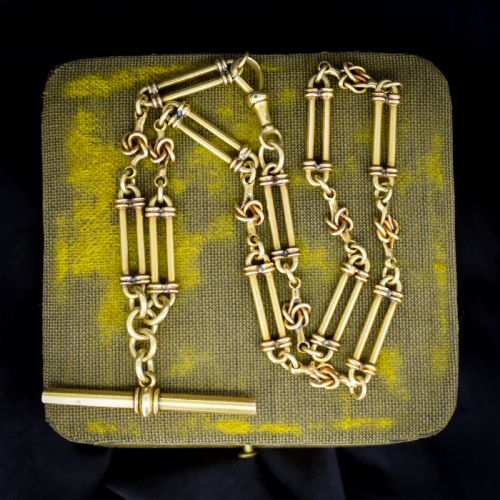
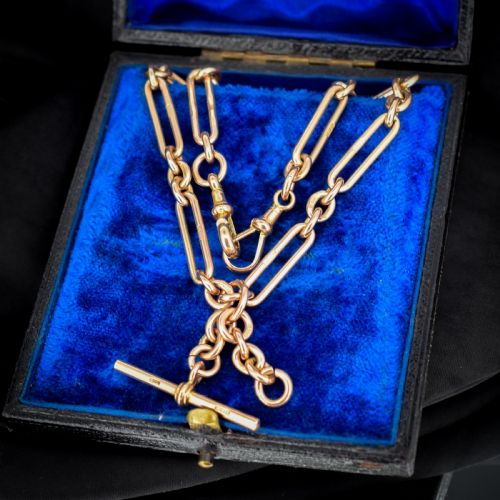
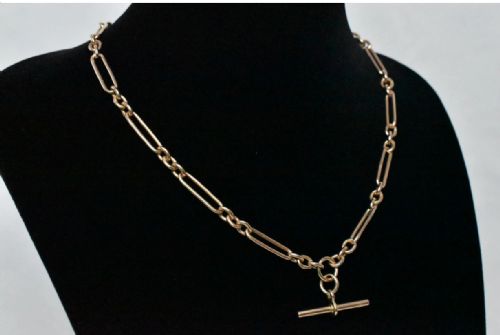
A gold fob chain necklace transforms historical watch chains, such as Albert and Albertina designs, into wearable neckpieces. These items originate predominantly from the Victorian, Edwardian, and 1920s periods, adapting functional timekeeper accessories into distinct jewellery.
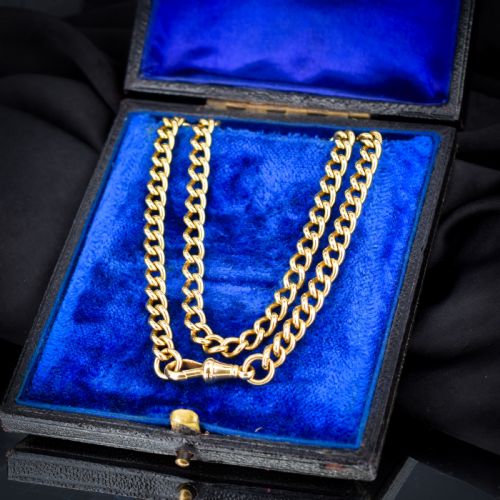
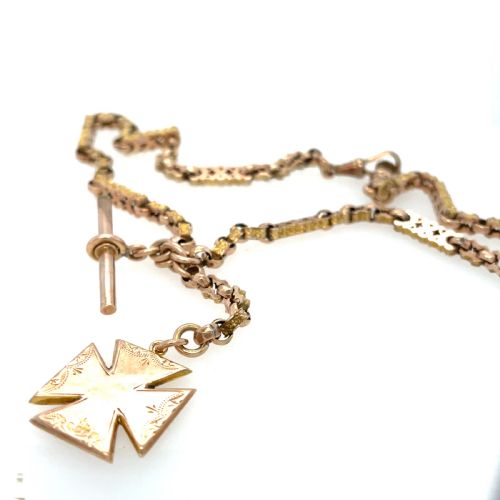
The inventory on this page centres on pieces that incorporate traditional elements like T-bars, dog clips, and hanging fobs. Buyers typically encounter links such as trombone, curb, and belcher styles, often measuring between thirteen and twenty-two inches.
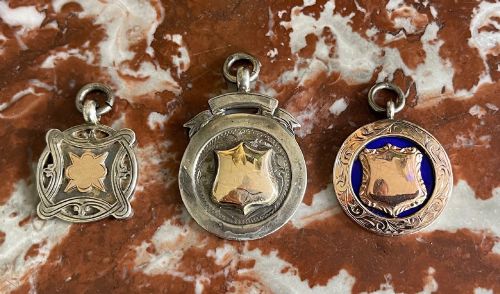
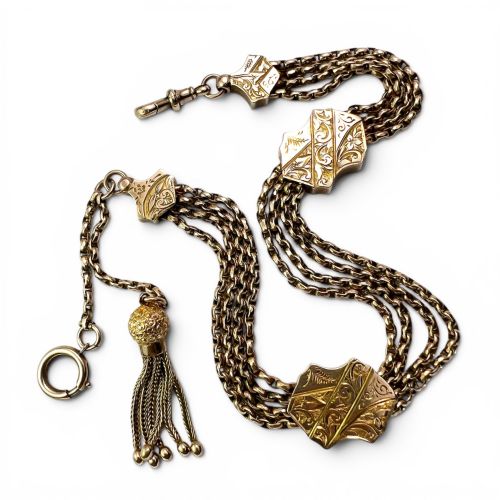
Originating as practical fastenings for pocket watches, these chains now serve primarily as necklaces and chokers. The survival of tassels, spinning fobs, and love knots adds decorative complexity to the foundational gold links.
Materials and construction
Metals span various grades of yellow and rose gold, notably nine-carat and eighteen-carat, alongside rolled gold variants and occasional sterling silver components. Smiths and jewellers shaped these precious metals into sturdy links designed to bear the weight of attached fobs and pendants.
Assembly relies on specialised mechanisms including swivel dog clips, bolt rings, and T-bars that originally secured pocket watches to waistcoats. Surface decoration occasionally incorporates enamel to add contrast and colour to the metalwork.
Materials documented across the inventory include nine-carat rose and yellow gold, eighteen-carat gold, rolled gold, and sterling silver.
What separates the finest pieces
Quality rests upon the weight and density of the gold, alongside the structural integrity of individual links and fastenings. Substantial gram weights and solid gold composition elevate a piece above rolled gold alternatives.
The presence of original, matching components such as T-bars, tassels, and functioning dog clips influences the overall standard. Graduated links that taper evenly from centre to ends demonstrate superior craftsmanship compared to uniform designs.
The Gold Fob Chain Necklace Glossary
- Albert chain
- A heavy watch chain designed to secure a pocket watch to a waistcoat, named after Prince Albert. These chains frequently feature a T-bar at one end and a swivel clip at the other.
- Albertina
- A lighter, more delicate version of the Albert chain, often multi-stranded and worn primarily by women. It frequently incorporates tassels and slide beads.
- T-bar
- A short transverse bar attached to the centre of a watch chain, used to anchor the chain through a buttonhole. It remains a decorative focal point when worn as a necklace.
- Dog clip
- A spring-loaded swivel fastening used to attach a pocket watch or fob pendant securely to the chain. Its mechanical reliability is a key feature of authentic pieces.
- Trombone link
- A specific watch chain link style composed of alternating long rectangular bars and small circular rings. This geometric pattern provides distinct visual rhythm to the necklace.
Gold Fob Chain Necklace: Frequently Asked Questions
How do I wear a pocket watch chain as a necklace?
These chains adapt easily to neckwear by fastening the dog clips directly to loop ends or connecting rings. The T-bar often hangs as a decorative pendant at the front.
Adjusting the length depends on whether the piece is a single or double chain format. Shorter lengths sit as chokers, while longer versions drape further down the chest.
Are these chains made of solid gold?
The materials vary between solid nine-carat and eighteen-carat gold, alongside rolled gold alternatives. Hallmarks and metal stamps help determine the exact composition of each piece.
Rolled gold items feature a substantial layer of gold bonded to a base metal core. Solid gold options consist entirely of precious metal throughout the links and components.
How can I date a antique gold chain?
Dating relies on stylistic markers, manufacturing techniques, and official metal hallmarks where present. Victorian pieces often display heavier rose gold tones and ornate detailing.
Later Edwardian and 1920s examples introduce different link geometries and lighter constructions. The presence of specific clasps and fob styles further narrows the era of origin.