




Gold Floral Cluster Pendant
These gold floral cluster pendant pieces offer botanical symmetry and rich coloured stones, combining period metalwork with intricate flower motifs.
Gold Floral Cluster Pendant
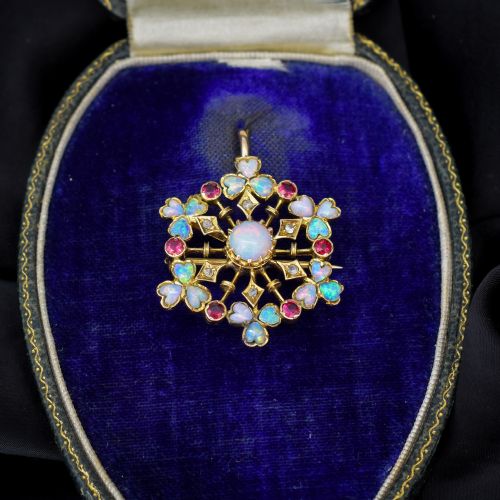
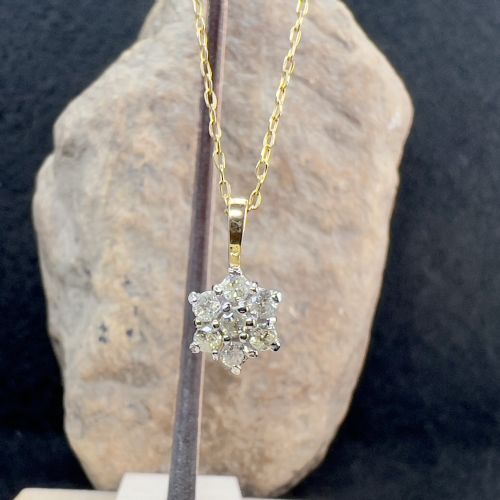
A gold floral cluster pendant brings together central gemstone settings and surrounding petals, forming a distinct botanical arrangement designed to be worn at the neck. These ornaments emerge from periods including the Victorian era, the Edwardian years, and the mid-twentieth century.
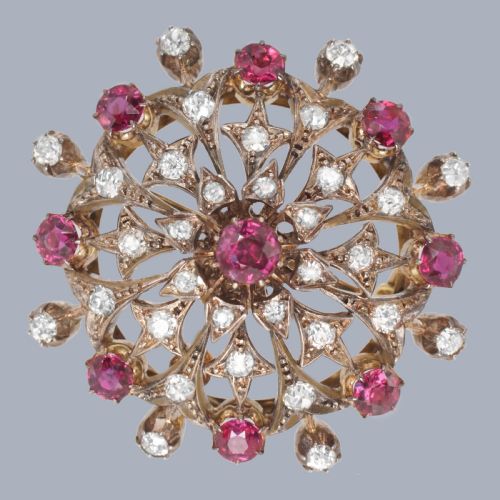
The versions most commonly met on this page combine 9ct gold or 15ct gold with precious stones such as rubies, garnets, diamonds, and opals. Many of these pieces function as dual-purpose items, featuring conversions or dual fittings that allow them to be worn as both brooches and pendants.
Designs range from starburst diamond arrangements to multi-gem flower heads utilising seed pearls, turquoise, and white sapphire. They reflect traditional craftsmanship from the nineteenth century through to nineteen sixty.
Materials and construction
The foundational metalwork relies on yellow gold, rose gold, and occasionally silver settings layered over gold to brighten diamond clusters. Jewellers utilised varying purities, incorporating 9ct, 15ct, and 18kt gold alongside silver claw and collet mounts.
Stones are secured using claw settings, bezel mounts, and closed-back foils in earlier Victorian examples. Seed pearls are threaded or pegged onto delicate gold stems, while rubies, garnets, and diamonds are shaped in old cut, rose cut, and oval cuts to catch the light within the floral cluster.
Some Victorian floral pendants double as secret hiding places, engineered with tiny hinged compartments behind the petals to hold a lock of hair.
Judging the range
The upper tier of these pendants displays superior gemstone matching, where rubies, garnets, or opals share consistent saturation and depth across the entire floral cluster. Lower tiers utilise simpler stone grading or mixed material pairings with minor surface wear.
Execution of the metalwork separates fine examples from standard pieces, visible in the precision of the petal symmetry and the delicacy of the surrounding gold wirework. The presence of original convertible fittings or certified untreated gems elevates the historical integrity of the piece.
The Gold Floral Cluster Pendant Glossary
- Cluster pendant
- A necklace ornament featuring a central stone encircled by a ring of smaller secondary gems. This layout mimics the natural geometry of a flower head.
- Rose cut
- A vintage diamond cut featuring a flat base and a domed crown faceted with triangular planes. It yields a soft, subtle shimmer rather than modern brilliance.
- Seed pearl
- A very small, naturally occurring or early cultured pearl, often un-drilled or half-drilled and secured to gold pins. They add a delicate luminosity to floral and starburst designs.
- Collet
- A metal collar or band that holds a gemstone in place by its girdle. This technique provides a secure, flush boundary around the stone.
- Old cut
- A hand-faceted diamond cut predating modern brilliant standards, characterised by a smaller table, higher crown, and open culet. These stones were shaped individually by hand.
Gold Floral Cluster Pendant: Frequently Asked Questions
How do I wear a convertible brooch pendant?
Many Victorian and Edwardian floral pieces feature a removable pin mechanism alongside a hidden bail for a chain. This allows the ornament to function interchangeably as a chest brooch or a neck pendant.
When wearing the piece on a chain, ensure the brooch pin is securely locked into its safety clasp so it does not catch on clothing.
What is the difference between Victorian and 1960s clusters?
Victorian and Edwardian floral pendants typically employ higher gold carats like 15ct and 18kt, often paired with silver-topped gold settings for diamonds. Hand-cut stones such as rose cuts and old cuts are standard in these earlier items.
Pieces from nineteen sixty frequently utilise 9ct gold and machine-assisted manufacturing techniques. They often feature bright rubies, garnets, and standard round brilliant or oval cut diamonds in structured starburst clusters.
Are seed pearls fragile to wear?
Seed pearls used in antique floral jewellery are held by tiny gold pegs or delicate setting work. Because natural pearls are organic materials, they require gentle care away from harsh chemicals, perfumes, and ultrasonic jewellery cleaners.
Store the pendant flat in a lined box to prevent pressure on the pearl settings and avoid submerging the piece in water.
How are garnets used in floral pendants?
Garnets serve as rich red petals or central stamens within nineteenth-century and mid-century cluster designs. Deep red almandine or imperial garnets provide a strong contrast against yellow gold mounts.
Jewellers cut these stones into oval, pear, or round shapes to fit the organic contours of the floral motif.