



Gold Etruscan Pendant
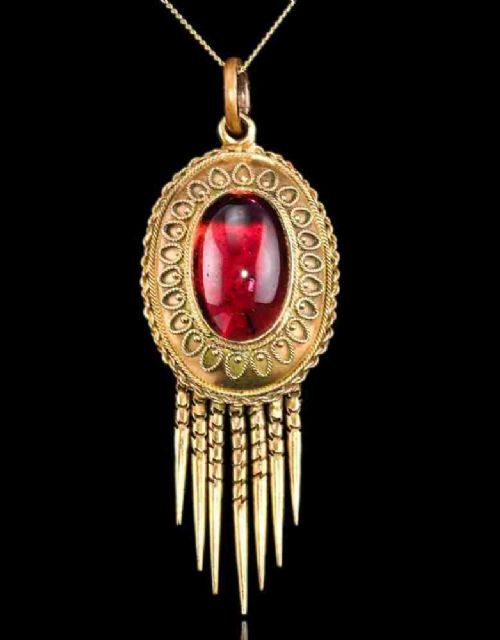
A gold etruscan pendant brings classical archaeological motifs to nineteenth-century jewellery, offering ornate granulation and filigree work on warm yellow gold.
Gold Etruscan Pendant
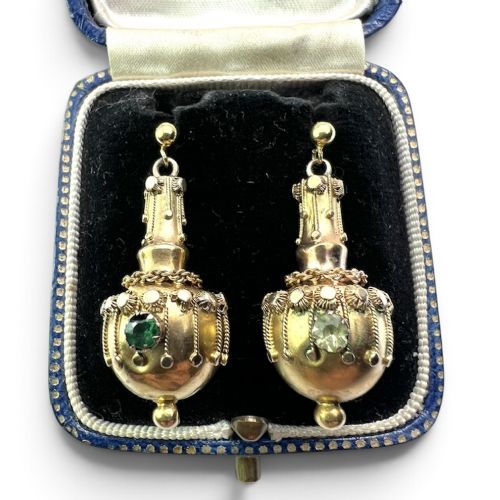
A gold etruscan pendant draws upon ancient Italian metalwork traditions, revived during the nineteenth century to satisfy Victorian tastes for classical antiquity. These pieces frequently appear in revival styles alongside matching earrings, lockets, and brooches.
Materials and Construction
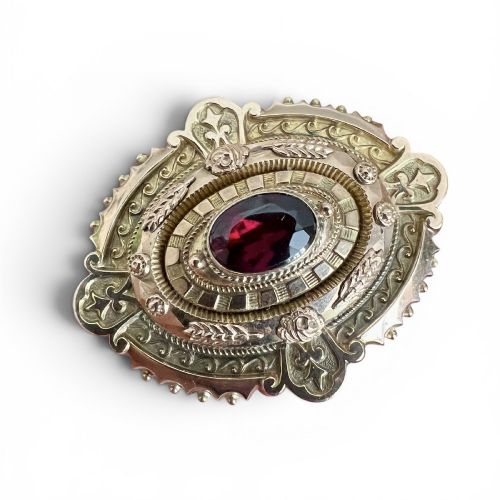
Goldsmiths utilised fifteen-carat and nine-carat yellow gold, occasionally incorporating rose gold variations to create distinct tonal contrasts within the intricate designs. Gemstones such as garnets, pearls, turquoise, and rock crystal cabochons frequently accent the metalwork.
Techniques relied upon delicate surface ornamentation, including filigree wirework and granulation, mimicking ancient Mediterranean artefacts. Metal components were shaped into amphora, locket, and circular geometries typical of classical revival aesthetics.
Gold Etruscan Pendant Retail Price Guide 2026
Typical asking prices for gold etruscan pendant among the pieces listed under this phrase on Sellingantiques today, from the lower quarter to the upper quarter. They describe what is for sale here now, not the wider market.
Listings demonstrate that gold etruscan pendants and related revival jewellery pair frequently with garnets, pearls, and turquoise set in fifteen-carat yellow gold.
Distinguishing Quality
Quality rests upon the precision and complexity of the applied wirework and granular details across the gold surface. Superior examples maintain crisp definition in their classical motifs without obscuring the underlying metal structure.
The selection of set stones also dictates the tier of the piece, with well-matched garnets, turquoise, or rock crystal cabochons elevating the overall refinement of the jewellery.
The Gold Etruscan Pendant Glossary
- Granulation
- A decorative technique involving the application of tiny spheres of gold soldered to a metal surface in geometric or floral patterns. This method defines much of the nineteenth-century archaeological revival style.
- Filigree
- Fine twisted threads of gold soldered together to create openwork designs resembling lace. Makers utilised this wirework to frame central gemstones or define the borders of pendants.
- Cabochon
- A gemstone shaped and polished with a smooth, convex surface rather than faceted edges. These rounded stones sit prominently within gold bezel settings on classical revival pieces.
- Etruscan Revival
- A nineteenth-century design movement inspired by ancient excavations in Italy. Jewellers reinterpreted ancient techniques and motifs into contemporary wearable forms like lockets and pendants.
Gold Etruscan Pendant: Frequently Asked Questions
How do I date a gold etruscan pendant?
Dating relies upon stylistic markers, gold karat standards, and accompanying materials recorded in the piece. Victorian examples often incorporate specific gemstone combinations like garnets or turquoise alongside distinct revival motifs.
Examining the construction methods and any remaining hallmarks helps place the item within the nineteenth-century classical revival period.
What materials are used in these pendants?
Pendants from this era are constructed primarily from yellow gold, frequently found in fifteen-carat or nine-carat purity. Designers added visual depth by setting garnets, pearls, turquoise, rock crystal, and glass paste into the metal.
Surface decoration depends entirely on the manipulation of gold wire and small metal spheres rather than heavy gemstone faceting.
How should I care for an antique pendant?
Antique gold jewellery requires gentle handling due to the delicate nature of applied wirework and granulation. Cleaning should involve soft cloths without harsh chemical dips that might damage softer set stones like turquoise or pearls.
Storing the pendant separately prevents the intricate gold elements from catching on other pieces in a collection.