

Gold Diamond Flower Ring
When choosing a gold diamond flower ring, a buyer selects a timeless botanical cluster formation set in precious metal.
Gold Diamond Flower Ring
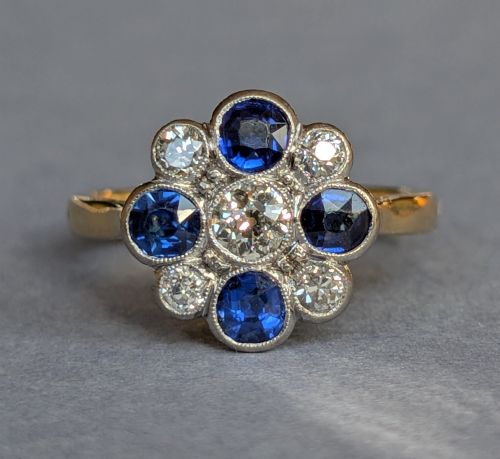
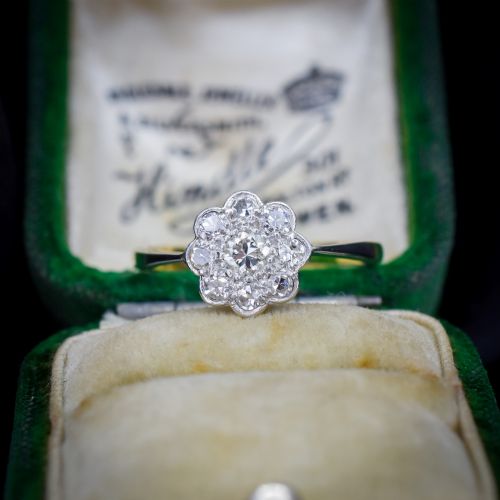
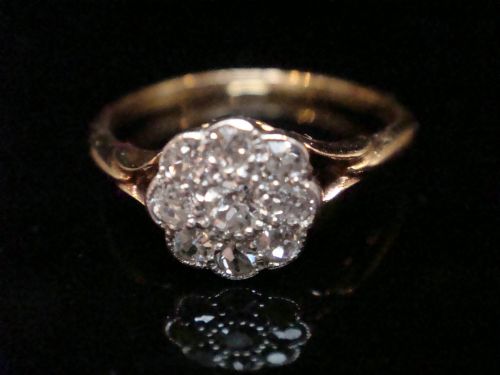
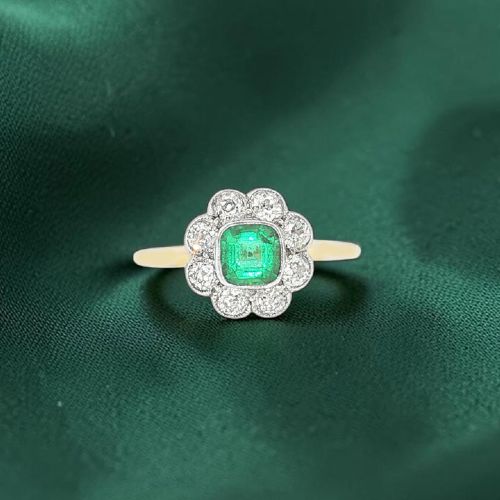
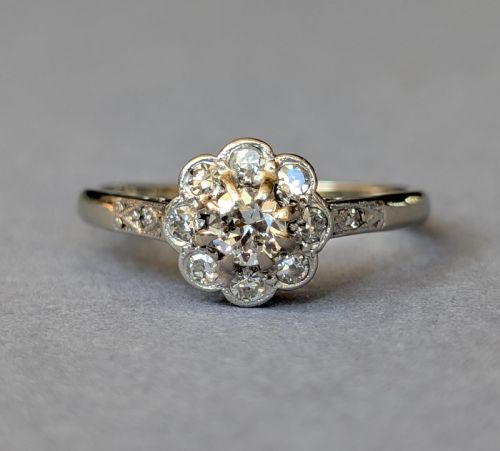
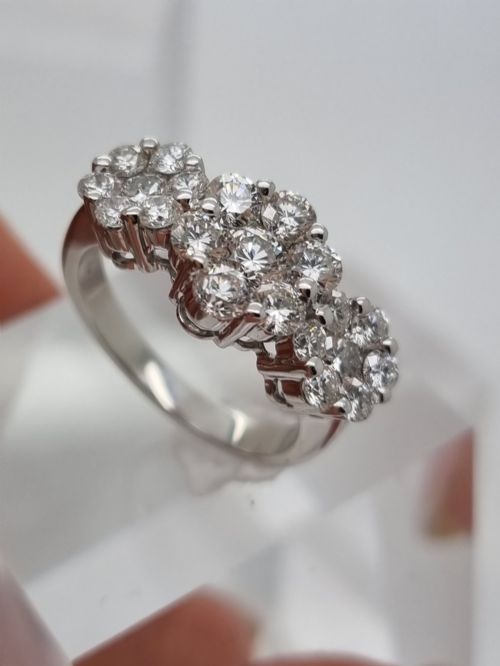
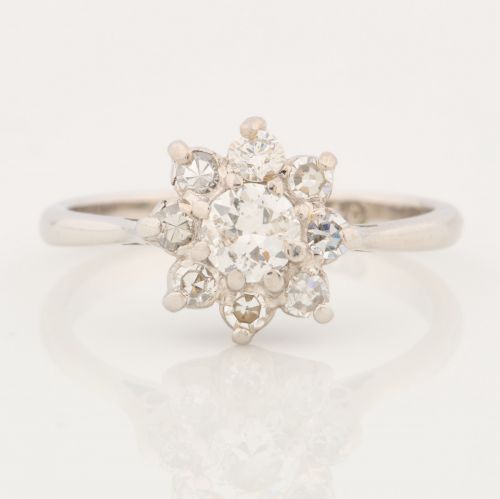
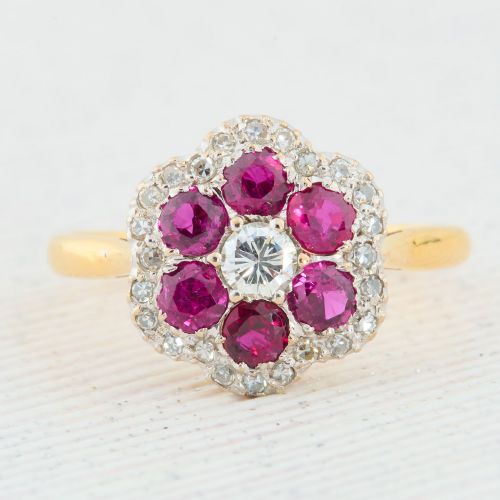
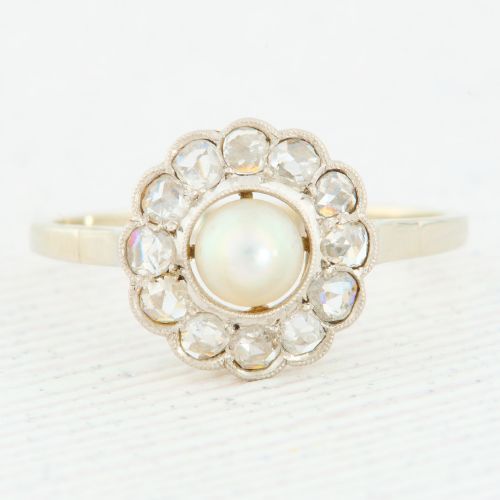
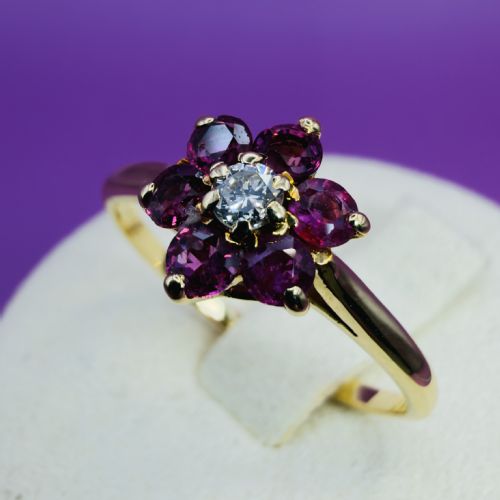
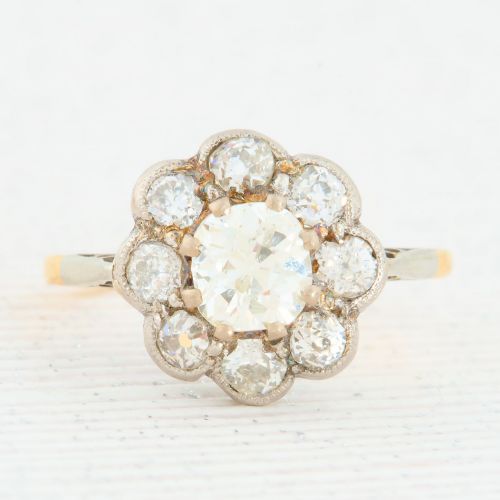
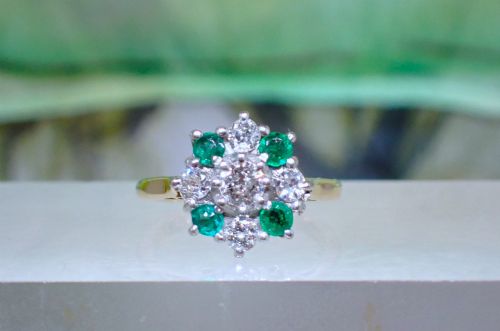
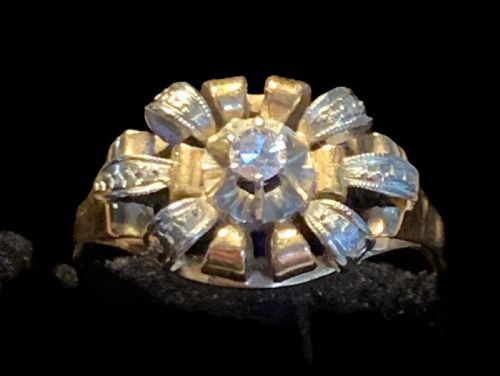
A gold diamond flower ring groups central diamonds or coloured stones within a circular cluster resembling petals, reflecting natural botanical motifs across various historical eras.
Most examples found in this selection originate from the Edwardian period through to the mid-century, utilising yellow gold, white gold, and platinum.
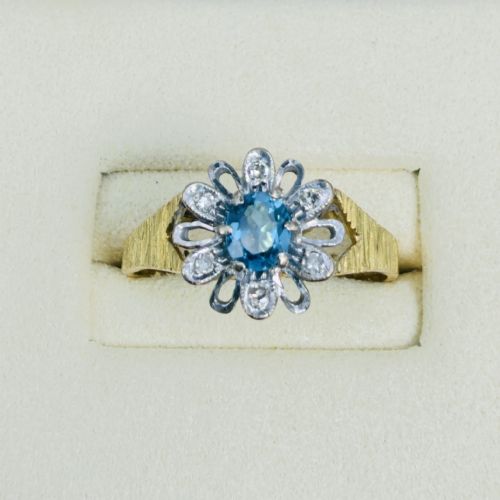
The layout typically arranges smaller diamond surrounds around a central diamond, sapphire, ruby, or emerald to create a distinct daisy or floral silhouette.
How they were made
Goldsmiths combined 18ct yellow or white gold with platinum settings to secure old cut and brilliant cut diamonds alongside coloured gemstones.
Cluster arrangements relied on meticulous claw or bezel settings to hold individual stones tightly together, forming symmetrical petal outlines.
Several vintage floral rings double as screw-back earrings in the archive, proving historic makers loved botanical symmetry everywhere.
What varies in quality
Quality rests on the precision of stone matching and the symmetry of the petal cluster, where uniform stone sizes create a balanced visual harmony.
The weight, cut grade, and clarity of the central diamond versus the surrounding stones dictate the overall brilliance and depth of the piece.
The Gold Diamond Flower Ring Glossary
- Cluster ring
- A ring design featuring a central stone encircled by a group of smaller gemstones, often shaped like a flower or daisy. This layout maximises surface sparkle by grouping multiple stones closely together.
- Old cut diamond
- A diamond cut by hand before modern machinery, characterised by a smaller table, higher crown, and large culet facet. These stones display a soft, candlelit glow rather than intense modern brilliance.
- Platinum
- A dense, durable white metal utilised in jewellery manufacturing to securely hold stones with minimal metal visibility. Its strength allows for delicate settings that withstand daily wear.
- Daisy cluster
- A specific floral ring configuration where a round centre stone is surrounded by circular petal stones. This style gained immense popularity during the Edwardian and Art Deco periods.
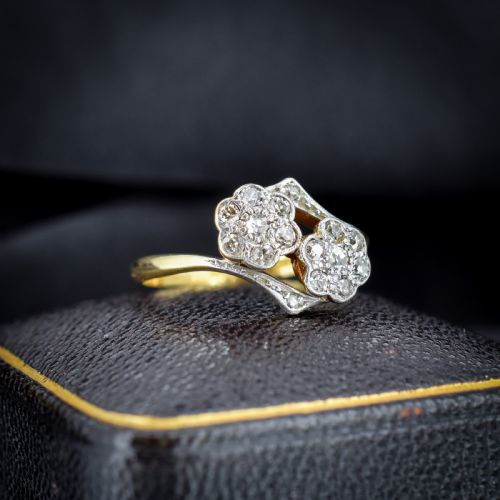
- Toi et Moi
- French for you and me, denoting a ring style featuring two main stones resting side by side. It represents intertwined union and romance.
Gold Diamond Flower Ring: Frequently Asked Questions
How do I identify an Edwardian flower ring?
Edwardian examples frequently combine 18ct yellow gold shanks with platinum top settings to accentuate the diamonds. They rely on delicate handiwork and intricate floral motifs.
Look for old cut diamonds arranged in naturalistic daisy formations, often accompanied by milgrain edge detailing around the bezels.
What is the difference between Art Deco and Edwardian clusters?
Art Deco clusters lean towards geometric precision, sharp angles, and strong symmetry using calibrated rubies, sapphires, or emeralds. Edwardian pieces favour softer, organic curves and lighter openwork metal.
Both styles utilise 18ct gold and platinum, but their overall visual rhythm distinguishes the decades.
Can I wear a vintage diamond flower ring daily?
These rings were built for regular wear, particularly those utilising durable 18ct gold and platinum settings. However, care should be taken with antique settings and softer coloured gemstones.
Removing the ring during heavy manual tasks preserves the integrity of the claws holding the petal stones.
What coloured stones appear with diamonds in these rings?
Sapphires, rubies, and emeralds frequently accompany diamonds in these floral configurations. Cornflower blue sapphires and rich red rubies serve as popular central or accent stones.
These coloured gems contrast sharply against the surrounding white diamonds and yellow or white gold metal.