



Gold Diamond Charm Necklace
A gold diamond charm necklace brings together precious metals and brilliant stones in wearable forms dating from the Victorian era through the mid-twentieth century.
Gold Diamond Charm Necklace
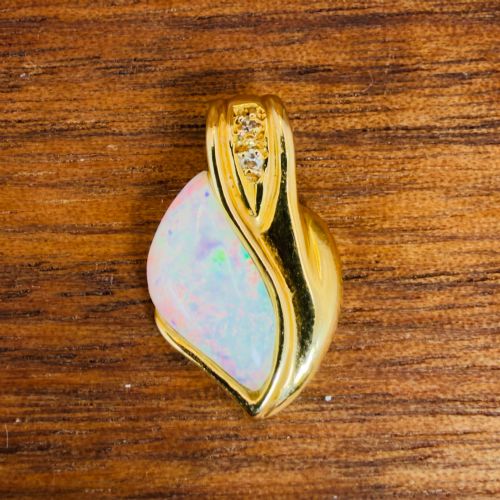
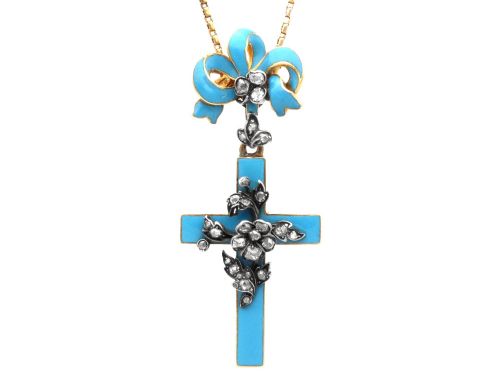
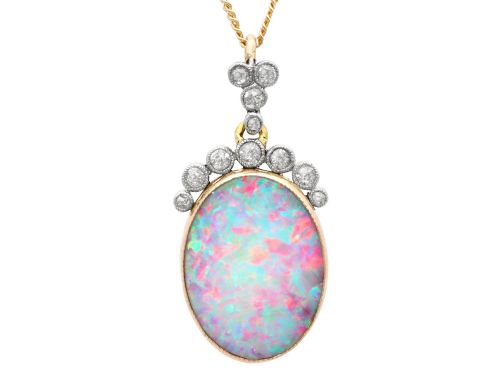
The selections on this page feature heart motifs, crosses, starbursts, animals, and floral designs mounted on chains or offered as standalone pendants. Pieces frequently incorporate supplementary gems such as rubies, opals, sapphires, pearls, and emeralds.
Victorian and Edwardian examples sit alongside 1950s and 1960s modernist and retro interpretations. Buyers encounter diverse physical forms, ranging from delicate cluster pendants to heavy gold crosses encrusted with diamonds.
Materials and construction methods
Goldsmiths utilised 9ct, 14ct, 15ct, 18ct, and occasional high-carat yellow, white, and rose gold to form the structural mounts and chains. Gemstones including brilliant-cut, old-cut, and rose-cut diamonds are secured alongside rubies, sapphires, opals, and pearls using traditional bezel, collet, or prong settings.
Many antique and vintage items incorporate secondary decorative techniques such as blue enamel work, shagreen, or mixed metals like silver-topped gold. Construction methods combine hand-worked fabrication with early machine stamping, evidenced by hallmarked elements and detailed millegrain or bezel framing.
Gold Diamond Charm Necklace Retail Price Guide 2026
Typical asking prices for gold diamond charm necklace among the pieces listed under this phrase on Sellingantiques today, from the lower quarter to the upper quarter. They describe what is for sale here now, not the wider market.
Listings feature yellow gold, white gold, and rose gold alongside platinum mounts, spanning periods from 1800 to the 1960s.
Factors determining quality
Quality separates through the weight and purity of the gold mount, the integration of heavier gram weights, and the stability of the settings holding each diamond and coloured gem. Superior examples exhibit crisp casting or hand-engraving, intact enamel, and well-matched natural stones without visible structural compromise.
The distinction between standard commercial production and finer workshops lies in the clarity and cut of the diamonds, the saturation of stones like black opal and Ceylon sapphire, and the overall integrity of the original findings and clasps.
C'est Laudier·Merrin·Hirsch & Oppenheimer
The Gold Diamond Charm Necklace Glossary
- Rose-cut diamond
- A vintage stone cut with a flat base and a faceted dome comprising triangular facets. This historic cutting style emits a subtle, soft gleam rather than the intense brilliance of modern cuts.
- Puffy heart
- A hollow or semi-hollow pendant form shaped like a rounded heart, often prevalent in Victorian and mid-century love tokens. These pieces frequently feature engraved details or star-set diamond accents.
- Cluster pendant
- An arrangement where a central gemstone is surrounded by a ring of smaller diamonds or contrasting coloured stones. This traditional configuration maximises visual impact and colour contrast.
- Bezel setting
- A metal collar that wraps around the outer perimeter of a gemstone to hold it securely in place. This technique provides a clean, modern outline while protecting the girdle of the stone.
Gold Diamond Charm Necklace: Frequently Asked Questions
What periods do these necklaces span?
The pieces span from the early nineteenth century through the Victorian and Edwardian eras into the 1950s and 1960s mid-century period.
Each era contributes distinct design characteristics, from hand- engraved floral motifs to retro geometric crosses and starburst charms.
What gemstones accompany the diamonds?
Makers frequently paired diamonds with rubies, sapphires, emeralds, pearls, opals, turquoise, and citrines.
Black opals, Ceylon sapphires, and blue enamel also appear alongside the central diamond configurations.
How are the pendants worn?
These items function primarily as pendants suspended from compatible chains, or as standalone charms added to existing neckwear.
Their varied scale allows for daily wear or incorporation into layered jewellery collections.
How can I identify a Victorian piece?
Victorian examples often utilise 15ct gold, rose-cut diamonds, natural pearls, and intricate enamel work or puffy heart configurations.
Hallmarks and specific construction techniques, such as closed-back settings or silver-topped gold mounts, further indicate nineteenth-century origin.