

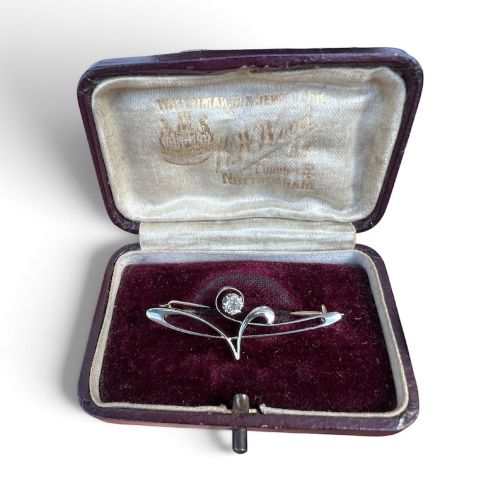
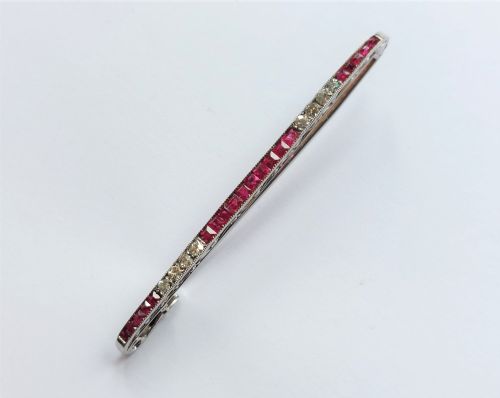
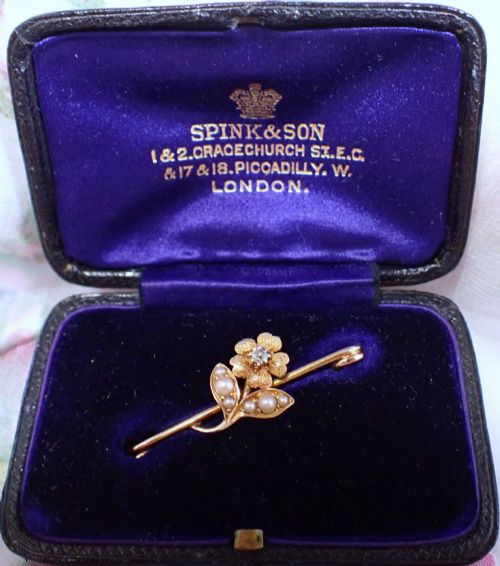

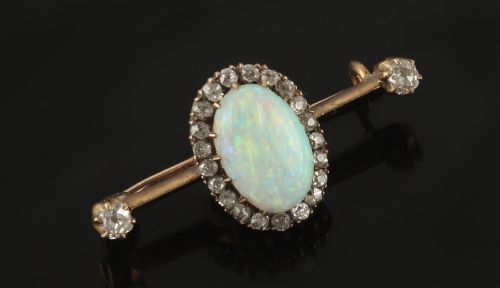


Gold Diamond Bar Brooch
A gold diamond bar brooch brings together the linear discipline of the late nineteenth and early twentieth centuries with the quiet brilliance of antique stones.
Gold Diamond Bar Brooch
A gold diamond bar brooch is a slender, elongated piece of antique jewellery designed to fasten fabric with a central horizontal element. These pieces emerge primarily from Victorian, Edwardian, and Art Deco periods, spanning the late nineteenth century through the mid-twentieth century.
Buyers meet variations ranging from simple geometric mountings in yellow gold to intricate platinum-topped Edwardian designs and stylized Art Deco creations. Alongside conventional linear mounts, the form often incorporates floral motifs, birds, and animal subjects set with pearls and rubies.
Originating across British and continental workshops, these items reflect the stylistic shifts from ornate Victorian sentimentality to the crisp geometry of the 1920s. The common thread remains the narrow profile designed to sit flat against a lapel or collar.
Materials and construction methods
Craftsmen utilised various purities of gold, notably 9ct, 14ct, 15ct, and 18ct yellow and rose gold, frequently pairing them with platinum for the mounting of stones. Platinum-topped gold became standard during the Edwardian era to provide a bright, durable white surface for diamonds without the weight of solid platinum.
Diamonds were predominantly hand-cut, utilising old European cuts and rose cuts that display softer facet patterns under candlelight or natural light. These stones are secured in millegrain settings, where tiny raised beads of metal edge the mount for a refined finish.
Animal subjects among these brooches include running hares, perched cockerels, and even a tiny monkey.
Factors that distinguish the range
The distinction between standard examples and the finest pieces lies in the subtlety of the metalwork and the integration of secondary gems like natural pearls, rubies, or sapphires. Hand-carved animal subjects or articulated components require exceptional bench skill that elevates a standard bar into a miniature sculpture.
Proportion and stone matching also define the upper tier, where the gradation of old-cut diamonds follows the precise curve or line of the gold backing without awkward gaps. Original boxes and documented provenance further separate ordinary survival pieces from collectors' examples.
The Gold Diamond Bar Brooch Glossary
- Millegrain
- A decorative technique involving a row of small rounded beads along the edge of a platinum or gold setting. This method softens the metallic boundary and frames the diamonds.
- Old-cut diamond
- A hand-faceted diamond cut before modern machine precision, typically characterised by a smaller table, higher crown, and open culet. These stones possess a distinctive, warmer facet sparkle.
- Rose-cut diamond
- A vintage gemstone cut featuring a flat base and a domed crown with triangular facets meeting at a point. It offers a translucent, shimmering effect rather than deep brilliant fire.
- Bar brooch
- A piece of jewellery featuring a narrow horizontal metal pin designed to distribute weight evenly across fabric. The form often supports a central cluster, motif, or graduating stones.
- Platinum-topped
- A construction method where a thin layer of platinum is fused to a gold base to provide a secure, bright white setting for diamonds. This technique preserves yellow gold warmth on the reverse while offering a silver-hued front.
Gold Diamond Bar Brooch: Frequently Asked Questions
How do I wear an antique bar brooch safely?
Secure the pin through a sturdy layer of fabric such as a wool lapel or heavy coat rather than delicate silk. Utilising an additional safety chain attached to the pin mechanism prevents accidental loss during wear.
Store the piece flat in a lined jewellery box when not in use to protect the projecting pin from bending. Avoid exposing antique pearl or opal elements to harsh solvents or ultrasonic cleaning.
What is the difference between Edwardian and Art Deco bar brooches?
Edwardian designs focus on delicate garland motifs, platinum-topped gold, and lace-like openwork set with rose-cut diamonds and natural pearls. These pieces lean towards romantic, organic symmetry inspired by nature.
Art Deco versions shift towards sharp geometry, stylised motifs, and structured white gold or platinum mountings set with brilliant old-cut diamonds. The lines are cleaner and the overall aesthetic reflects industrial modernity.
Are these brooches suitable for daily use?
These pieces were built for regular social wear in their original eras, but their antique status requires moderate care. Daily use is entirely possible provided the pin mechanism remains firm and stones are checked periodically for security.
Remove the brooch before rigorous physical activity, bathing, or sleeping to protect the delicate gold claws and gemstone settings from impact.
How can I tell the gold purity of my brooch?
Look closely at the reverse of the bar or pin stem for traditional hallmarks or stamped numbers indicating gold content. Common antique standards include 9ct, 15ct for British pieces, and 14ct or 18ct for continental items.
Absence of a stamp does not preclude authenticity, as many smaller items or converted pieces lost their marks through resizing or wear over the decades.