

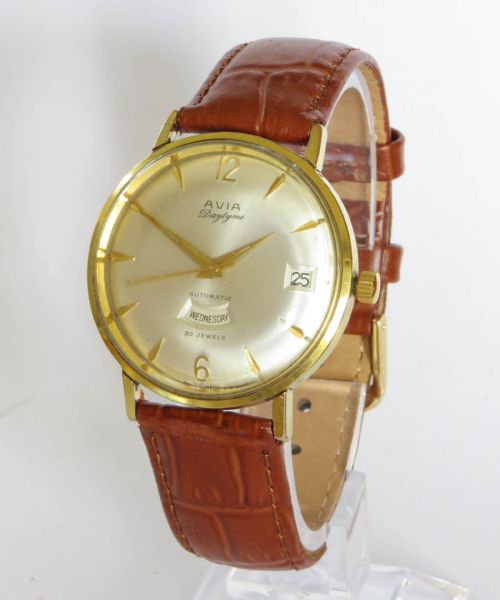
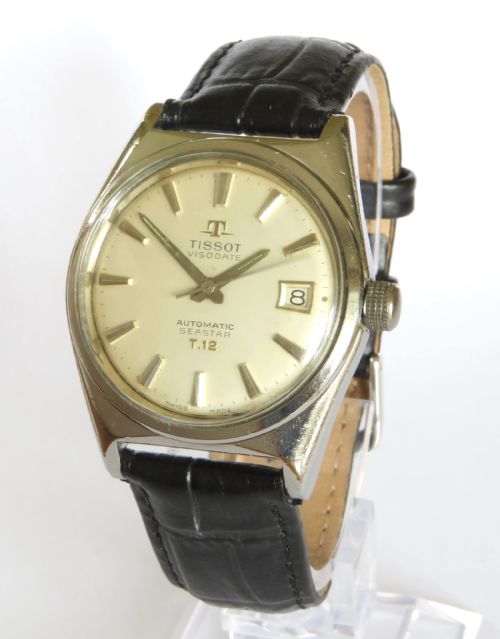
Gold Dial Automatic Watch
A gold dial automatic watch combines self-winding mechanical movements with a distinct golden face, offering reliable mid-century horology.
Gold Dial Automatic Watch
A gold dial automatic watch represents a category of gents wristwatches driven by self-winding mechanical movements. These pieces originate primarily from the 1950s and 1960s, reflecting mid-century design principles and enduring horological craftsmanship.
The versions most commonly met on this page span the 1950 and 1960 periods, often configured as gents wrist watches. They range from simple dress models to robust water-resistant chronometers.
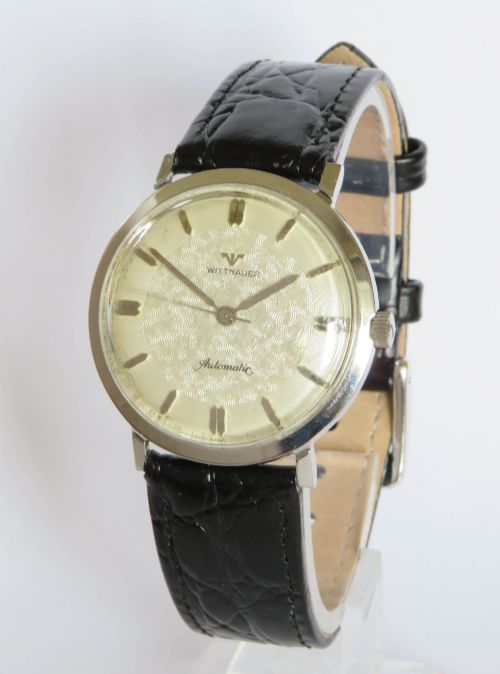
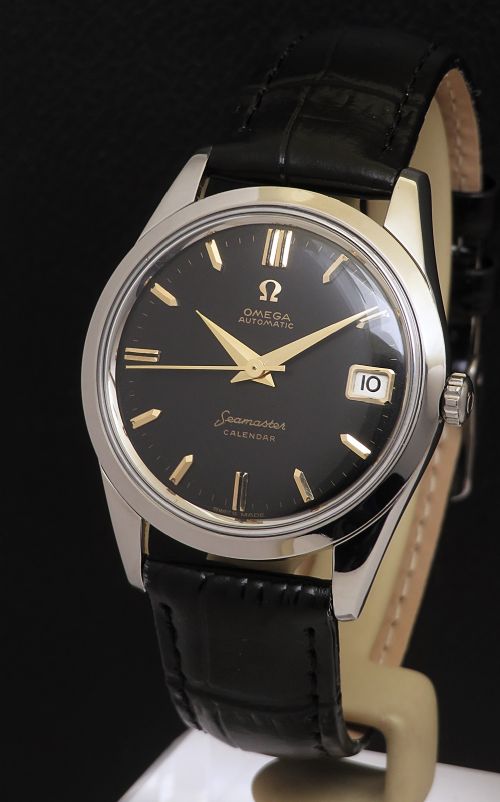
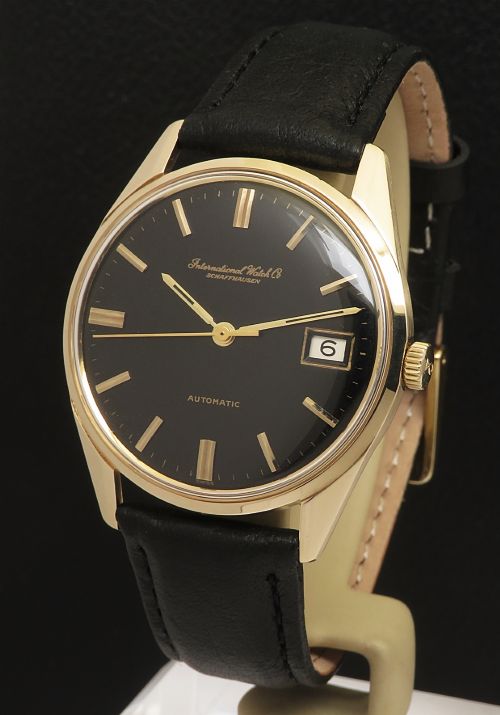
Makers recorded in the evidence include Omega, Eterna, IWC, Avia, Tissot, Consul, and Longines. These pieces frequently pair their gold-toned or solid precious metal faces with matching cases and leather straps.
Materials and construction
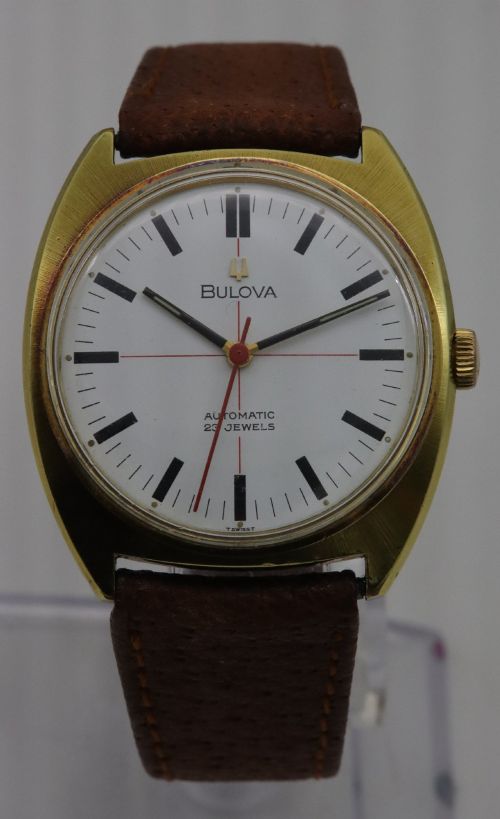
Cases utilise a variety of metals, including stainless steel, gold plate, gold-filled metal, solid 9ct gold, and solid 18ct gold. These materials house internal mechanical movements powered by the wearer's wrist motion.
Dials and internal components sit behind protective layers of glass or acrylic crystals. Straps are predominantly constructed from leather to secure the wristwatch to the wrist.
Gold Dial Automatic Watch Retail Price Guide 2026
Typical asking prices for gold dial automatic watch among the pieces listed under this phrase on Sellingantiques today, from the lower quarter to the upper quarter. They describe what is for sale here now, not the wider market.
Some mid-century movements gently tap your wrist like a tiny metal heartbeat.
Factors of quality
The distinction between tiers rests upon the composition of the case and the sophistication of the movement. Solid 9ct and 18ct gold cases sit above gold-plated and gold-filled alternatives.
Internal engineering varies from standard automatic calibres to chronometer-grade movements and bumper automatic systems. Dial variations, such as harlequin or diamond patterns, also differentiate the examples.
Omega·Eterna Matic·IWC·Avia·Tissot·Consul·Longines
The Gold Dial Automatic Watch Glossary
- Automatic
- A self-winding mechanical movement that uses a weighted rotor to wind the mainspring through natural wrist motion.
- Chronometer
- A high-precision watch movement that has passed rigorous accuracy tests, often officially certified.
- Bumper automatic
- An early form of automatic movement where the rotor swings back and forth against springs rather than rotating fully 360 degrees.
- Gold-filled
- A material comprising a solid layer of gold mechanically bonded to a base metal core for increased durability.
- Calibre
- The specific manufacturer's designation for a particular watch movement design.
Gold Dial Automatic Watch: Frequently Asked Questions
How do automatic watches wind themselves?
Automatic watches feature an internal weighted rotor that pivots as the wearer moves their arm. This motion tightens the mainspring, keeping the watch powered without manual winding.
Most pieces from the 1950s and 1960s utilise this mechanical system, though they may still be hand-wound if left stationary for extended periods.
What is a bumper automatic movement?
A bumper automatic is an early self-winding mechanism where the rotor swings through an arc of about 270 degrees, striking springs or bumpers at either end.
This distinct movement style is characteristic of mid-century calibres, allowing wearers to feel a gentle tap on their wrist as the rotor moves.
How can I identify solid gold cases?
Solid gold cases bear specific hallmark stamps indicating the purity of the metal, such as 9ct or 18ct gold. These hallmarks are typically stamped inside the case back.
In contrast, gold-filled or gold-plated models display base metals underneath where wear occurs over decades.
Are these watches waterproof?
Historical wristwatches from the 1950s and 1960s generally lack modern waterproof seals, even when designated as waterproof or water-resistant in period literature.
Exposure to moisture can damage vintage dials and movements, so keeping these pieces away from water is standard practice.