





Gold Decorative Clock
A gold decorative clock brings warmth and architectural presence to a room, drawing the eye with gilt surfaces and intricate metalwork.
Gold Decorative Clock
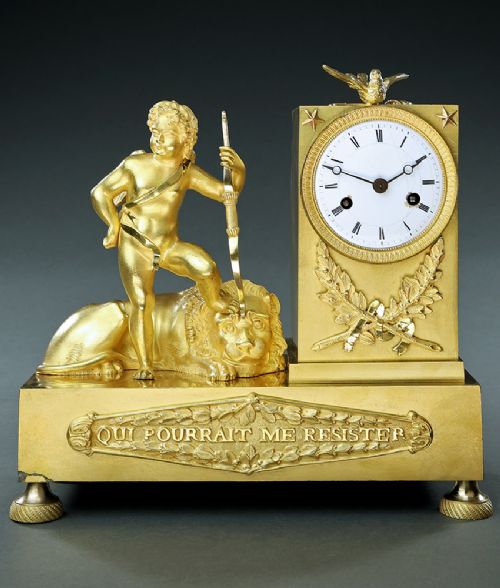
A gold decorative clock encompasses timepieces finished in gilt bronze, ormolu, brass, and giltwood, originating predominantly from nineteenth-century France and Victorian England. Buyers seek these pieces for their ornamental impact on mantelpieces, desks, and walls.
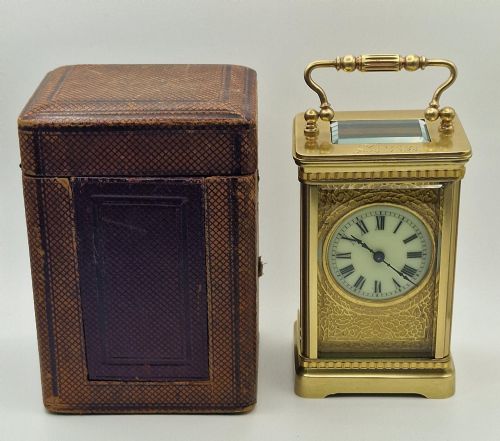
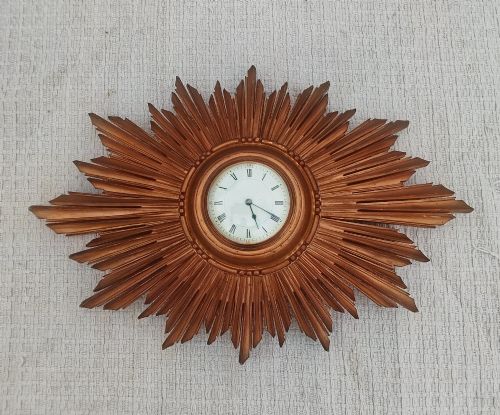
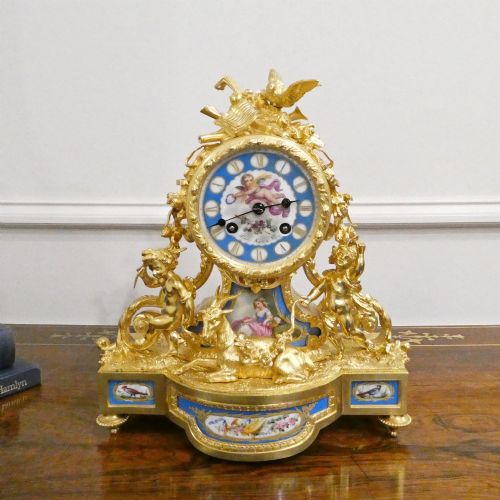
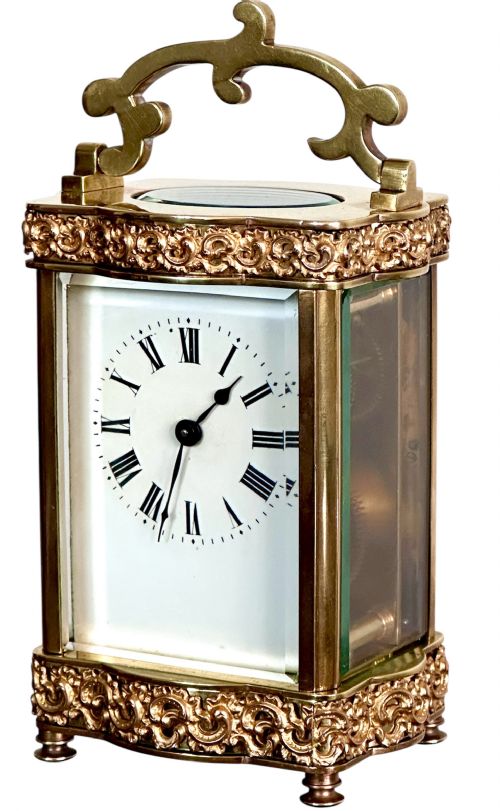
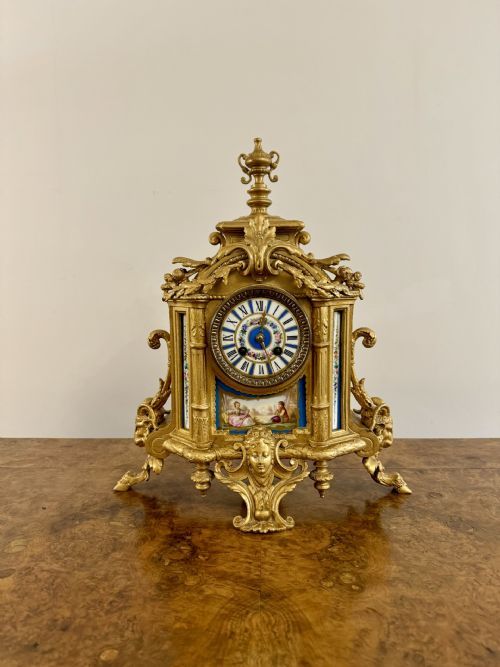
The selection ranges from substantial architectural mantel clocks adorned with porcelain panels and figurative mounts to portable carriage clocks and starburst wall timepieces. French workshops produced many of the most ornate examples seen here.
Most items date from the Victorian era and the latter half of the nineteenth century, reflecting revival styles such as Rococo, Empire, and Neoclassical design.
How they were made
Casting in bronze or brass formed the structural foundation for many cases, followed by mercury gilding or electroplating to create the characteristic golden finish known as ormolu. Artisans then chased the metal surfaces by hand to sharpen details and create contrasting matte and polished textures.
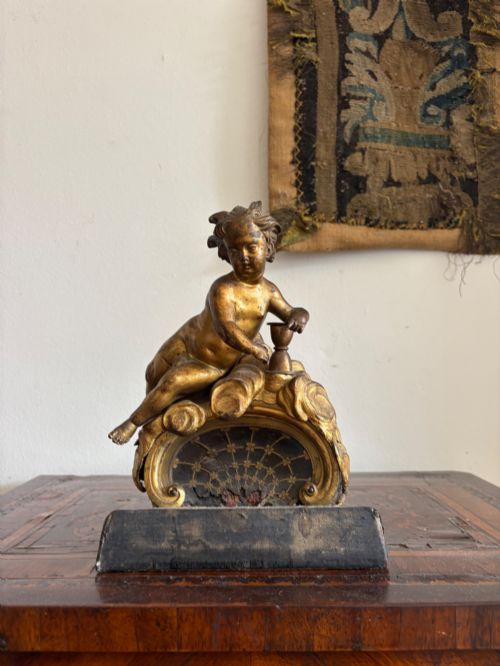
Enamel, porcelain plaques - frequently from Sevres - and glass panels were integrated into the metal frameworks to add colour and narrative scenes. Giltwood alternatives relied on carved timber substrates coated in gold leaf to achieve their radiant appearance.
Gold Decorative Clock Retail Price Guide 2026
Typical asking prices for gold decorative clock among the pieces listed under this phrase on Sellingantiques today, from the lower quarter to the upper quarter. They describe what is for sale here now, not the wider market.
Materials documented across the inventory include gilt bronze, champlevé enamel, Sevres porcelain, giltwood, and brass.
What varies in quality
The depth and crispness of the hand-chasing on the ormolu or bronze mark the distinction between standard production and exceptional work. Superior pieces exhibit finely articulated foliage, figures, and architectural motifs that retain sharp edges rather than soft contours.
The integration of materials dictates distinction, where hand-painted porcelain panels, champlevé enamel work, and signed movements by notable makers elevate a clock beyond a mass-produced item of the period.
Henry Marc·Etienne Lenoir·Wetterstrands·Duverdrey & Bloquel·Henri Jacot·Paul Garnier
The Gold Decorative Clock Glossary
- Ormolu
- Gilt bronze produced by applying a mercury and gold amalgam to a bronze base and heating it until the mercury vaporised. This technique creates a durable, rich golden surface characteristic of fine nineteenth-century French clocks.
- Champlevé
- An enamelling technique where troughs or cells are hollowed out of a metal surface and filled with vitreous enamel powder before firing. The resulting design sits flush with the surrounding metal borders.
- Cartel clock
- A wall-mounted clock housed in an ornate frame made of giltwood, bronze, or brass. These pieces rely on wall brackets rather than resting on mantelpieces.
- Crystal regulator
- A mantel clock enclosed entirely in bevelled glass panels held within a brass or gilt frame. This design allows the pendulum and movement to be viewed from multiple angles.
- Carriage clock
- A small, portable spring-driven timekeeper originally designed for travel. They frequently feature glass panels and a swing handle on top.
Gold Decorative Clock: Frequently Asked Questions
How do I wind a vintage mechanical clock?
Most mechanical clocks require a specialised key inserted into the winding arbors on the dial face. Turn the key gently until you feel resistance, taking care not to overwind the mainspring.
Pendulum clocks also need to be set in beat after moving, ensuring the tick-tock rhythm sounds even and steady.
Where should I place a heavy ormolu mantel clock?
These dense metal and porcelain pieces require a sturdy, level surface such as a wooden mantelpiece or a heavy sideboard. Avoid placing them near direct heat sources or in areas subject to strong vibrations.
Because many examples weigh significantly due to their bronze construction, ensure the shelf depth fully supports the base.
How do I identify a French nineteenth-century clock?
Look for cast bronze or brass cases featuring styles such as Rococo revival, Empire, or Neoclassical motifs. Many house drum movements stamped with maker marks or serial numbers on the backplate.
Dial faces often incorporate hand-painted porcelain chapters or delicate enamel cartouches characteristic of Parisian workshops from that era.
What is a carriage clock used for?
Originally built for officers on the move during the nineteenth century, carriage clocks provided portable timekeeping housed in brass and glass cases. They rely on a spring mechanism rather than a hanging pendulum.
Today, they function primarily as desk or table clocks prized for their visible escapements and compact proportions.