



Gold Crossover Dress Ring
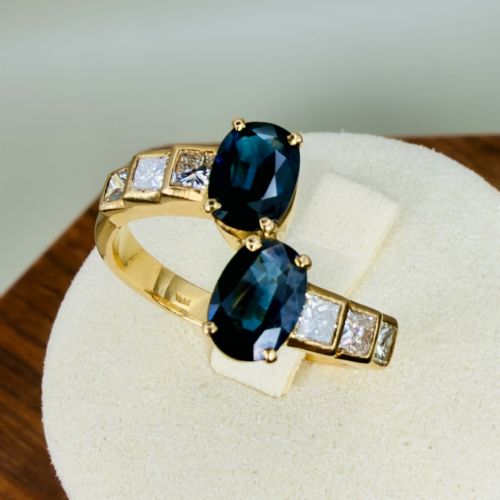
When you handle a gold crossover dress ring, you hold a piece designed to sweep across the finger with overlapping gemstone terminals.
Gold Crossover Dress Ring
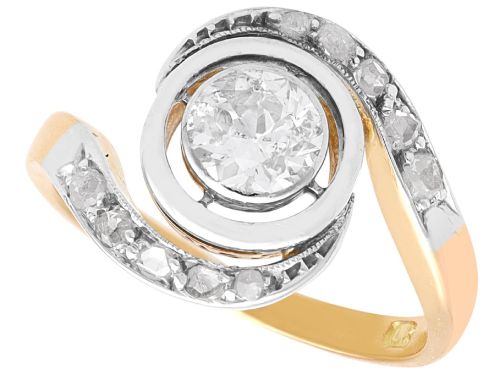
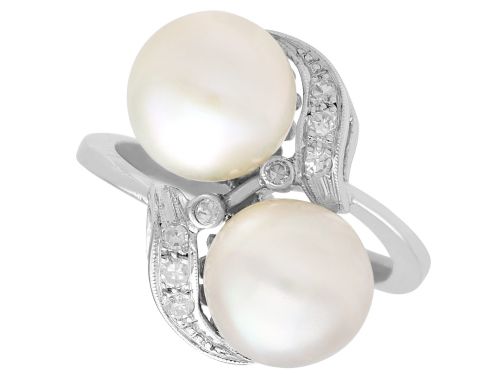
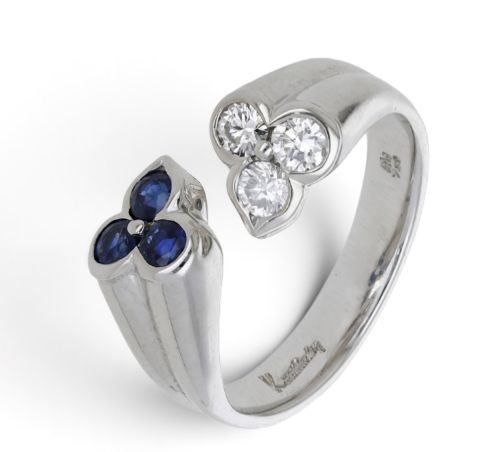
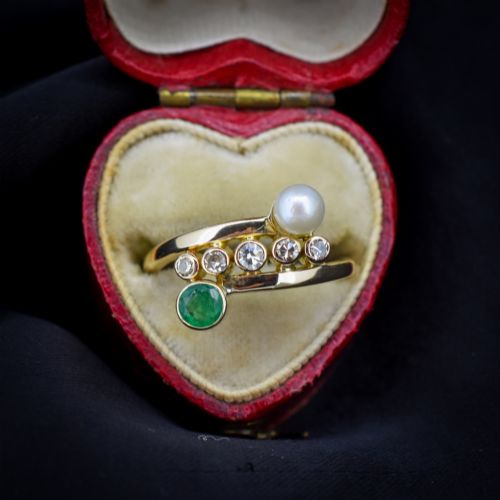
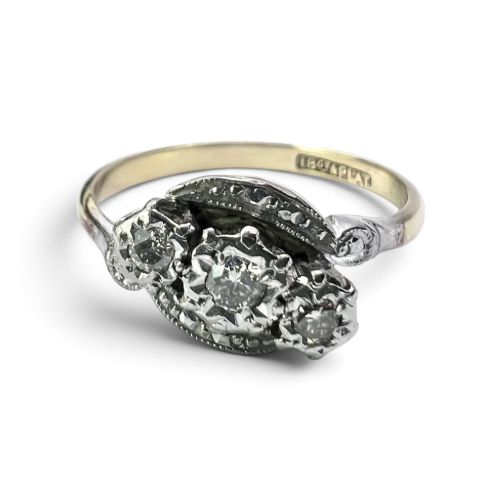
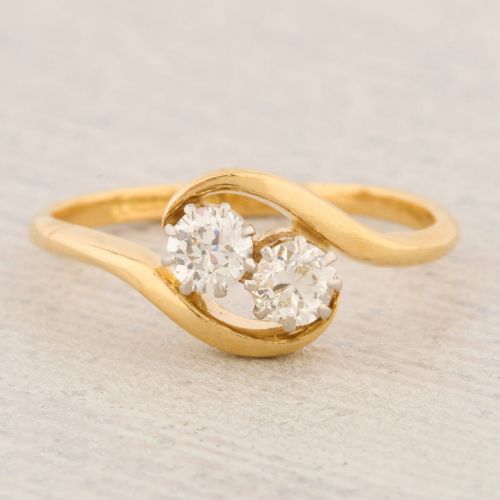
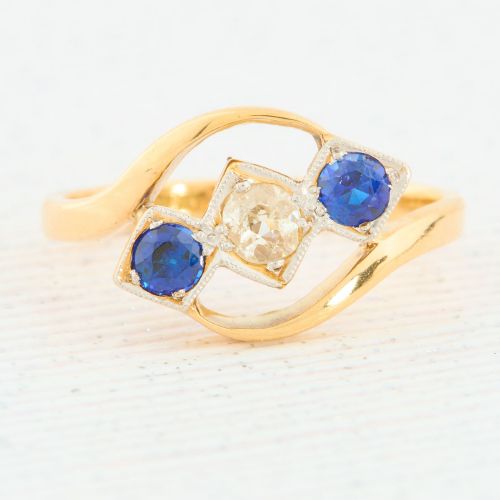
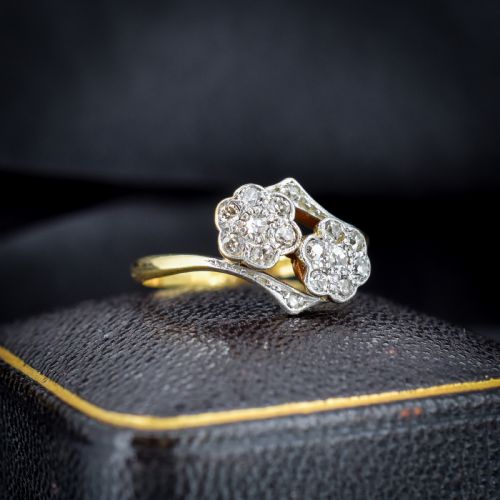
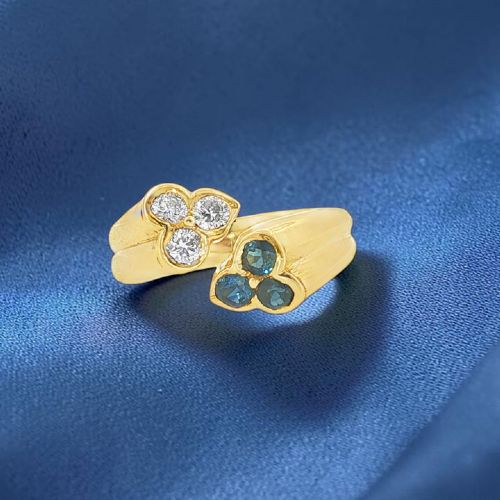
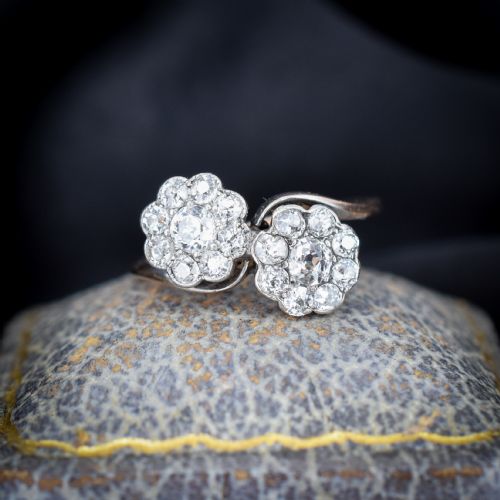
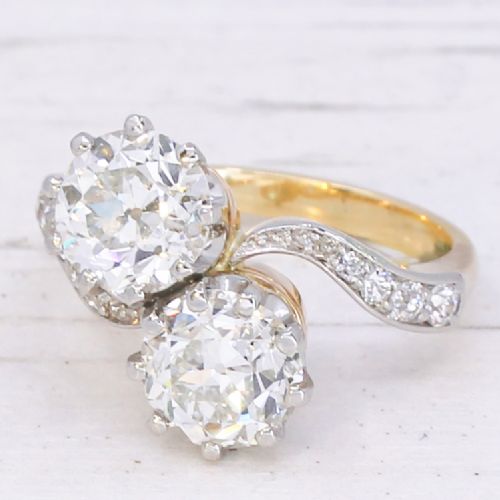
A gold crossover dress ring brings together two or more opposing elements, often styled as a twist, bypass or Toi et Moi configuration that sits prominently on the hand. These pieces draw the eye through asymmetrical or mirrored gemstone arrangements that curve fluidly around the finger.
The selections available here span from Edwardian and Art Deco periods through to mid-century and later vintage eras. Within these groupings, buyers frequently encounter diamond, sapphire, ruby and pearl combinations set against yellow, white or standard 18ct gold bands.
Materials and construction techniques
Jewellers typically utilised 18ct gold and platinum to construct the curving shanks and secure settings of these rings. Platinum mounts often appear alongside gold bands in Edwardian and Art Deco examples to provide a bright, durable contrast for old cut diamonds.
Gemstones such as diamonds, sapphires and rubies are secured in claw, cluster or flush settings designed to follow the sweeping contours of the twist. Pearls and turquoise also feature as central terminals, held firmly within bespoke settings engineered to handle the tension of the crossover design.
Gold Crossover Dress Ring Retail Price Guide 2026
Typical asking prices for gold crossover dress ring among the pieces listed under this phrase on Sellingantiques today, from the lower quarter to the upper quarter. They describe what is for sale here now, not the wider market.
Listings feature 18ct gold, platinum and yellow gold alongside diamonds, sapphires, rubies, pearls and turquoise across Edwardian to mid-century periods.
Judging quality in crossover rings
The distinction between standard and superior pieces rests on the precision of the curve and the symmetry of the opposing stones. A finely made ring maintains balanced proportions where the two terminals meet, ensuring the shank flows naturally without stiffness.
Stone selection and setting work further separate the tiers of craftsmanship. High-grade examples display well-matched diamonds or vibrant sapphires and rubies held securely in crisp, hand-finished platinum or gold prongs that complement the overarching silhouette.
Kutchinsky
The Gold Crossover Dress Ring Glossary
- Crossover ring
- A ring design where the band sweeps and crosses over itself at the top of the finger. This configuration is sometimes called a twist or bypass ring.
- Toi et Moi
- A French term meaning you and me, describing a two-stone ring where two gems sit side by side or sweep together. It represents a classic romantic motif seen across antique and vintage pieces.
- Old cut diamond
- A diamond cut by hand before modern machinery, characterised by a high crown, small table and open culet. These stones project a softer, warmer candlelit sparkle.
- Bypass ring
- A style where the ends of the shank pass each other rather than meeting in a traditional closed circle. This creates a flexible, dynamic line on the hand.
- Platinum
- A dense, strong white metal frequently used in antique settings. It allows jewellers to create delicate, secure prongs for holding precious stones.
Gold Crossover Dress Ring: Frequently Asked Questions
How do I wear an antique crossover ring?
Antique and vintage crossover rings suit everyday wear provided you give them sensible care during manual tasks. Their curving profiles stack with certain wedding bands, though many prefer to wear them alone as a statement piece on the hand.
Because these rings often incorporate delicate old cut stones or pearls, removing them during heavy lifting or gardening protects the settings. Regular checks by a jeweller ensure the claws remain tight around the gems.
What periods do these rings come from?
The pieces span multiple decorative eras, including Edwardian, Art Nouveau, Art Deco and mid-century designs. Edwardian examples often combine platinum and yellow gold with pearls and old cut diamonds, while Art Deco versions favour geometric sapphire and diamond clusters.
Later vintage items from the mid-20th century introduce bolder yellow gold forms and varied gemstone pairings. Each era brings distinct characteristics to the twist and bypass structure.
How do I tell an Edwardian ring from Art Deco?
Edwardian crossover rings typically showcase soft, garland-style motifs, delicate millegrain work and natural pearls combined with old cut diamonds. The metalwork leans towards light platinum settings paired with yellow gold shanks.
Art Deco pieces introduce sharper lines, geometric sapphire cuts, and more stylised symmetry in the crossover terminals. The overall aesthetic shifts from romantic organic curves to structured architectural patterns.