
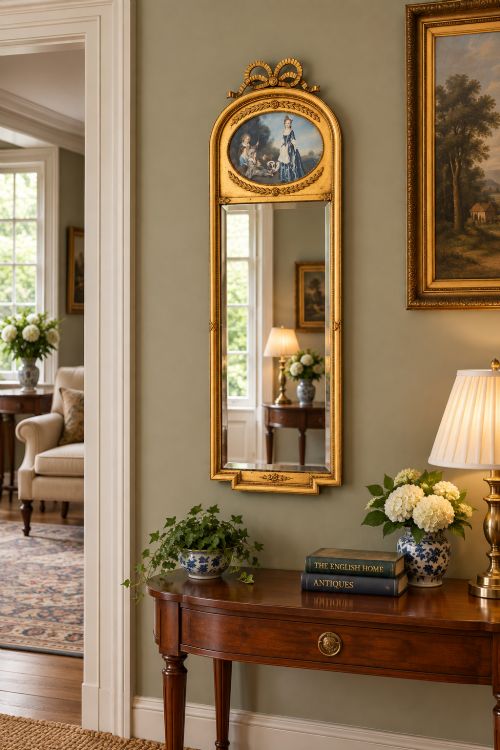
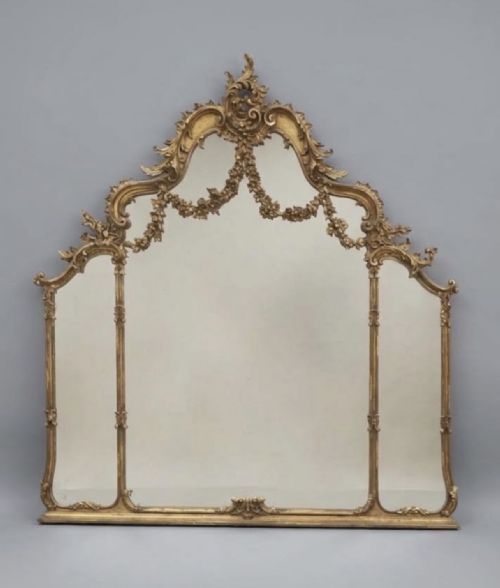
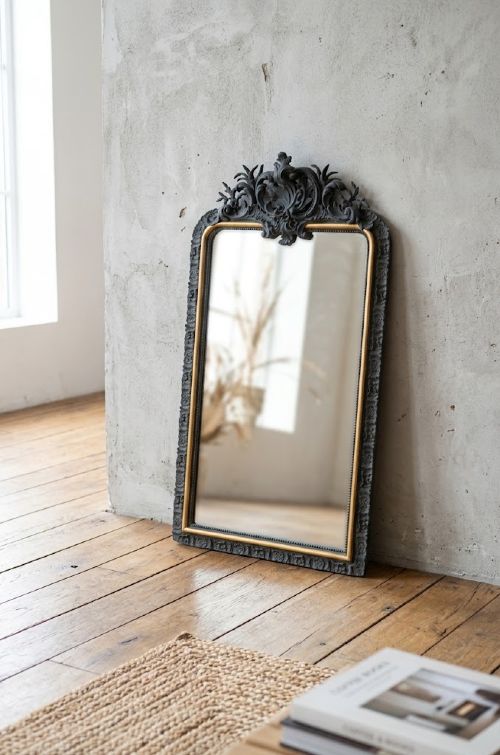
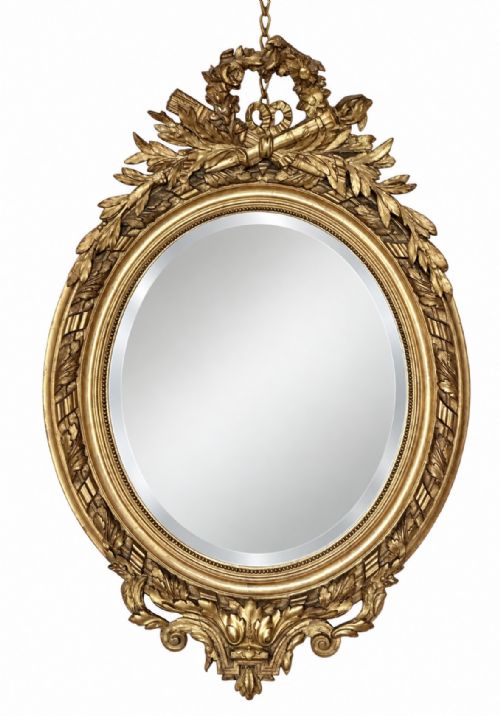
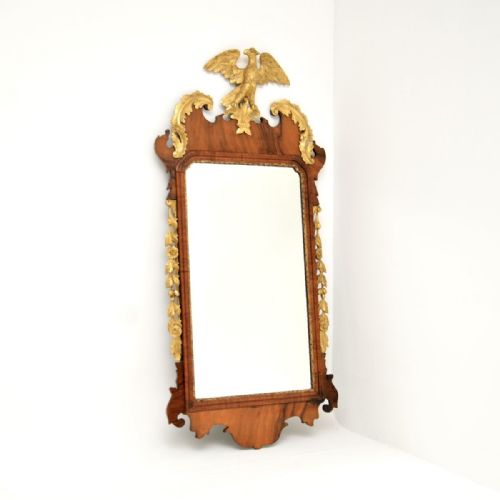
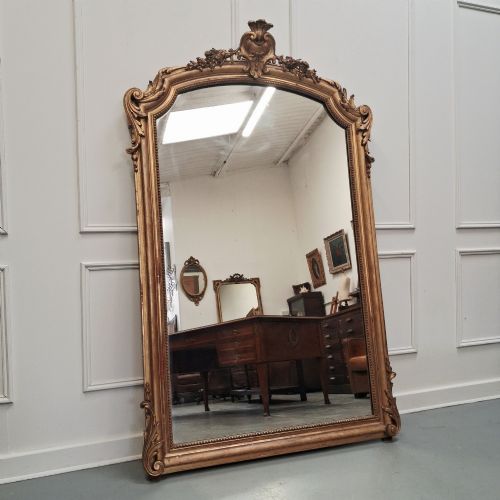
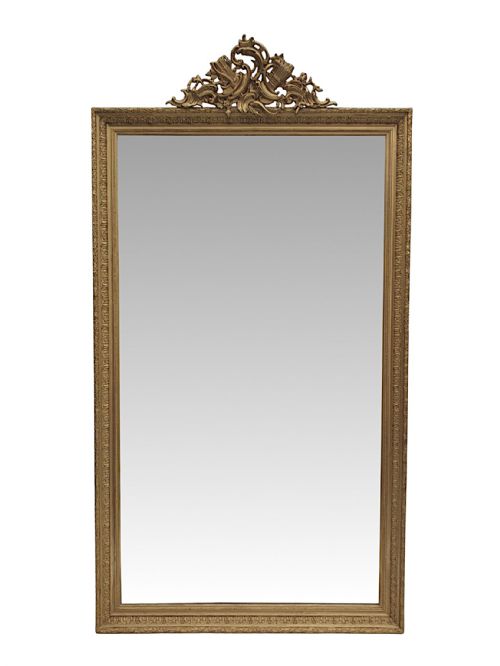
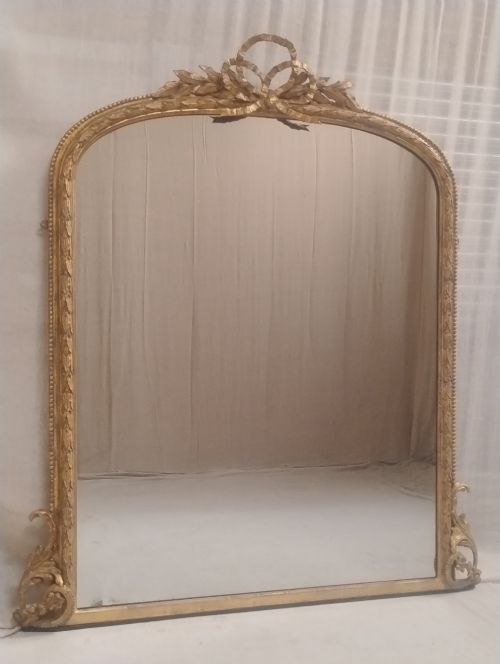
Gold Crested Wall Mirror
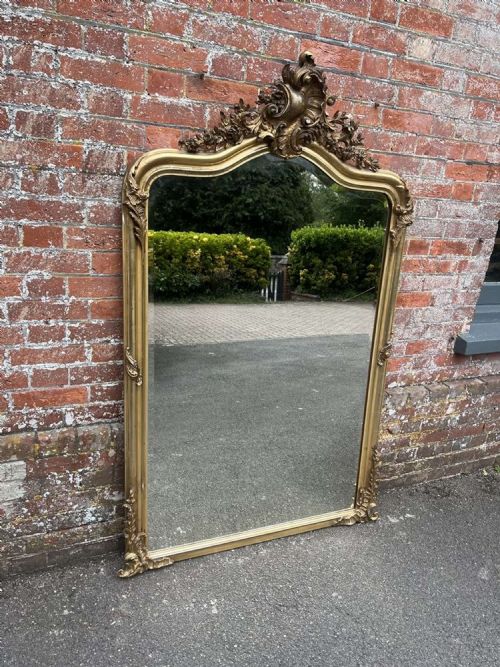
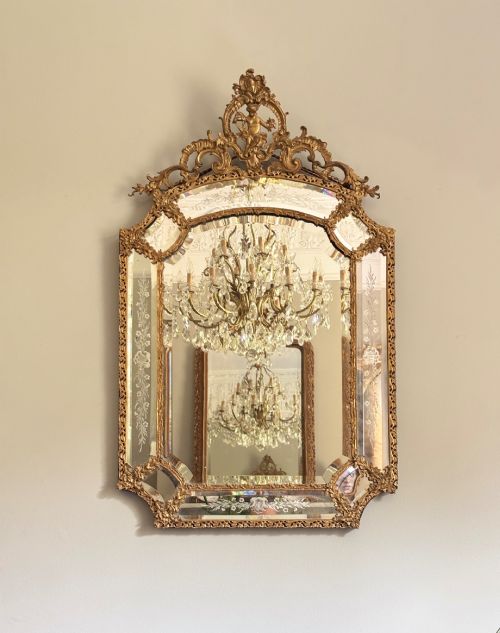
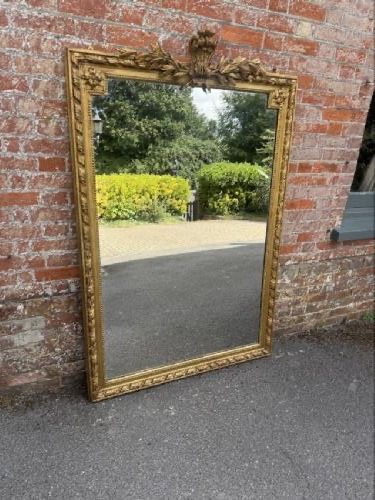
These gold crested wall mirror examples bring grand proportions and gilded detail to period interiors.
Gold Crested Wall Mirror
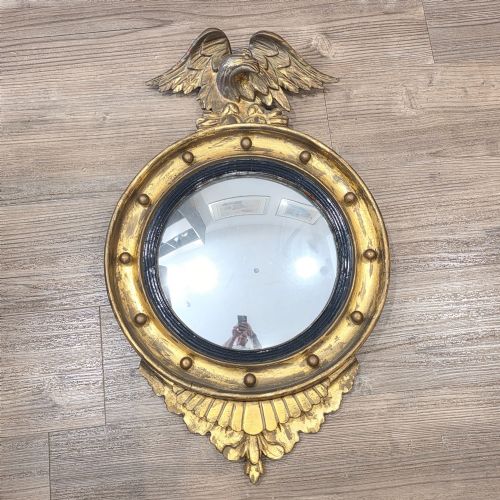
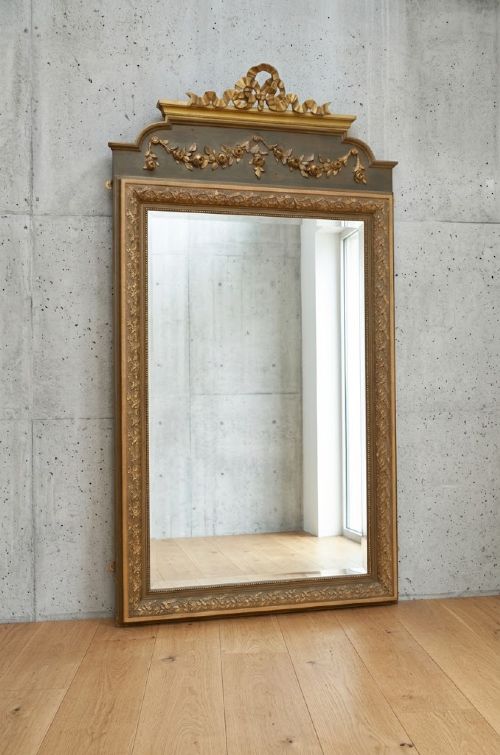
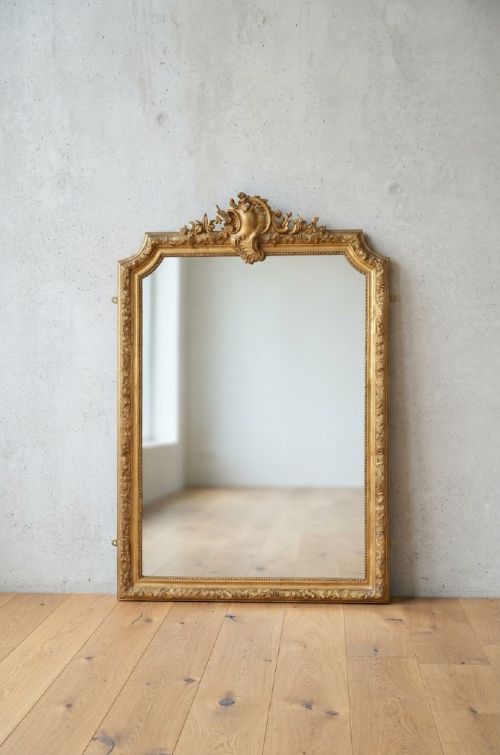
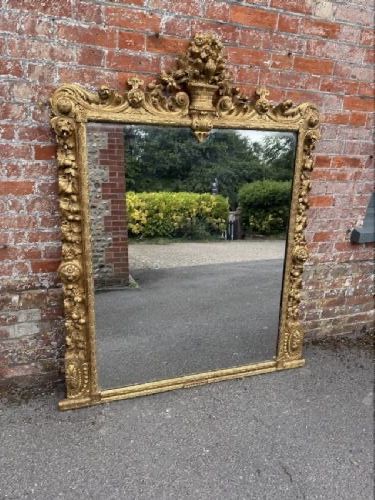
A gold crested wall mirror search reveals ornate furnishings spanning the eighteenth, nineteenth, and early twentieth centuries. These pieces appear primarily as large wall mirrors, overmantels, and circular convex styles.
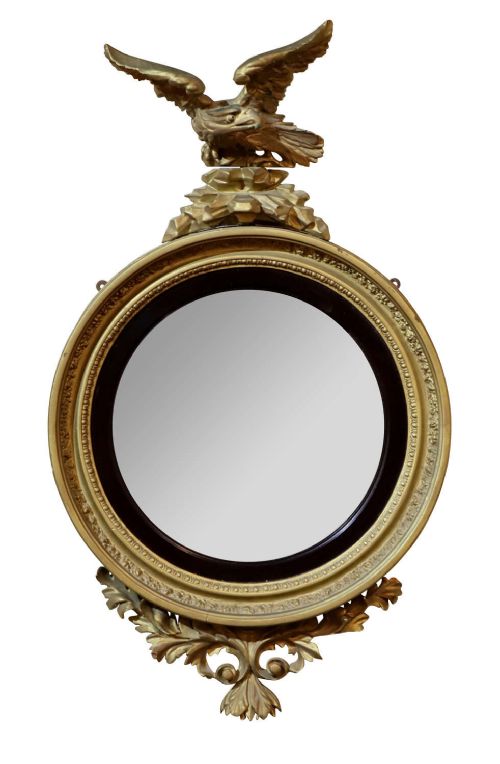
French and English workshops dominate the selection, bringing Louis XVI, Regency, and Rococo Revival aesthetics to the market. Buyers frequently encounter imposing architectural overmantels alongside smaller convex forms topped with carved eagles.
Materials and Construction
Carved wood and moulded gesso provide the structural base for the heavy gilding seen across the inventory. Artisans applied gold leaf or paint over these surfaces to achieve a luminous metallic finish.
Frames incorporate glass panels, occasionally featuring foxed mercury surfaces or bevelled edges. Secondary woods such as mahogany and ebonised timber appear alongside gilded compositions.
Listings span the 18th, 19th, and early 20th centuries, uniting Regency, Victorian, and French Louis styles through shared giltwood and gesso materials.
Assessing the Pieces
Depth and crispness in the carved crestings and wooden mouldings distinguish superior examples from simpler production. Original gilding and untouched glass plates carry more desirability than later restorations.
The integrity of the structural joinery and the survival of secondary elements like display brackets or original backboards influence overall execution.
The Gold Crested Wall Mirror Glossary
- Giltwood
- Timber that has been coated with a thin layer of gold leaf. This material forms the primary framework for many ornate antique looking-glasses.
- Gesso
- A plaster mixture applied to wood frames to create smooth surfaces for carving and gilding. It allows for intricate relief decoration.
- Convex mirror
- A circular looking-glass with a curved surface that reflects a wide, distorted field of vision. These pieces frequently feature eagle surmounts.
- Overmantel mirror
- A large looking-glass designed to hang directly above a fireplace mantel. They often span considerable heights to fill chimney breasts.
- Pier mirror
- A tall looking-glass made to fit the wall space between windows. These vertical pieces frequently incorporate painted or gilded wooden elements.
Gold Crested Wall Mirror: Frequently Asked Questions
Where should I hang an overmantel mirror?
These large looking-glasses mount securely above a fireplace mantel to reflect light across the room. Their substantial proportions require solid wall fixings.
Positioning the glass at the correct height ensures proper balance with the surrounding interior architecture and ceiling height.
How do I clean antique glass?
Gentle dusting with a dry microfiber cloth prevents the accumulation of grime on fragile surfaces. Avoid harsh chemical cleaners that can damage aged silvering.
Particular care is needed around the edges of old plates where the backing may be loose or flaking.
What is a convex mirror?
This circular form uses a curved glass plate to capture a panoramic reflection of the interior space. Regency examples often include elaborate eagle mounts.
Historically placed to monitor rooms, these items function primarily as decorative focal points today.
How do I identify a Regency mirror?
Regency pieces often display classical motifs, ebonised details, and round convex glass formats. The frames frequently utilise balls or reeded decorations.
Examining the construction methods and wood types helps confirm the early nineteenth-century timeline.