

Gold Chain with Dog Clip
A gold chain with dog clip is a functional piece of antique jewellery designed to secure pocket watches or charms with absolute reliability.
Gold Chain with Dog Clip
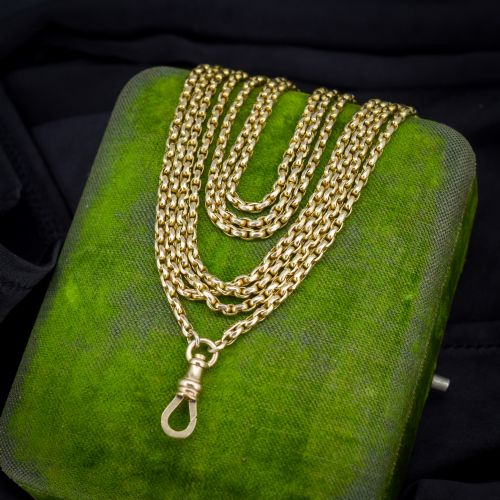
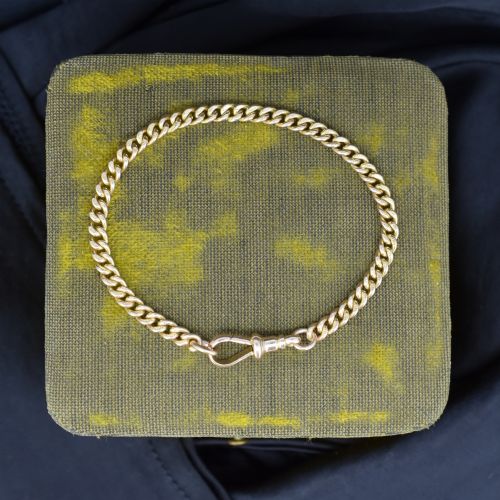
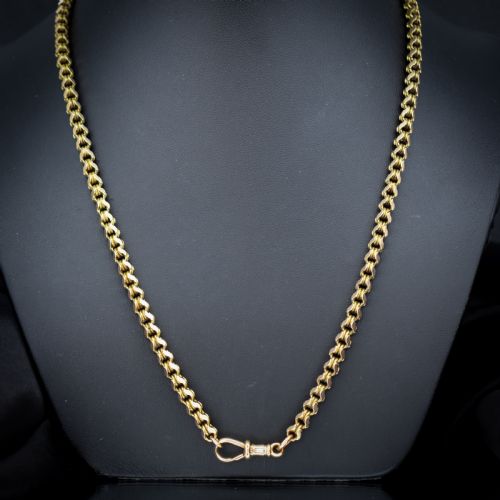
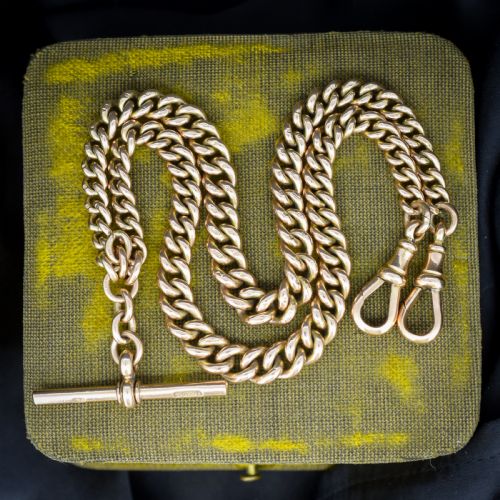
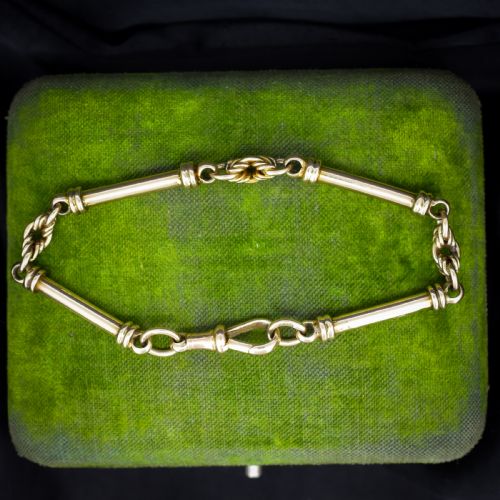
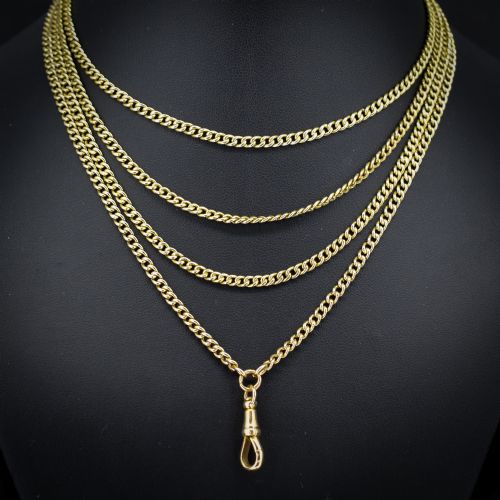
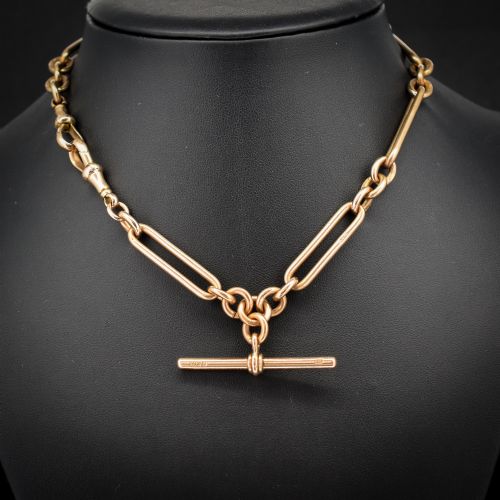
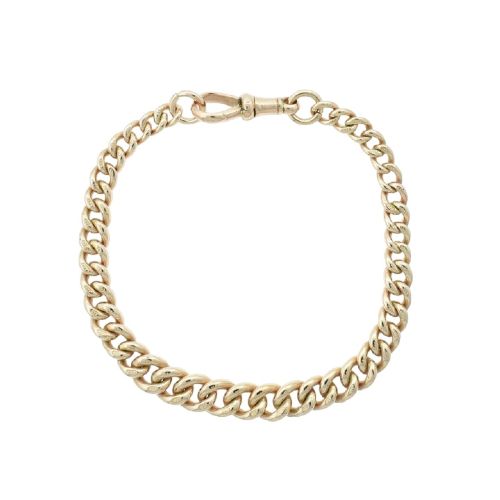
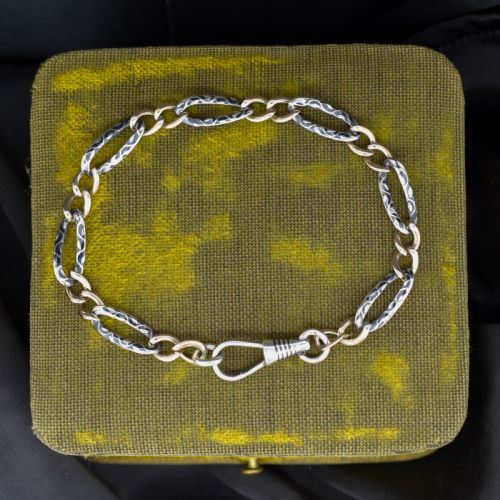
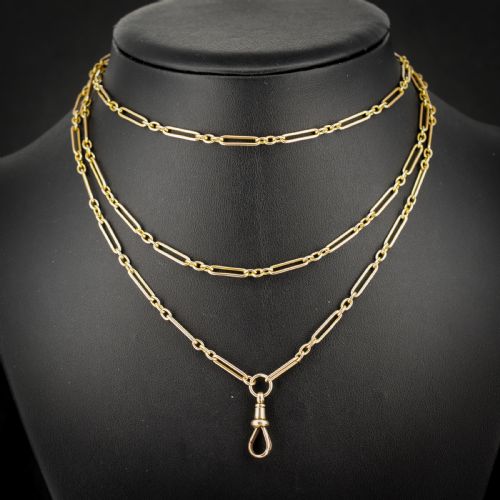
A gold chain with dog clip functions primarily as a wearable piece of history originating from the nineteenth and early twentieth centuries, encompassing periods such as Victorian and Edwardian eras. These items manifest as long guard chains, robust albert chains, bracelets, and shorter necklaces.
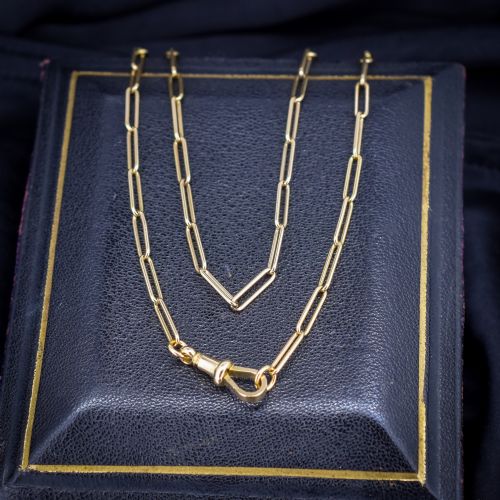
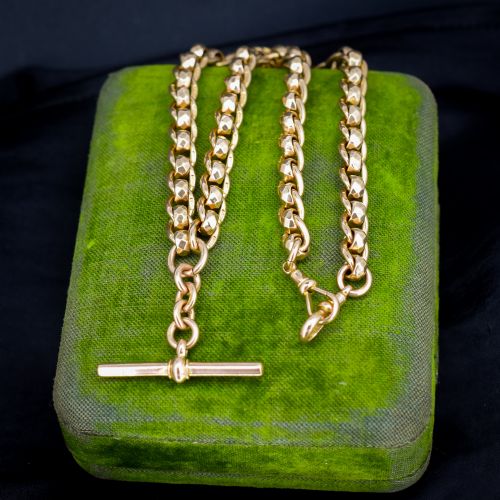
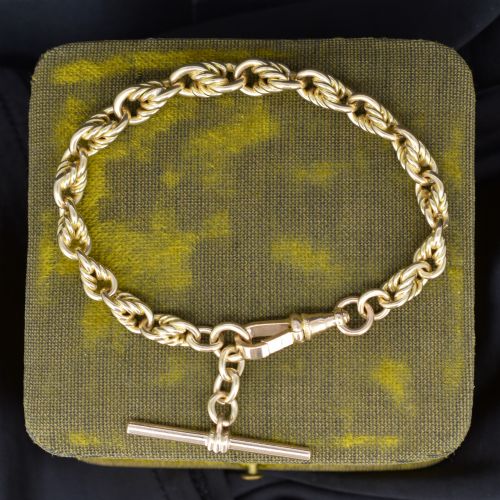
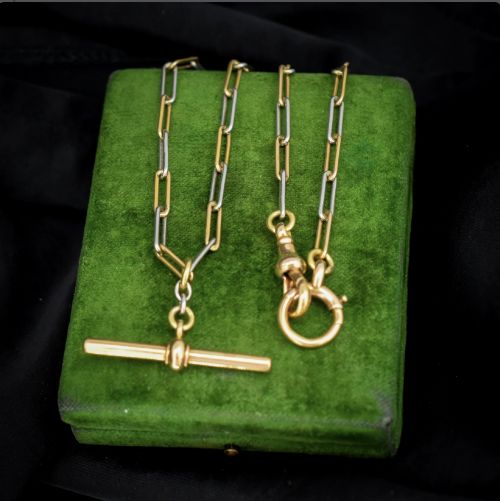
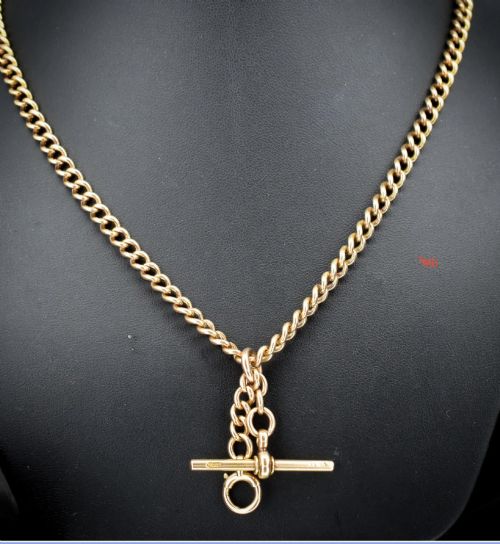
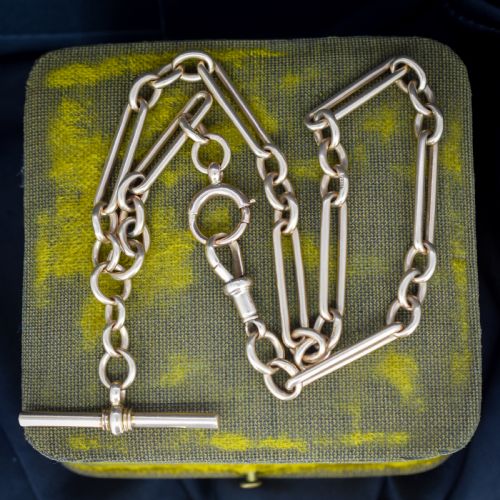
The inventory on this page demonstrates that many pieces incorporate structural elements like T-bars, love knots, and bolt rings alongside the characteristic swivelling clasp. Forms range from short wrist-worn bands measuring under ten inches to substantial guard chains extending past fifty inches.
How they were made
Materials utilised across these listings include yellow gold in nine, fifteen, eighteen, and ten carat purities, alongside silver, niello, and platinum accents. Gold content dictates the warmth and durability of each link, with higher carat weights yielding a richer hue.
Links take distinct geometric and figurative forms, including faceted oval shapes, paper links, trombone patterns, tubular bars, and solid curb links. Goldsmiths assembled these components by hand, soldering individual rings and fitting spring-loaded mechanisms into the swivelling dog clips.
Gold Chain with Dog Clip Retail Price Guide 2026
Typical asking prices for gold chain with dog clip among the pieces listed under this phrase on Sellingantiques today, from the lower quarter to the upper quarter. They describe what is for sale here now, not the wider market.
Some nineteenth-century guard chains reach over fifty-eight inches long, offering enough gold wire to wrap around your neck four times.
What varies in quality
Quality rests in the density of the gold and the structural integrity of the individual links, separating hollow tubular constructions from solid metal iterations. Substantial gram weights indicate superior metal content that withstands daily wear without stretching.
The precision of the spring mechanism within the dog clip and the crispness of maker marks or hallmarks further distinguish finer examples. Maker attention to detail in fancy link variations and secondary components like T-bars elevates the overall standard.
The Gold Chain with Dog Clip Glossary
- Dog clip
- A swivelling spring-loaded clasp originally designed to attach pocket watches to watch chains. This component allows the attached item to rotate freely without twisting the links.
- Albert chain
- A type of watch chain worn by men and women in the nineteenth century, featuring a T-bar at one end to secure through a buttonhole. They often carry one or two dog clips.
- Long guard chain
- An extra-long necklace designed to be looped multiple times around the neck, frequently fitted with a dog clip to suspend a watch, lorgnette, or pendant.
- T-bar
- A short transverse bar attached to the centre of a watch chain, used to anchor the chain securely in a waistcoat or garment pocket. It appears frequently on pieces from the Victorian and Edwardian periods.
- Paper link
- A watch chain link style characterised by elongated, flattened rectangular links resembling folded paper. This construction provides a flat profile against the skin or clothing.
Gold Chain with Dog Clip: Frequently Asked Questions
How do I wear a long guard chain?
Long guard chains measure substantial lengths and are typically doubled or tripled around the neck to create a layered look. The integrated dog clip fastens to the opposite end or holds a pendant.
Alternatively, these chains can hang at their full length as a single sweeping strand. The weight of the gold keeps the piece hanging straight against garments.
What is an albert chain used for?
Albert chains were originally worn to secure pocket watches to a gentleman's waistcoat or a lady's lapel. The T-bar slips through a buttonhole while the dog clip attaches to the timepiece.
In modern styling, these chains function as substantial necklaces or wrap-around bracelets. The original mechanical clips make securing charms straightforward.
How can I tell the gold carat?
British antique pieces often feature hallmark stamps indicating the purity of the metal, such as nine, fifteen, or eighteen carat gold. These tiny marks are typically stamped onto the dog clip or near the end links.
Lower carat numbers contain a higher alloy proportion for durability, while higher numbers display a deeper yellow colour. Professional testing acid confirms the exact metal purity if stamps are worn.
What period do these chains come from?
The pieces span the nineteenth and early twentieth centuries, covering Victorian, Edwardian, and the nineteen-tens and twenties. Design motifs often reflect the reigning aesthetic of the manufacturing decade.
Hallmarks and dated components like inscribed love knots provide precise chronological markers. This historical range gives each chain a distinct period character.