



Gold Chain Earrings
Gold chain earrings are delicate drop ornaments bringing swing and stone colour to the ear, and collectors prize them for period movement and gemstone work.
Gold Chain Earrings
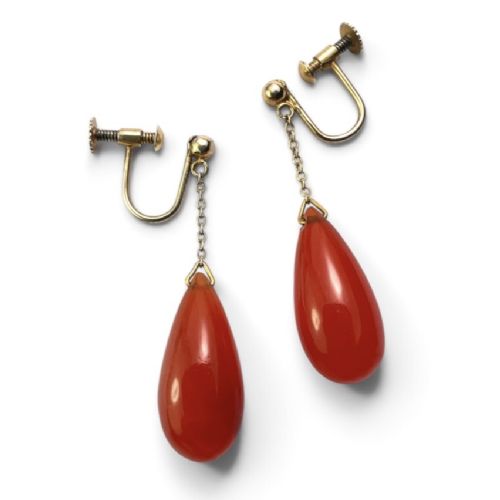
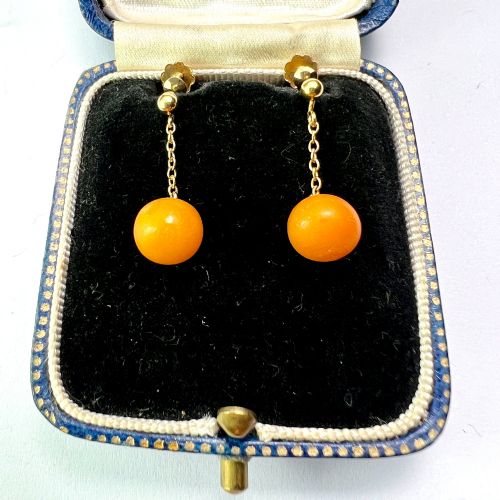
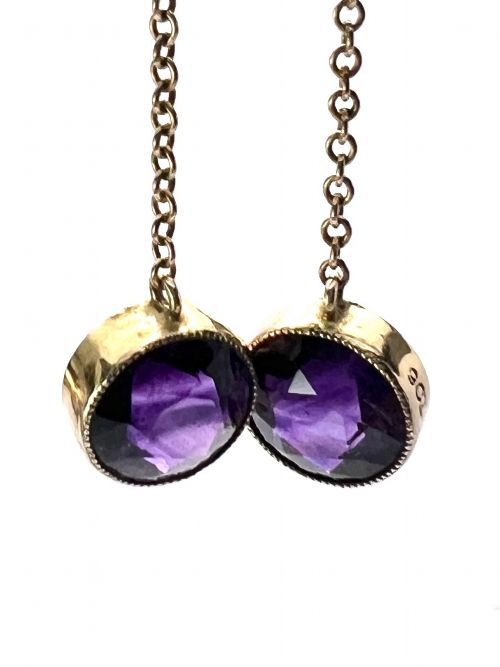
When you search for gold chain earrings, you are looking at drop earrings suspended by fine links, originating primarily from the Edwardian and Victorian eras with later mid-century examples. The pieces on this page are predominantly Edwardian drop earrings featuring articulated chain sections paired with carved or faceted stones.
The forms range from simple single drops to triple chains and tassel designs, often utilising screwback fittings or traditional hooks. These pieces capture the lighter, airier metalwork typical of early twentieth-century jewellery design while retaining secure settings for daily wear.
How they were made
The foundation of these pieces relies on nine-carat yellow gold and occasionally eighteen-carat gold, fashioned into fine chain links, bezels, and wirework. Metalsmiths combined gold with silver in specific periods to provide a bright backing for stones like rock crystal and diamonds, enhancing their sparkle.
Gemstones including amethyst, agate, amber, turquoise, and chalcedony were hand-cut into teardrops, spheres, and faceted beads before being linked manually to the chain drops. This assembly required precise wire-wrapping and soldering to ensure the dangling elements moved freely without catching.
Gold Chain Earrings Retail Price Guide 2026
Typical asking prices for gold chain earrings among the pieces listed under this phrase on Sellingantiques today, from the lower quarter to the upper quarter. They describe what is for sale here now, not the wider market.
What varies in quality
Quality in these earrings rests upon the precision of the link construction and the integrity of the stone settings. Finer pieces demonstrate uniform link sizing, secure bezel or prong work that holds the gemstone firmly without excess solder, and balanced weight distribution.
The natural material grade also dictates distinction, separating standard commercial stones from deeply saturated amethysts, well-matched carnelian, or clean rock crystal. Original fittings, such as intact screwbacks or properly shaped wire hooks, preserve the structural integrity of the piece.
The Gold Chain Earrings Glossary
- Chain drop
- An earring design where a pendant section hangs below the earlobe via one or more flexible chain links. This construction creates noticeable movement when the wearer turns their head.
- Screwback
- A mechanical earring fitting utilising a threaded post and a small nut to adjust pressure on the earlobe. It provides a secure fastening for non-pierced ears.
- Foxtail chain
- A flexible, square-section chain woven from curved metal links that resemble the bushy tail of a fox. It offers a dense, smooth texture suited to tassel designs.
- Chalcedony
- A cryptocrystalline variety of silica used extensively for carved and smooth-polished gemstone drops in antique jewellery. It appears in various translucent colours including green and white.
- Bezel setting
- A method of holding a gemstone in place by pushing a thin metal collar around its perimeter. This technique protects the stone edges while offering a clean outline.
Gold Chain Earrings: Frequently Asked Questions
Are these earrings for pierced ears?
Many Edwardian and Victorian examples on this page utilise traditional wire hooks or modern posts suitable for pierced ears. However, some older variants feature screwback mechanisms originally designed for unpierced lobes.
Buyers can often have screwback findings converted by a jeweller if modern post fittings are preferred, though keeping the original hardware preserves the antique status.
How do I clean antique gold chain earrings?
Cleaning requires gentle care, using warm soapy water and a soft brush to remove dust from the chain links and stone backs. Harsh chemical dips should be avoided, particularly with porous stones like turquoise, amber, and pearls.
Soaking is generally discouraged for pieces with foiled settings or glued elements, as moisture can penetrate behind the stones and discolour the metal backing.
How can I tell an Edwardian pair from a Victorian pair?
Edwardian drop earrings typically feature lighter, airier platinum or white-on-yellow gold metalwork with pastel stones like amethyst, peridot, and seed pearls. The aesthetic focuses on lace-like delicacy and refined chain work.
Victorian pieces tend to be heavier, incorporating warmer yellow gold, bolder gemstones such as carnelian and turquoise, and occasionally mourning motifs or more robust structural designs.
Do the stones in these earrings change colour?
Natural stones like amethyst and carnelian maintain their stable mineral coloration over centuries, though prolonged exposure to direct sunlight can slightly fade certain treated agates or amethysts. Organic materials such as amber and turquoise may develop a deeper patina with age and skin contact.
Checking the stone surface under magnification reveals the natural inclusions and cutting anomalies that confirm the authenticity of antique gems.