
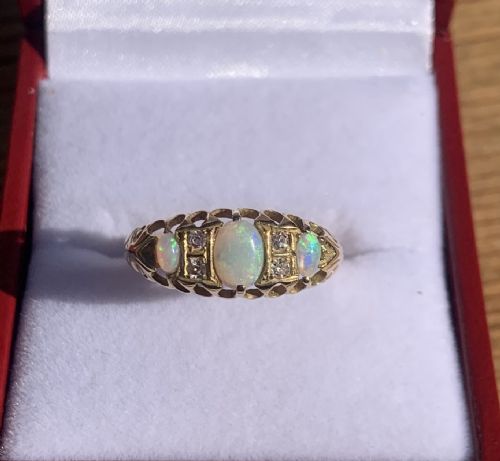


Gold Bridge Ring
A gold bridge ring sits low on the hand, carrying stones across the knuckle in Victorian, Edwardian, and Art Deco designs.
Gold Bridge Ring
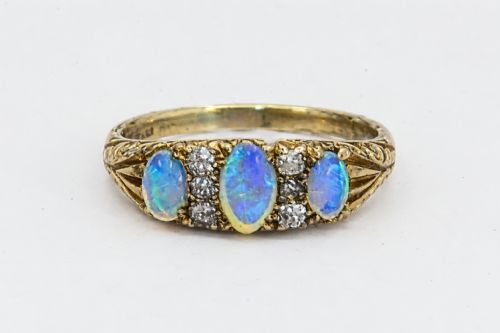
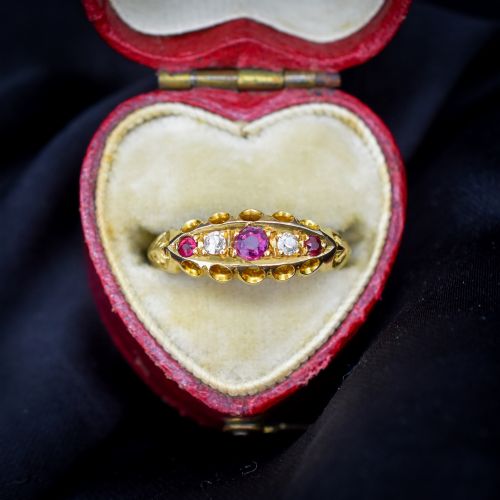
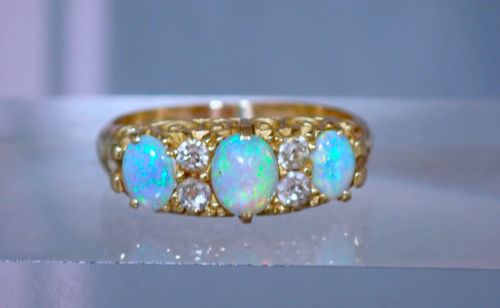
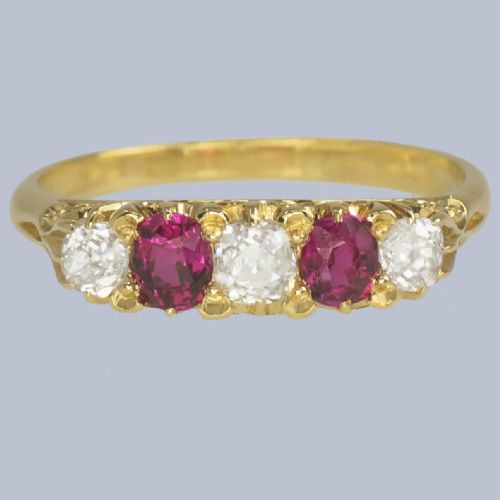
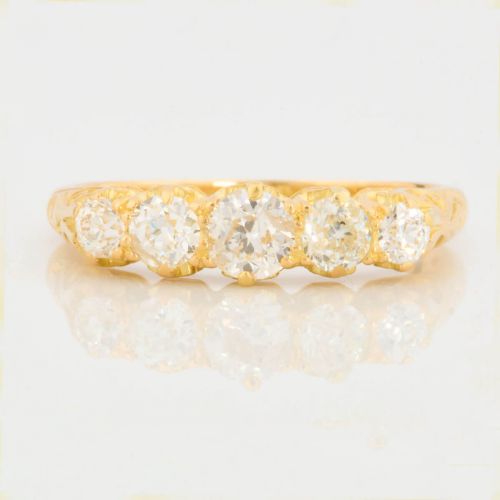
A gold bridge ring is a finger ornament designed with stones set across a low mounting that spans the finger like a bridge. When searching for a gold bridge ring, buyers typically encounter boat-shaped settings, five-stone rows, and multi-stone arrangements from the Victorian, Edwardian, and Art Deco periods. These pieces balance gemstone displays with secure, low-profile mountings that sit flat against the hand.
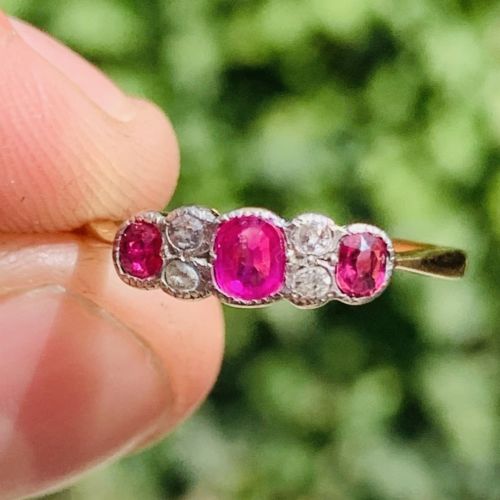
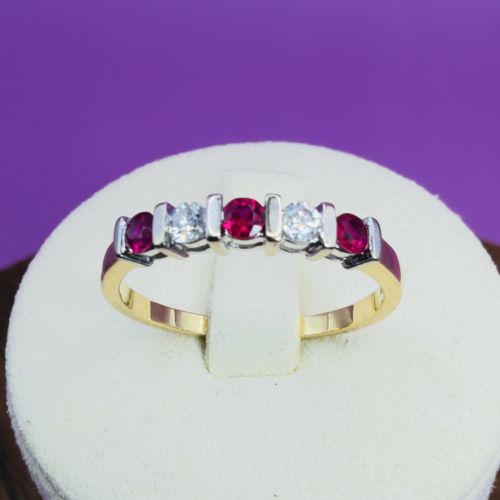
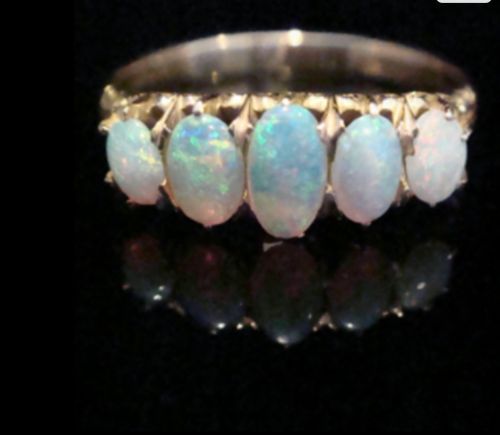
The selections span eras from the late nineteenth century through the mid twentieth century, featuring styles such as late Victorian, Edwardian, and Art Deco iterations. Common configurations include alternating rubies, sapphires, opals, and diamonds arranged in straight lines or curved boat forms. Most examples utilise yellow gold alongside platinum or white metal settings for the stones.
How they were made
These rings were constructed primarily in eighteen-carat yellow gold, fifteen-carat yellow gold, fourteen-carat gold, and platinum, often combining gold bands with platinum settings to enhance the brilliance of diamonds. Goldsmiths utilised traditional hand fabrication techniques, mounting gemstones such as rubies, sapphires, opals, turquoise, and old-cut or rose-cut diamonds into secure claw or boat frameworks. Assay office hallmarks, such as those from Chester, frequently appear stamped inside the bands to verify the metal purity and origin.
Gemstones were hand-selected and secured into position using precise metalwork that allowed maximum light to enter the stones while maintaining structural integrity. The incorporation of contrasting materials like platinum on yellow gold allowed makers to create crisp white borders around diamonds while retaining warm gold shanks. This method of construction ensured that multi-stone arrangements remained stable during daily wear.
Gemstone combinations in these selections frequently pair diamonds with rubies, sapphires, opals, or turquoise in five-stone and boat configurations.
What varies in quality
Quality in these rings is determined by the selection, matching, and cutting of the gemstones, alongside the crispness of the metalwork and settings. Superior examples feature well-matched natural stones, such as vibrant rubies, solid opals, or bright sapphires paired with clean old-cut diamonds. The precision of the bridge structure and the preservation of original hallmarks also distinguish finer pieces from standard production.
The condition of the claws and the security of the stone settings govern the structural standard of each ring. Pieces that retain their original stone proportions and possess crisp, unpolished shank edges demonstrate superior craftsmanship. The harmony between the gold mounting and the integrated gems marks the upper tier of these historical rings.
The Gold Bridge Ring Glossary
- Bridge ring
- A ring featuring a setting that spans the finger, often holding stones in a straight line or a curved boat shape above the band.
- Boat ring
- A jewellery style featuring a navette or boat-shaped setting that curves across the finger, typical of late Victorian and Edwardian design.
- Old-cut diamond
- A hand-faceted diamond cut before the standardisation of modern brilliant cuts, characterised by a smaller table and higher crown.
- Trilogy ring
- A ring set with three stones, often symbolising the past, present, and future, frequently seen in Victorian gold mountings.
- Hallmark
- Official stamps marked inside the ring band indicating metal purity, assay office location, and date of manufacture.
Gold Bridge Ring: Frequently Asked Questions
What is a gold bridge ring?
A gold bridge ring is a historical finger ornament featuring stones mounted across a low framework that spans the finger. These pieces gained popularity during the Victorian and Edwardian eras for their comfortable, low-profile designs.
They typically incorporate diamonds, rubies, sapphires, or opals set into yellow gold bands. The bridge structure allows multiple stones to sit securely across the knuckle without catching on clothing.
How do I wear a antique bridge ring?
Antique bridge rings pair well with modern wear due to their low-profile settings that sit flat against the hand. They function effectively as standalone dress rings or alongside simple wedding bands.
Care should be taken with softer stones like opals or turquoise when worn daily. Removing the ring during heavy manual tasks preserves the integrity of the gold claws and stones.
How do I tell Victorian from Edwardian rings?
Victorian rings often feature heavier yellow gold mountings, rich ruby and sapphire combinations, and robust boat-shaped settings. They frequently date from the late nineteenth century and display deep, warm gold tones.
Edwardian pieces tend to introduce platinum tops on yellow gold to showcase diamonds with greater contrast. The metalwork in Edwardian designs often appears lighter, more lace-like, and refined.
Are these rings suitable for daily wear?
Many of these pieces were built for regular use, utilising durable eighteen-carat gold and secure claw settings. Rings set with harder stones like diamonds, rubies, and sapphires handle regular wear well.
Items containing opals or turquoise require greater mindfulness due to the softer nature of those minerals. Regular inspection of the settings by a specialist ensures the stones remain secure.