
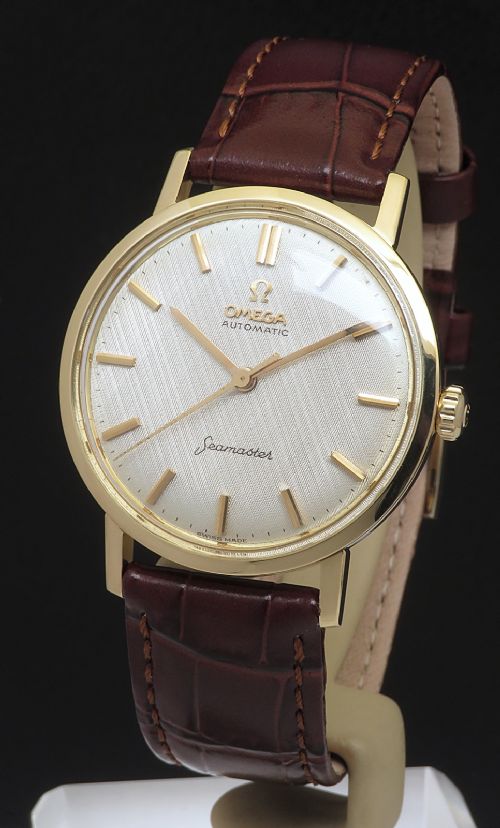
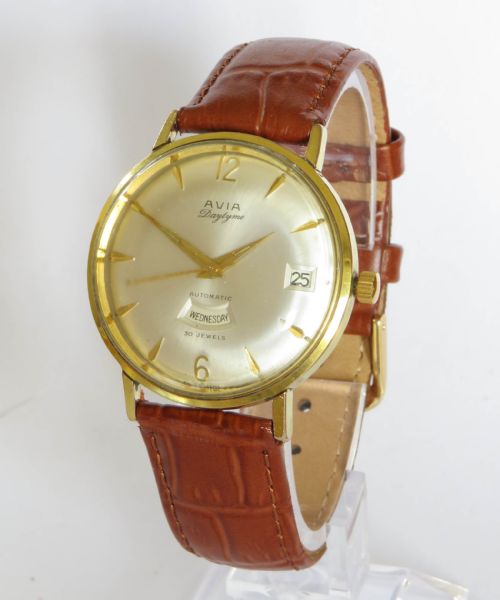
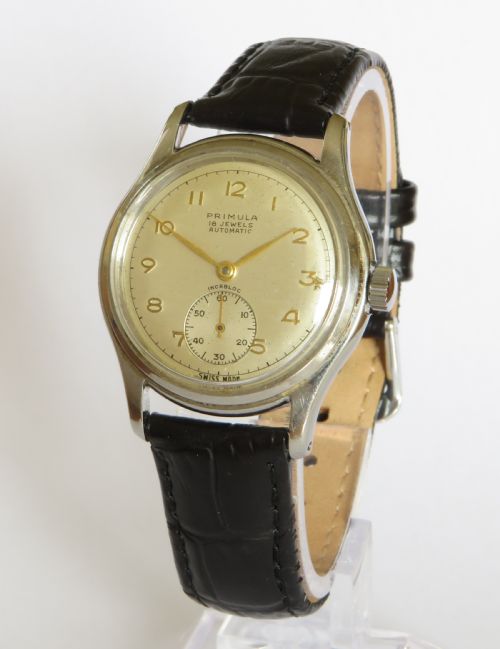
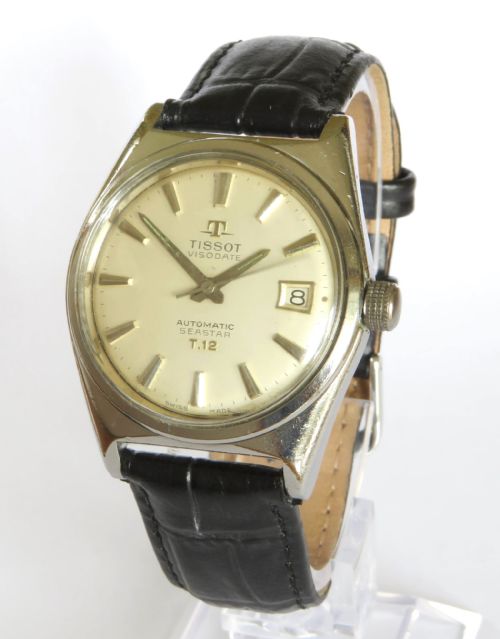




Gold Automatic Wrist Watch
A gold automatic wrist watch combines mid-century mechanical innovation with precious metal cases.
Gold Automatic Wrist Watch
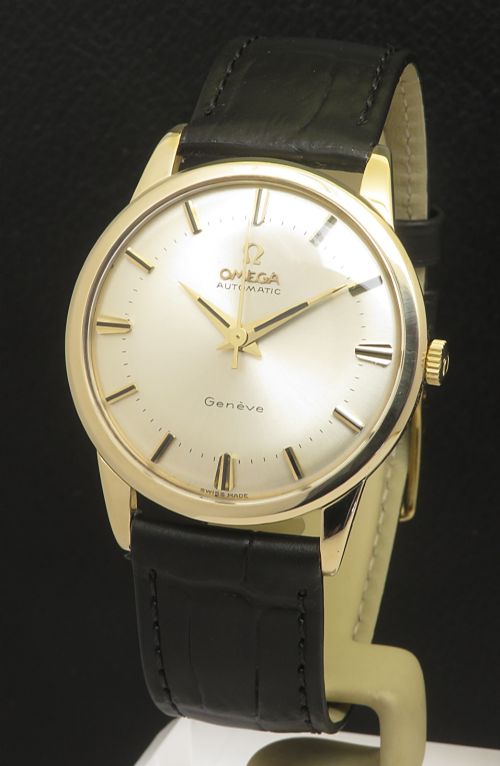
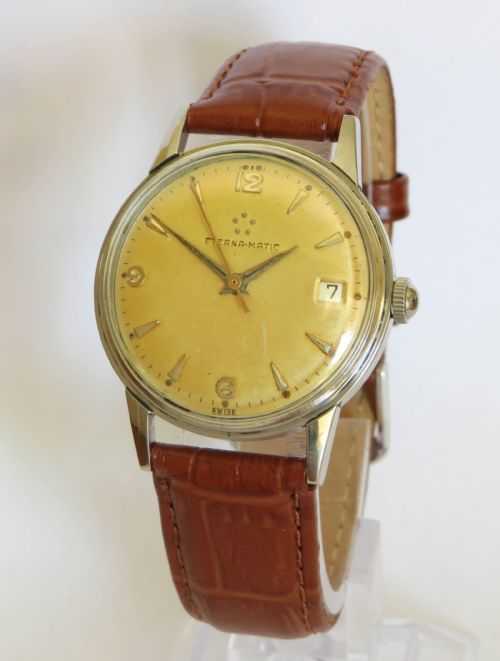
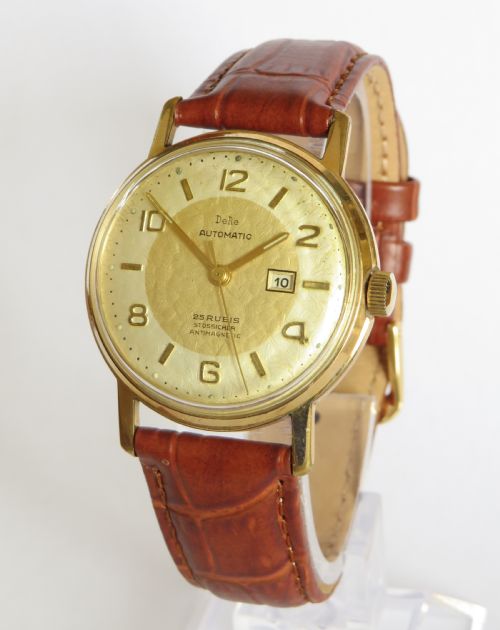
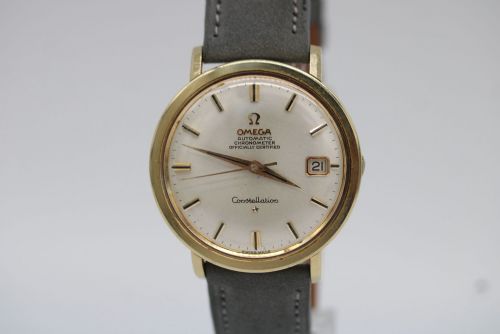
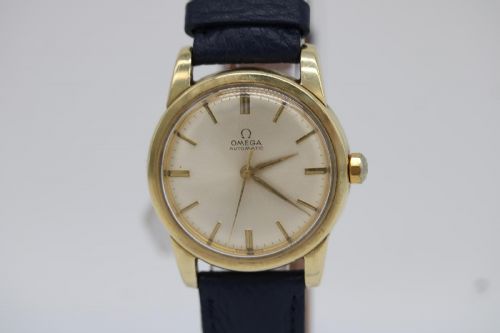
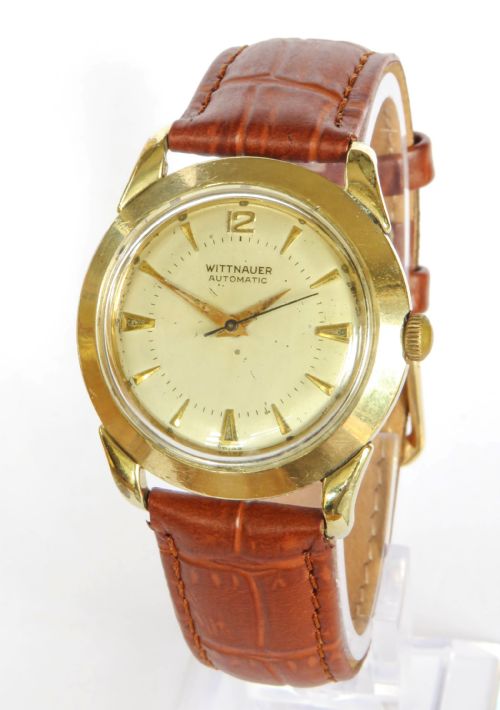
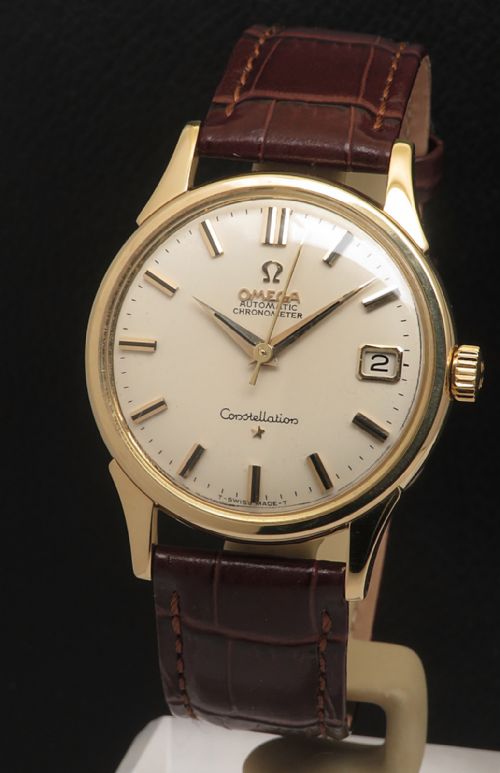
A gold automatic wrist watch represents a standard development in mid-century horology, driven by self-winding movements housed in yellow gold or gold-plated housings. Most examples encountered here originate from the 1950s and 1960s, spanning the Mid-Century Modern and related styles.
The selections include prominent makers such as Omega, Eterna-Matic, and Rolex, alongside brands like Longines, Tissot, and Juvenia. Formats range from solid 9ct gold and 18ct gold to gold-plated and gold-filled housings paired with leather straps.
How they were made
Cases utilise solid 9ct gold, 18ct gold, gold-plated, or gold-filled constructions, paired with glass, acrylic, or acrylic glass crystals. Dials and movements are enclosed within these precious metal shells, often accompanied by leather bands.
Movements rely on automatic winding technology, including early bumper automatic mechanisms and later rotor-driven calibres. These self-winding calibres utilise the natural motion of the wearer's wrist to power the internal gears.
Listings feature items from the 1950s and 1960s, incorporating leather, stainless steel, acrylic glass, 9ct gold, and 18ct gold.
What varies in quality
The grade of precious metal dictates the foundational quality, distinguishing solid 9ct and 18ct gold cases from gold-plated or gold-filled alternatives. Case weight, hallmark clarity, and the inclusion of original boxes and papers further separate standard pieces from collector grade examples.
Movement sophistication and overall preservation define the standard of the watch. Intact original dials, undamaged acrylic crystals, and sophisticated internal calibres elevate the execution of the piece.
Omega·Eterna Matic·Rolex·Longines·Tissot·Jaeger Le Coultre
The Gold Automatic Wrist Watch Glossary
- Automatic
- A self-winding mechanical watch movement that uses a weighted rotor to wind the mainspring through the motion of the wearer's arm.
- Bumper automatic
- An early type of self-winding movement where the weight swings back and forth and hits springs rather than rotating fully. This technology precedes the 360-degree rotor.
- Calibre
- The specific internal movement of a watch, designated by the manufacturer to identify the mechanical design.
- Gold-plated
- A method of covering a base metal core with a thin layer of gold. This differs from solid gold construction.
Gold Automatic Wrist Watch: Frequently Asked Questions
What is a gold automatic wrist watch?
A gold automatic wrist watch is a timepiece featuring a self-winding mechanical movement enclosed in a gold or gold-plated case. These items date predominantly from the mid-century period.
The self-winding mechanism eliminates manual daily winding by utilising wrist movement, while the precious metal case provides a decorative exterior.
How do I wind an automatic watch?
Automatic watches wind themselves through the kinetic motion of your arm during regular daily wear. The internal rotor spins to tension the mainspring automatically.
If the watch has been stationary for days and stopped, you give the crown a few manual turns to jumpstart the movement before wearing it.
How can I tell the decade from the style?
Mid-century pieces from the 1950s often feature simpler dials and bumper automatic movements. Pieces from the 1960s tend to display Mid-Century Modern design cues with full rotor automatic calibres.
Case shapes and typography on the dial also shift across these two decades, reflecting changing design aesthetics.
Can I wear these watches daily?
These vintage pieces suit regular wear provided you account for their age. Many feature leather straps and acrylic crystals which respond well to gentle handling.
Because they originate from the 1950s and 1960s, keeping them away from water and heavy impacts preserves their internal mechanical components.