
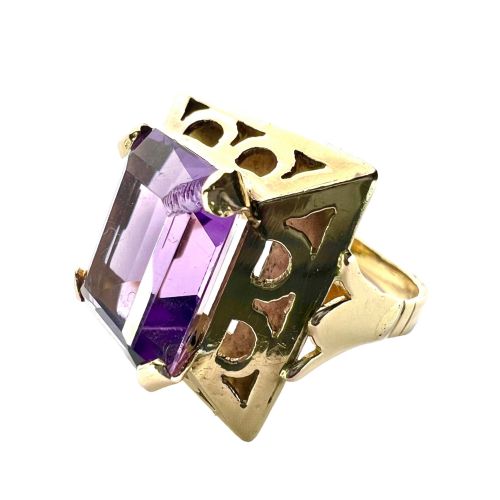


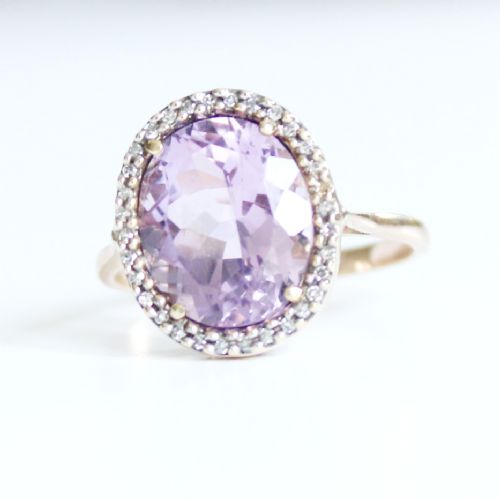

Gold Amethyst Cocktail Ring
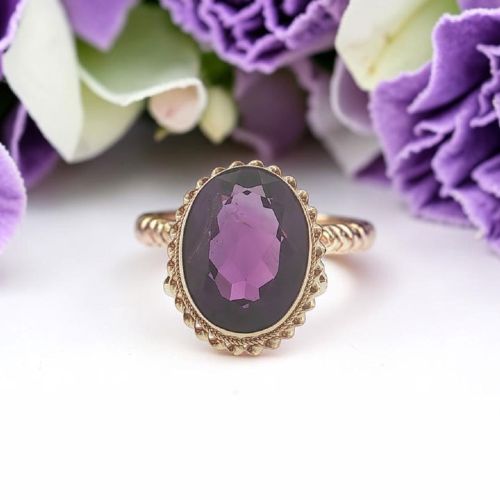
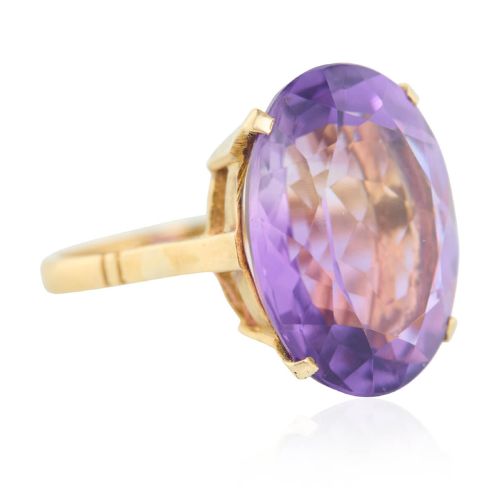
A gold amethyst cocktail ring makes a bold statement with a large purple stone set in precious metal, built to catch the eye across a crowded room.
Gold Amethyst Cocktail Ring
A gold amethyst cocktail ring brings together a substantial purple gemstone and precious metal, designed primarily for evening wear and social gatherings. These pieces range from Victorian cluster designs to mid-century solitaires and Art Deco creations.
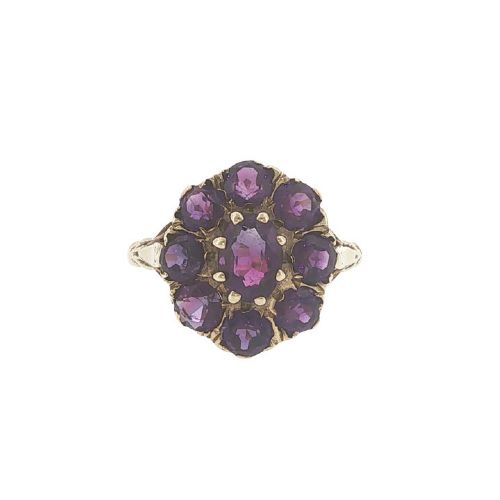
Makers through the decades utilised various formats, from simple single-stone settings to elaborate halo arrangements accompanied by smaller diamonds or pearls.
How they were made
Goldsmiths shaped these mountings from nine-carat, fourteen-carat, eighteen-carat, and sometimes fifteen-carat yellow, rose, and white gold, casting or hand-fabricating the metal to support substantial stones. Prong, bezel, and cluster settings secure the gems firmly while maximising light entry.
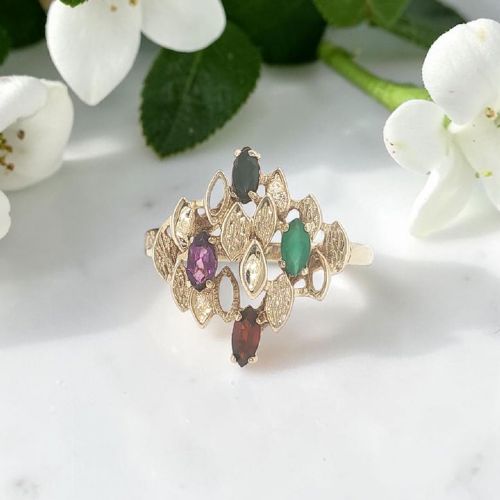
Stones were cut in various profiles including emerald, square, heart, and large rectangular steps to enhance the natural purple hues of the quartz. Accompanying diamonds, pearls, or emeralds were carefully grain-set or bezel-set around the central amethyst in cluster and halo formations.
Some mid-century stones tip the scales past twenty-two carats, proving that previous generations understood the joy of wearing a literal purple boulder on one finger.
What varies in quality
The distinction between tiers rests upon the depth of the amethyst colour, the precision of the stone cutting, and the weight of the gold used in the shank and setting. Heavier mountings with crisp hallmarks and substantial gemstone carats occupy the upper end of the range.
Design ambition and balance also separate standard productions from finer pieces, where intricate gallery work, harmonious proportions, and well-matched accent stones elevate the overall presence of the jewellery.
The Gold Amethyst Cocktail Ring Glossary
- Cocktail ring
- A large, showy ring designed to draw attention during evening social events. These pieces typically feature an oversized central gemstone surrounded by smaller accent stones.
- Cluster ring
- A ring design featuring a central stone encircled by a group of smaller gems. This arrangement magnifies the visual impact on the hand.
- Emerald cut
- A rectangular gemstone cut with stepped facets and cropped corners. This geometry highlights the clarity and depth of large amethysts.
- Halo ring
- A setting style where a primary gemstone is completely encircled by a ring of smaller stones, usually diamonds or pearls. This technique enhances the perceived size of the centre gem.
- Solitaire
- A jewellery setting designed to showcase a single gemstone without any accompanying accent stones. In these pieces, the quality and size of the main amethyst carry the visual weight.
Gold Amethyst Cocktail Ring: Frequently Asked Questions
Can I wear a gold amethyst cocktail ring every day?
Amethyst is a durable quartz suitable for regular wear, though very large stones require some care during manual tasks. Storing the ring separately prevents scratching from harder gems.
Many owners enjoy these pieces daily, while others reserve them for evening gatherings where the large stone can catch the light.
How do I know the gold purity?
British pieces often carry hallmarks stamped inside the shank indicating the exact metal standard and assay office. Items from other regions may feature numerical stamps like fourteen karat or eighteen karat.
A magnifying glass helps locate these tiny stamps, which often include maker marks and date letters.
What is the difference between an Art Deco and a mid-century ring?
Art Deco rings from the 1920s and 1930s favour geometric lines, sharp angles, and often white gold or platinum settings alongside step-cut stones. Mid-century designs from the 1950s and 1960s frequently embrace warmer yellow gold and massive organic or clean solitaire forms.
Examining the gallery construction and the cut of the stones usually reveals the stylistic period of the workshop.
Are all amethysts natural?
The stones seen across these periods are natural quartz varieties formed in volcanic rock cavities. Variations in purple saturation range from pale lilac to deep violet.
Jewellers selected these stones for their natural clarity and dramatic scale rather than artificial enhancement.