
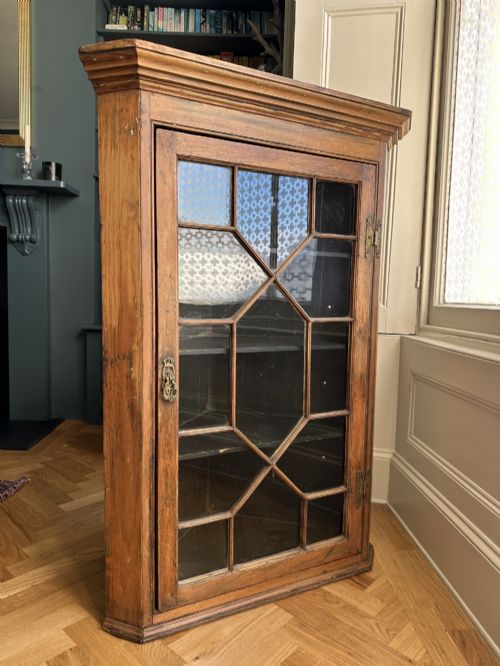


Glazed Wooden Wall Cabinet
These glazed wooden wall cabinet examples offer compact display space, bringing traditional timber frames and glass panels directly to the room.
Glazed Wooden Wall Cabinet
When searching for a glazed wooden wall cabinet, buyers encounter a variety of hanging, tabletop, and corner storage forms designed to display small items while keeping them protected behind glass doors. These pieces serve practical storage roles in domestic interiors, holding books, keys, or display items.
The versions most commonly met on this page include mahogany, walnut, oak, and pine constructions originating from the Regency, Victorian, Edwardian, and 1930 periods. Styles range from simple rustic farmhouse designs to formal Regency bow-fronted cupboards, Gothic Revival breakfront bookcases, and Arts & Crafts or Cotswold School pieces.
Makers shaped these objects into specialised forms such as corner cabinets, key cupboards, and tabletop display cabinets. Each piece utilises timber framing combined with glass and brass hardware to create functional wall-mounted or freestanding units.
How they were made
Carpenters constructed these units primarily from solid or veneered hardwoods and softwoods including mahogany, walnut, oak, and pine. Timber frames were joined using traditional woodworking techniques to support the weight of glazed doors and internal shelving.
Glazing involved fitting glass panes into wooden doors, often secured with timber beads or lead cames depending on the style. Brass hardware such as hinges, handles, and locks completed the construction, while selected interiors received original painted finishes or linings.
The listings here span the eighteenth, nineteenth, and twentieth centuries, incorporating woods such as mahogany, walnut, oak, and pine.
What varies in quality
The refinement of the timber selection and the precision of the joinery distinguish finer examples from simpler utilitarian boxes. Higher quality pieces display well-figured mahogany or walnut veneers, carefully mitred mouldings, and substantial brass hardware.
Design ambition also marks the difference between standard storage cupboards and architecturally conscious pieces like Gothic Revival breakfront bookcases or Regency bow-fronted corner cabinets. The integration of original glass, painted interiors, and intact structural elements determines the integrity of each survivor.
The Glazed Wooden Wall Cabinet Glossary
- Bow Front
- A convex, outwardly curved front elevation typical of refined Regency cabinetry. This curved form maximises internal storage capacity while softening room angles.
- Breakfront
- A cabinet facade where the central section projects forward from the flanking wings. This architectural arrangement creates depth and visual rhythm on larger wall units.
- Cotswold School
- An early twentieth-century design movement focusing on honest construction methods and traditional craftsmanship in solid oak. Pieces from this tradition emphasise natural timber textures.
- Gothic Revival
- A nineteenth-century style drawing on medieval architectural motifs such as pointed arches and tracery. This aesthetic appears on casework through decorative timber carving and proportions.
- Key Cupboard
- A specialised wall-mounted box fitted with internal hooks for organising keys. These utilitarian objects often feature compact dimensions and secure locking doors.
Glazed Wooden Wall Cabinet: Frequently Asked Questions
How were corner cupboards used?
Corner cupboards made efficient use of domestic space by fitting snugly into room angles where standard rectangular furniture would not reach. They stored tableware, books, or decorative objects.
Many examples feature glazed upper doors to show off contents while keeping out dust.
How do I identify a Regency cabinet?
Regency pieces often display characteristic geometric restraint, premium mahogany timbers, and curved fronts such as the bow-fronted corner cupboard style. Proportions tend to be classical and clean.
Brass fittings and subtle cockbeading around doors help date these pieces to the early nineteenth century.
Can these cabinets hang on walls?
Many smaller units and key cupboards were designed specifically for wall mounting, while others functioned as tabletop display cabinets or floor-standing corner units. Weight and construction determine how each piece is supported.
Solid hardwood examples require secure fixings into structural wall studs.