


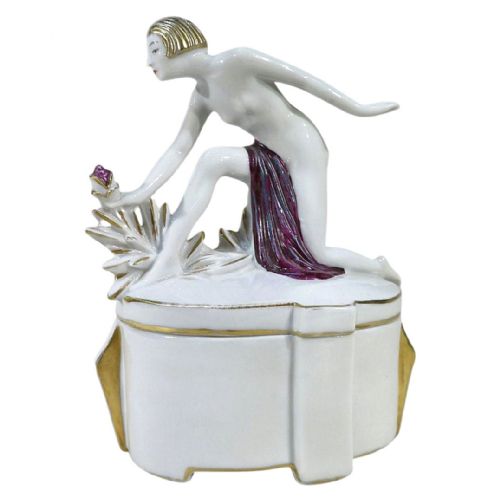

Glazed Porcelain Vanity Dish
These glazed porcelain vanity dish pieces are charming Art Deco powder boxes and dressing table accessories that bring period elegance to a dressing room.
Glazed Porcelain Vanity Dish
A glazed porcelain vanity dish takes the form of an Art Deco powder box, bowl, jar, or novelty holder designed for the dressing table. Most examples date from around nineteen thirty and originate from France or Germany.
How they were made
Makers shaped these vanity accessories from porcelain, earthenware, and ceramic before applying a protective glaze. Many examples incorporate gilt trim to highlight the moulded contours of the lids and bases.
Figural elements such as half dolls and flapper figures were modelled in ceramic and hand-painted. Fabric components occasionally accompany these vanity accessories to form functional powder puff stands.
Glazed Porcelain Vanity Dish Retail Price Guide 2026
Typical asking prices for glazed porcelain vanity dish among the pieces listed under this phrase on Sellingantiques today, from the lower quarter to the upper quarter. They describe what is for sale here now, not the wider market.
A porcelain flapper girl smiles eternally from her ceramic lid, guarding loose powder with quintessential nineteen thirties charm.
What varies in quality
Quality rests upon the crispness of the moulding in the porcelain and the precision of the hand-painted details on figures like flappers and pierrots. Pieces originating from established factories display superior control over the glaze and gilt trim.
The artistic expression of the modelled figures dictates the distinction between standard production items and finer display pieces. Intricate figural lids command greater interest than plain containers.
Limoges
The Glazed Porcelain Vanity Dish Glossary
- Art Deco
- A design style prevalent in the nineteen thirties characterised by stylised geometric forms and modern motifs. This aesthetic defines the shaping of these vanity pieces.
- Glazed Porcelain
- A vitrified ceramic material covered with a glossy coating to create a smooth, impermeable surface. It provides the durable white body for these dressing table vessels.
- Half Doll
- A ceramic figure modelled from the waist up, frequently used as a lid or decorative topper for powder boxes. They often depict fashionable women of the period.
- Gilt Trim
- A thin application of gold leaf or metallic paint used to accent the edges and details of ceramic objects. It adds a decorative flourish to the rim of a bowl or jar.
Glazed Porcelain Vanity Dish: Frequently Asked Questions
What is a glazed porcelain vanity dish used for?
These vessels were originally made to hold cosmetic face powder, puffs, and small trinkets on dressing tables during the interwar period.
Today, they function well as decorative display objects or storage containers for small personal items.
Where were these powder boxes made?
The available evidence points to production in France and Germany during the nineteen thirties.
French pieces frequently include work associated with Limoges alongside distinct regional ceramic designs.
How do I identify an Art Deco vanity dish?
Look for characteristic nineteen thirties styling, including stylised figural lids depicting flappers and pierrots.
The use of glazed porcelain combined with ceramic modelling and gilt trim typically indicates this period.
What materials make up these powder bowls?
They consist primarily of porcelain, ceramic, and earthenware finished with a smooth glaze.
Some examples also incorporate fabric elements and delicate gilt trim across the surface.