




Glazed Mahogany Side Table
These glazed mahogany side table pieces combine timber frames with glass display cases, offering an elegant way to store and view small collections.
Glazed Mahogany Side Table
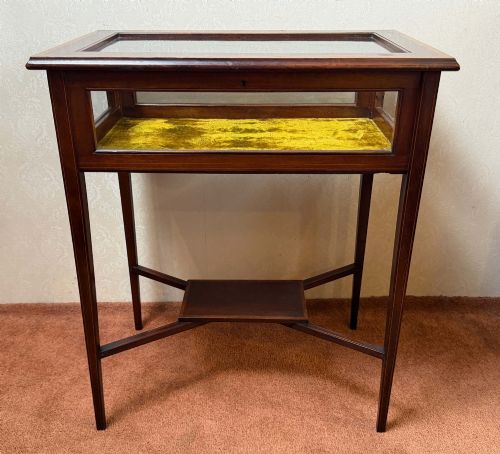
A glazed mahogany side table usually takes the form of a display or bijouterie table, bringing together polished timber and glass viewing compartments. Buyers searching for a glazed mahogany side table will most frequently encounter Edwardian examples featuring satinwood inlay and hinged glass lids.
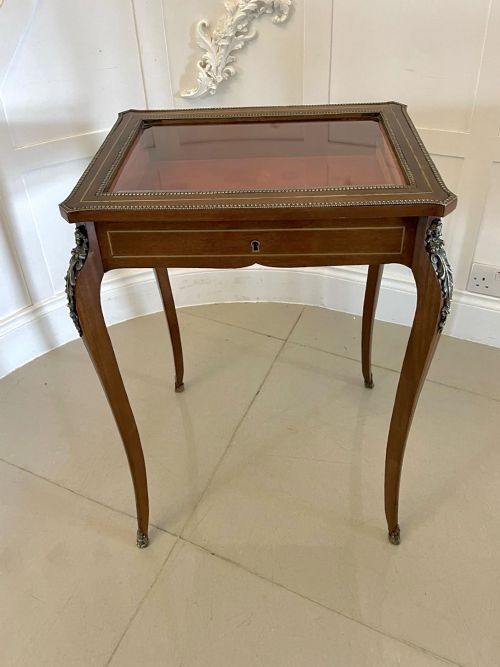
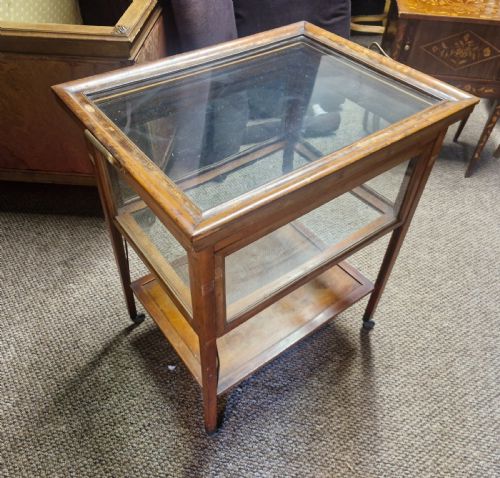
The selection extends from George III forms to later twentieth-century variants, including tea trolleys and lamp end tables with glass surfaces. Continental French interpretations also appear, showing styles such as Louis XV and Louis XVI alongside traditional British cabinet-making.
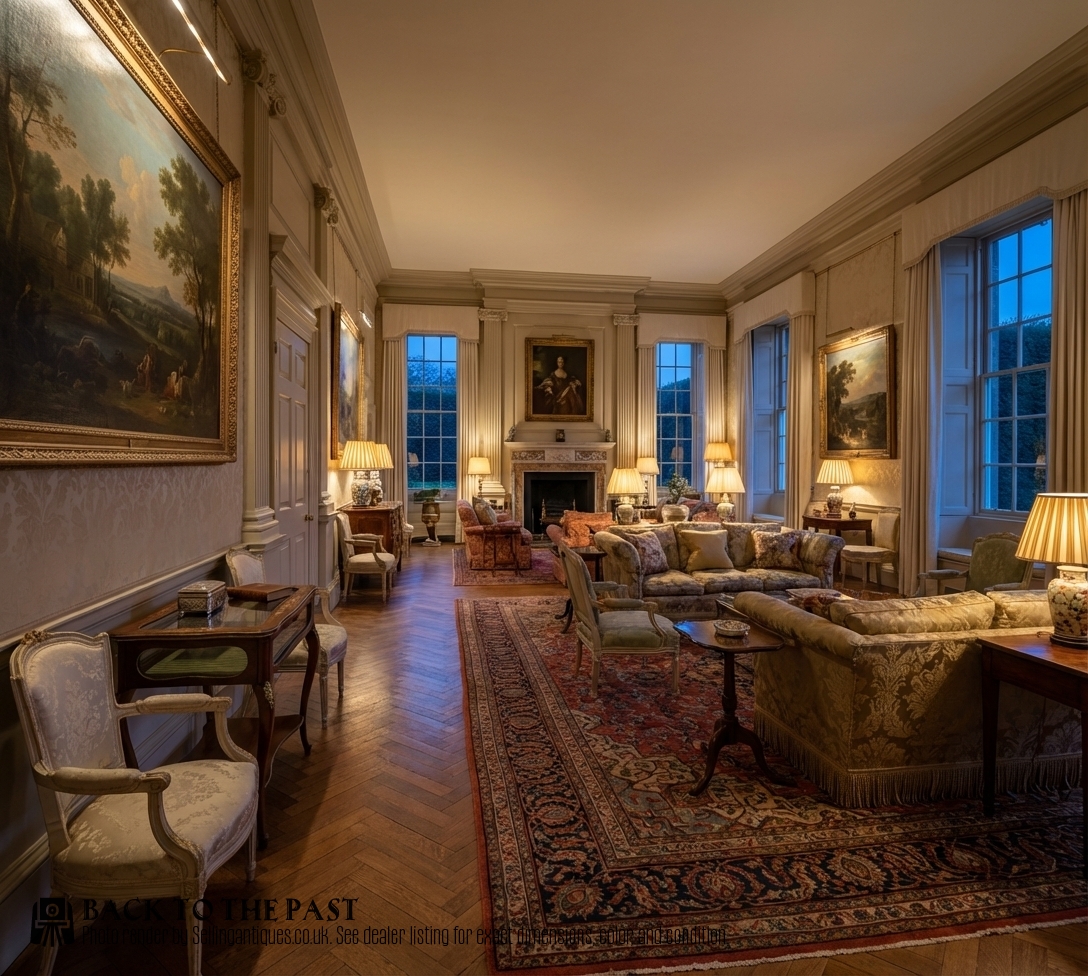
Makers utilised various formats, from kidney-shaped surfaces to oval vitrines designed for jewellery and small curiosities. These pieces served both decorative and practical functions in reception rooms, providing secure visibility for treasured possessions.
Materials and construction
The primary structure relies on solid and veneered mahogany, often enriched with contrasting satinwood inlay or marquetry details. Workshops combined these timbers with brass mounts, ormolu accents, and fabric or velvet linings inside the display wells.
Glazing forms the crucial component, fitted into hinged lids or cabinet doors to protect the contents while maintaining full visibility. Hardwood frames support the glass panels, joined with traditional cabinet-making techniques suited to domestic furniture of the period.
Glazed Mahogany Side Table Retail Price Guide 2026
Typical asking prices for glazed mahogany side table among the pieces listed under this phrase on Sellingantiques today, from the lower quarter to the upper quarter. They describe what is for sale here now, not the wider market.
Listings span multiple eras from George III up to the nineteen thirties, with Edwardian examples predominating.
Factors determining quality
Quality rests heavily on the precision of the timber inlay and the crispness of any brass or ormolu mounts. Finer examples display meticulous marquetry work, particularly on kidney and oval shapes where fitting veneer requires considerable skill.
The condition and thickness of the glass, alongside the smooth operation of hinged lids and drop sides, distinguish superior pieces. Interior detailing, such as original velvet or fabric linings, also contributes to the overall standard of the object.
The Glazed Mahogany Side Table Glossary
- Bijouterie table
- A small display table with a glass top and sides, originally intended for storing and exhibiting small trinkets or jewellery.
- Marquetry
- Decorative patterns formed by inserting pieces of wood, shell, or ivory into a veneered surface.
- Ormolu
- Gilded bronze or brass used for decorative mounts and furniture ornamentation.
- Vitrine
- A glass-fronted or glass-topped cabinet used for displaying fine objects and curiosities.
- Satinwood
- A durable, yellowish timber often used for contrasting inlay and stringing on darker woods.
Glazed Mahogany Side Table: Frequently Asked Questions
What is a bijouterie table used for?
These tables served primarily to exhibit small valuables, coins, medals, and jewellery beneath a protective glass cover.
They allowed hosts to display their personal collections to guests in drawing rooms without handling the items directly.
How do I date an Edwardian display table?
Edwardian pieces typically date between nineteen hundred and nineteen ten, often featuring lighter satinwood inlay on mahogany.
Comparison with George III or Victorian examples reveals stylistic shifts from heavier proportions to more refined, delicate framing.
Can I use these tables for everyday items?
While sturdy enough for lamps or tea service on designated trolleys, glass-topped variants require care to protect the surface.
Owners usually reserve the interior compartments for light display rather than heavy daily storage.
What maintenance do mahogany and glass tables need?
Regular dusting with a dry cloth keeps the mahogany clean, avoiding harsh chemical polishes that might damage the finish.
Glass panels require standard glass cleaner applied carefully to prevent moisture seeping into the surrounding timber frame.