

Glazed Hall Light
A glazed hall light provides immediate architectural presence at a threshold, combining clear glass panels with robust metal frames to illuminate entryways.
Glazed Hall Light
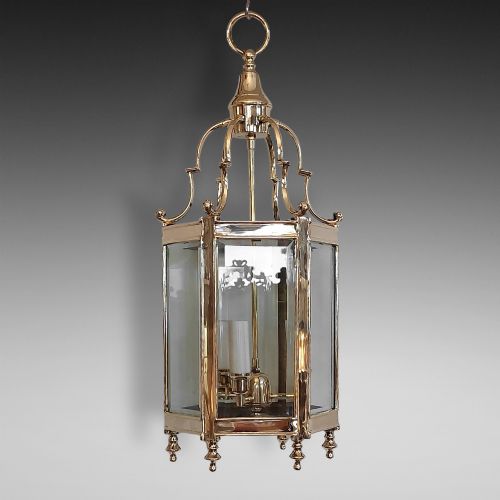
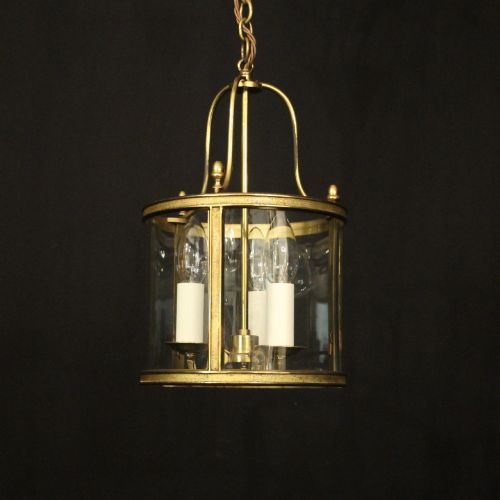
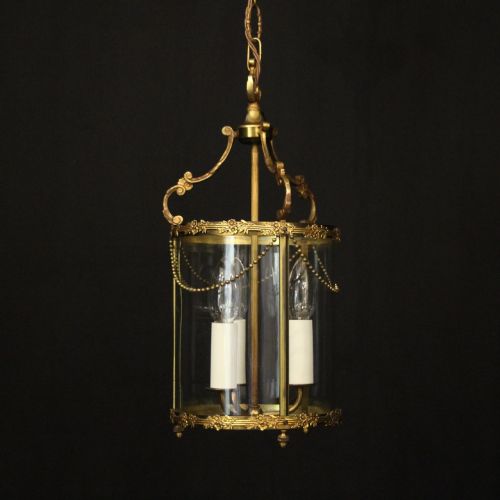
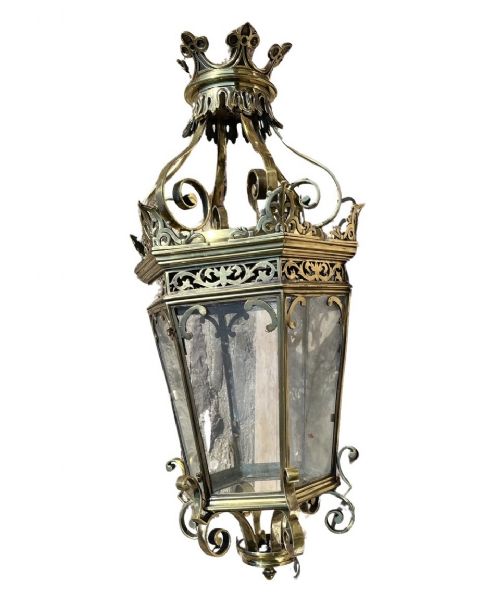
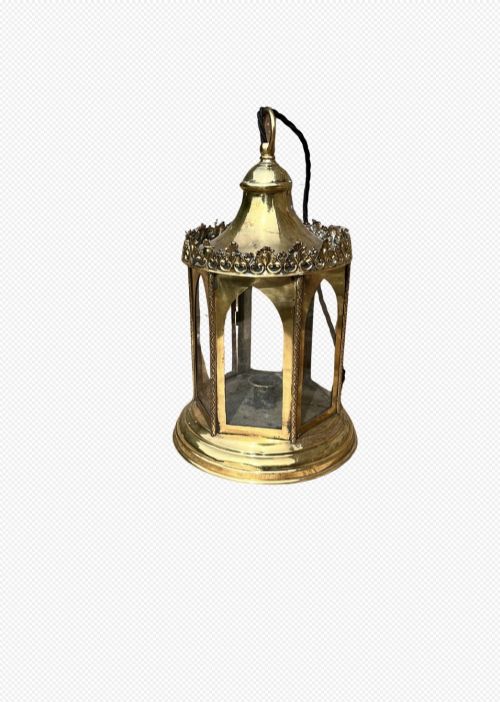
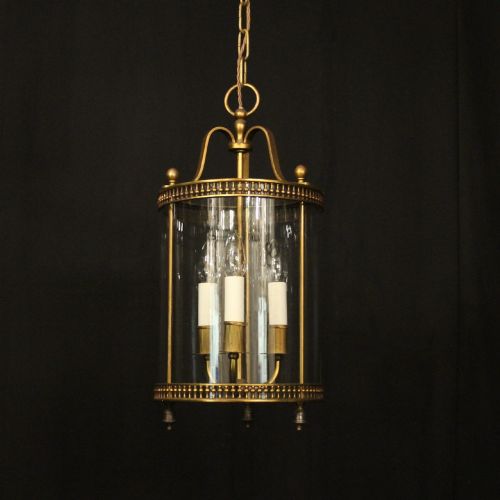
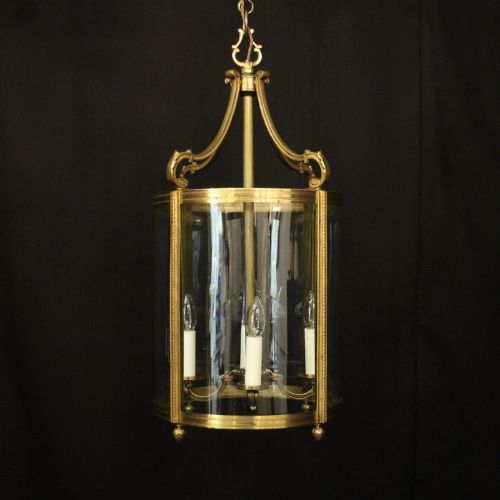
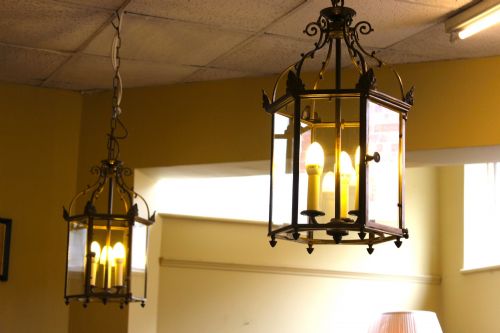
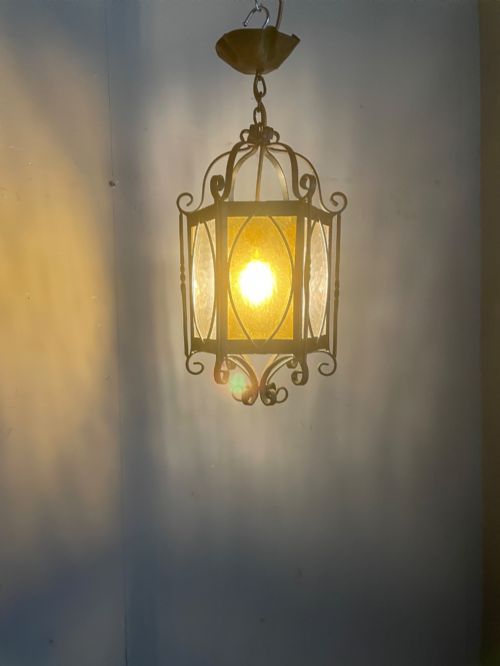
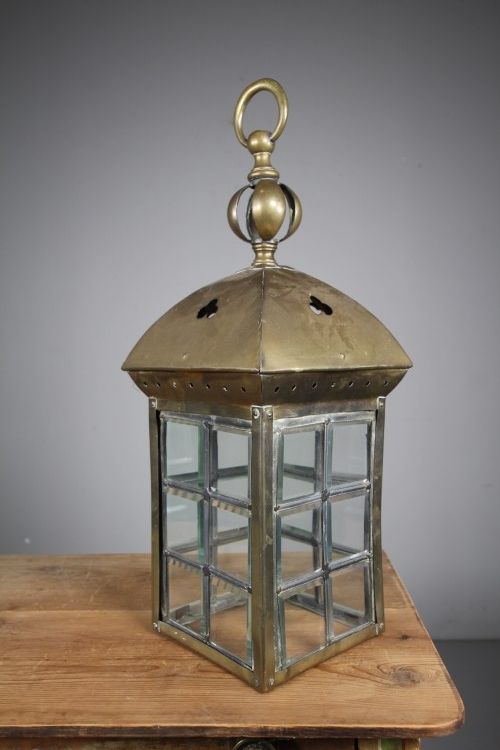
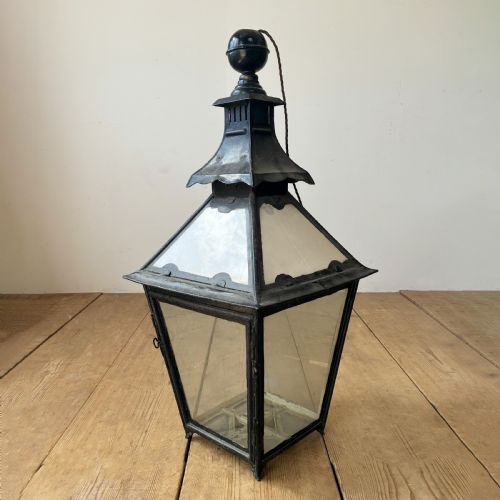
A glazed hall light serves as the primary hanging illumination for an entrance passage, vestibule or staircase. When searching for a glazed hall light, buyers encounter a variety of forms including pendant lanterns, ceiling lights and hexagonal lanterns designed to distribute light evenly across a threshold.
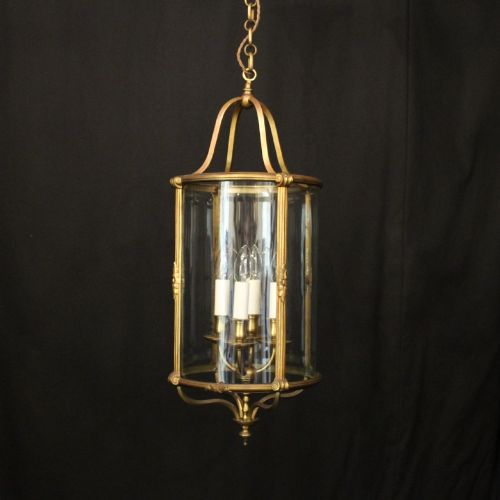
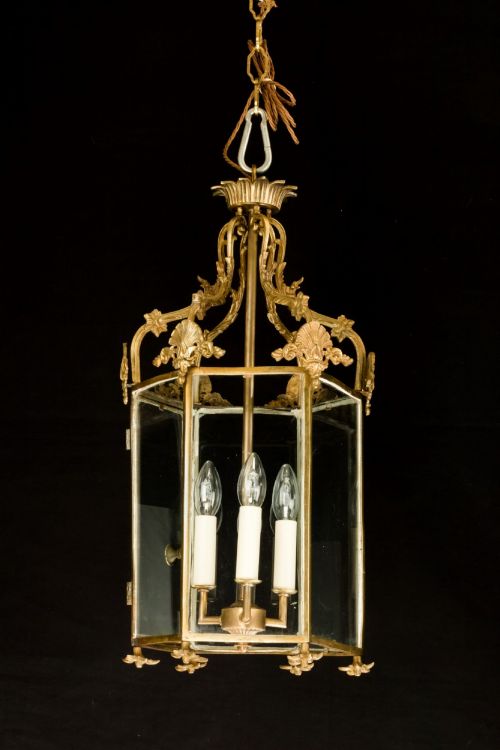
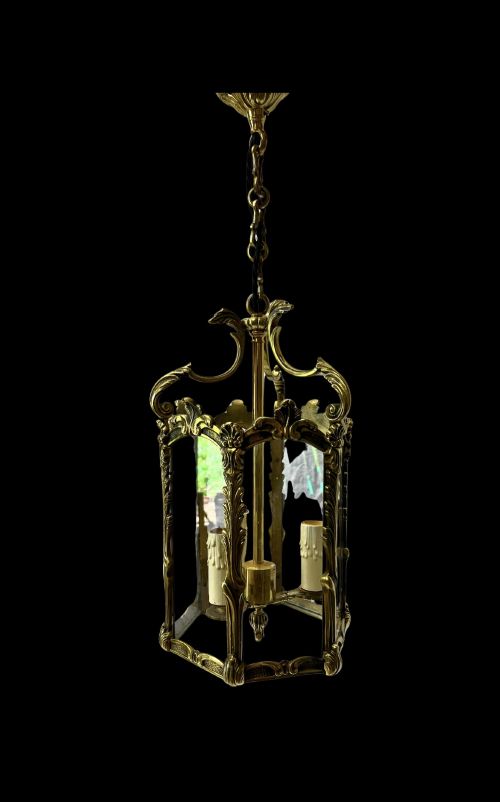
The selection ranges from Victorian and Edwardian English pieces to French chateau and neoclassical models from the early twentieth century. Hexagonal and multi-light configurations dominate the choices, often fitted with doors for internal access to the bulbs or candles.
How they were made
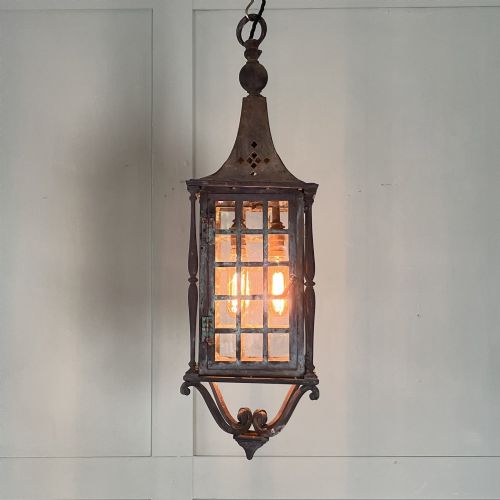
Metalwork forms the structural skeleton of these pieces, utilising brass, copper, wrought iron and steel shaped into frames, mounts and suspension loops. Gilt bronze and gilded brass frequently appear in French models, adding a reflective metallic finish to the primary structure.
Glass panels are fitted directly into the metal framework, sometimes featuring bevelled edges to refract the internal light. Wrought iron and steel elements are forged to create robust structural integrity, while hinged side doors allow access to the interior.
What varies in quality
The substance of the metal frame and the weight of the casting set distinct tiers within the selection. Thicker gauge brass, substantial wrought iron and finely chased gilded bronze represent superior manufacturing compared to lighter, simpler sheet metal alternatives.
The integration of the glass panels also dictates standard. Bevelled glass fitted securely into rebated metal channels demonstrates a higher degree of precision than plain flat glass held with basic clips.
The Glazed Hall Light Glossary
- Hexagonal lantern
- A hanging light fixture featuring six flat glass panels set within a six-sided metal frame. This geometric form allows light to disperse across multiple angles.
- Bevelled glass
- Window glass cut with an angled edge around the perimeter. This treatment creates prismatic light refractions.
- Gilt bronze
- Bronze metal treated with a thin layer of gold or gold-coloured alloy. It provides a durable, warm metallic surface often found on French decorative fixtures.
- Pendant light
- A light fixture suspended from the ceiling by a single chain, rod or cord. It positions the illumination lower in high-ceilinged entrance halls.
Glazed Hall Light: Frequently Asked Questions
How do I hang a hall lantern?
Suspension typically relies on a matching chain or ceiling hook secured to the structural joists above the entranceway. The weight of the metal frame and glass panels requires proper anchoring into timber or masonry.
Height placement depends on the clearance needed beneath the fixture for people passing underneath, usually positioning the bottom of the lantern well above head height.
Are these lights electrified?
Many surviving examples have been adapted with internal lamp holders to operate on modern electrical circuits. Wiring runs down through the suspension loop and into the core of the fixture.
Multi-light configurations accommodate several bulbs to provide ample illumination for dark hallways and stairwells.
How do I clean the glass panels?
Access to the interior typically occurs through a small hinged door built directly into the metal frame of the lantern. Opening this door allows for cleaning both the inner and outer glass surfaces.
Standard glass cleaner and a soft cloth maintain clarity without damaging the surrounding metal or gilt finishes.
How do I identify French styles?
French fixtures often incorporate decorative motifs from neoclassical, rococo or chateau traditions within the brass and bronze castings. Elements such as acanthus leaves, urns and ornate scrollwork distinguish them from simpler English designs.
Heavier gilt finishes and multi-light internal clusters are also characteristic traits of French manufacture from the early twentieth century.