

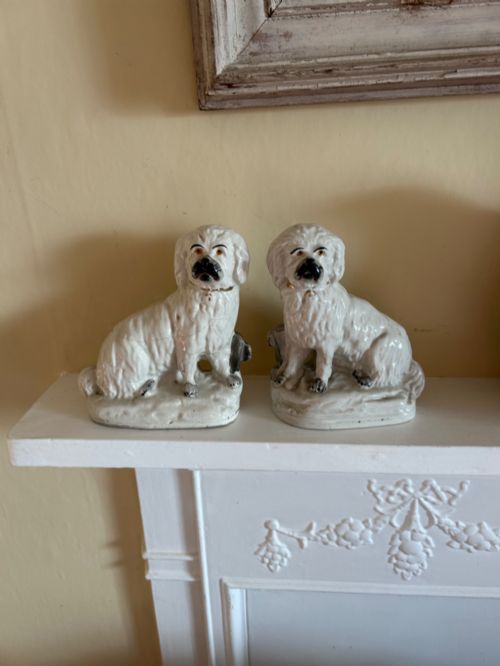
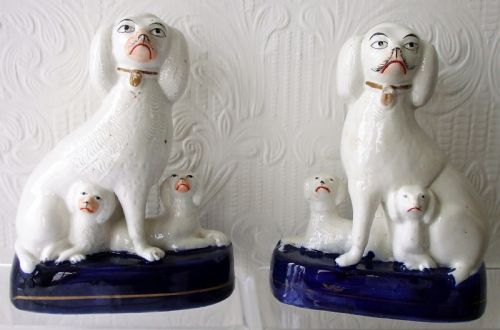


Glazed Ceramic Spaniels
These glazed ceramic spaniels bring Victorian hearths to life, offering warmth and character that modern interiors simply cannot replicate.
Glazed Ceramic Spaniels
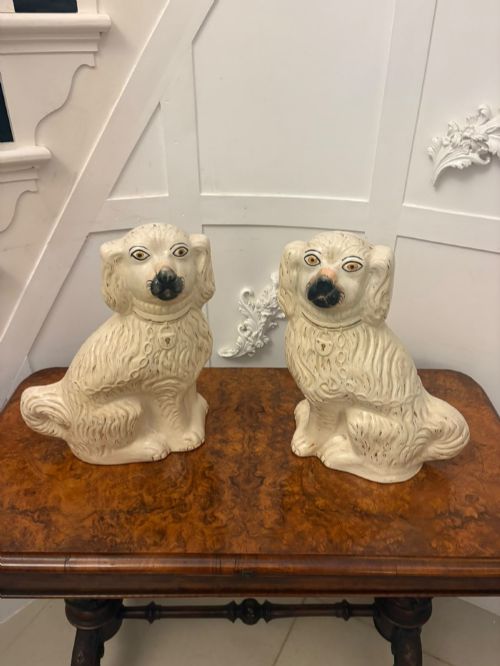
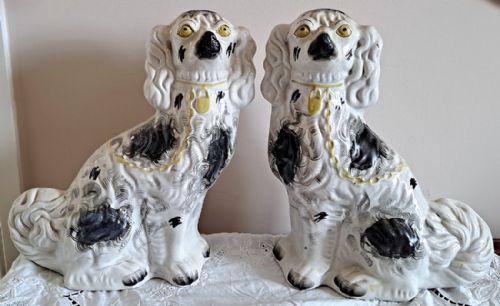
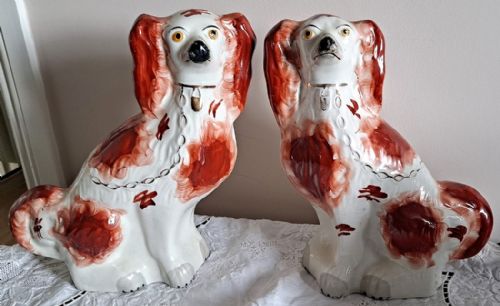
Glazed ceramic spaniels form a distinct group of decorative figures originating from nineteenth-century English workshops, typically modelled as seated pairs. These Staffordshire pottery dogs frequently appear as copper lustre examples, hand-painted models, or functional quill holders designed for the Victorian mantelpiece.
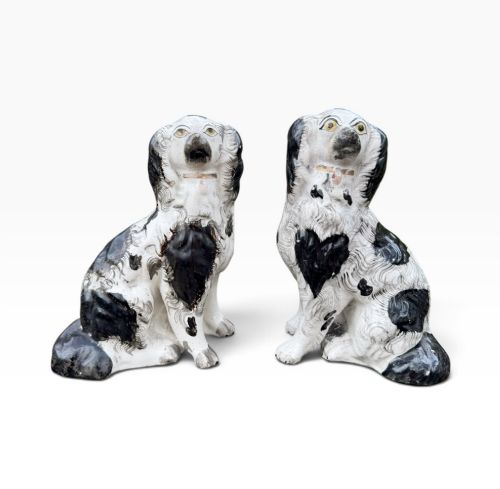
The selection ranges from traditional black and white markings to stoneware King Charles spaniels and related canine companions such as poodles and Maltese terriers. Most examples date from the Victorian era, particularly around the eighteen-eighties, capturing domestic affection in ceramic form.
Materials and construction
Many specimens incorporate touches of gilt or gold leaf to highlight chains and lockets, adding a decorative sheen to the fired ceramic base.
Glazed Ceramic Spaniels Retail Price Guide 2026
Typical asking prices for glazed ceramic spaniels among the pieces listed under this phrase on Sellingantiques today, from the lower quarter to the upper quarter. They describe what is for sale here now, not the wider market.
The documented object types span decorative figurines, mantel groups, and quill holders created by Staffordshire potteries.
Judging quality and finish
The richness of the glaze and the preservation of copper lustre or gold leaf details also separate standard decorative examples from superior collector pieces.
The Glazed Ceramic Spaniels Glossary
- Staffordshire pottery
- Ceramic wares produced in the various kilns and potteries of Staffordshire, England. This region became the primary centre for nineteenth-century decorative figures.
- Earthenware
- Porous pottery fired at a lower temperature and rendered impermeable by a surface glaze. It serves as the standard body for these Victorian dog figures.
- Copper lustre
- A metallic glaze technique producing a reflective, copper-coloured sheen upon the ceramic surface. Potters utilised this finish to create ornate collars and markings.
- Quill holder
- A hollow decorative figurine fitted with an aperture to hold writing quills. These functional items combine domestic display with practical desk use.
- Stoneware
- A dense, durable ceramic fired at higher temperatures than earthenware. It provides a sturdier body for certain nineteenth-century animal figures.
Glazed Ceramic Spaniels: Frequently Asked Questions
Where were glazed ceramic spaniels displayed?
Victorian households traditionally placed pairs of these ceramic dogs on either side of the fireplace mantelpiece. They faced inward toward the hearth, creating a symmetrical arrangement that grounded the domestic living space.
Beyond the fireplace, owners positioned them on sideboard tables, chests of drawers, and occasional shelves throughout the Victorian parlour to project an air of respectable domesticity.
How do I identify nineteenth-century Staffordshire dogs?
Nineteenth-century Staffordshire figures typically display characteristic earthenware bodies beneath a glossy transparent glaze, often featuring hand-painted enamel markings in black, copper lustre, or gold leaf. Examining the underside reveals the porous clay body and typical potting traits of the period.
Earlier examples from the mid-nineteenth century frequently exhibit simpler modelling and distinct ventilation holes underneath, distinguishing them from later twentieth-century reproductions and related factory output.
Were all Staffordshire dogs spaniels?
While King Charles spaniels and seated spaniels dominate the ceramic output, Staffordshire potteries also modelled poodles, Maltese terriers, and greyhounds. Makers occasionally produced complex groups incorporating puppies or functional items like quill holders alongside standard dog figures.
These varied canine subjects shared the same decorative purpose and production methods within the Staffordshire kilns, reflecting Victorian affection for multiple dog breeds.
How should I clean antique glazed ceramic spaniels?
Careful dusting with a soft, dry brush or a lint-free cloth is sufficient for routine maintenance of glazed ceramic surfaces. Avoid harsh chemical cleaners or abrasive materials that might damage the delicate enamel paints and metallic lustre finishes.
Keep these figures away from direct, prolonged sunlight to prevent any fading of the hand-painted colours and gilt highlights applied over the glaze.