





Glazed Ceramic Dogs
Glazed ceramic dogs bring domestic warmth and historic character to a room, ranging from Staffordshire mantel ornaments to Chinese temple figures.
Glazed Ceramic Dogs
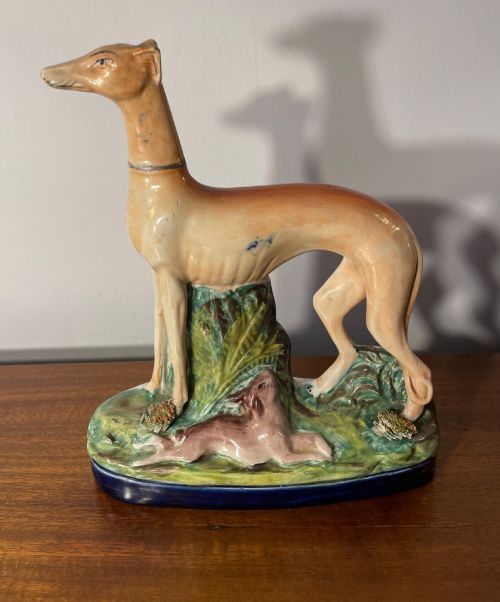
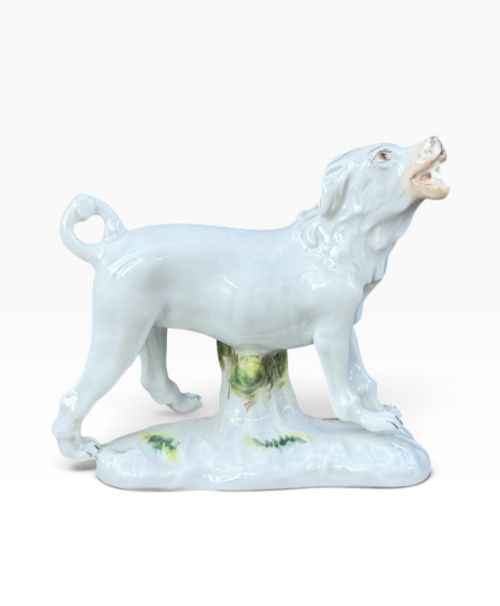
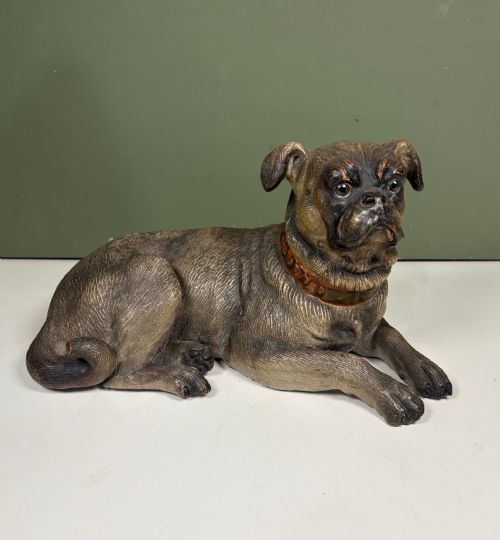
Glazed ceramic dogs encompass a wide array of decorative figures, mantel ornaments, and functional items such as inkwells and quill holders. When searching for glazed ceramic dogs, buyers frequently encounter Staffordshire earthenware spaniels, poodles, and greyhounds alongside Chinese porcelain Foo dogs and Japanese Meiji period Shishi figures.
The selection bridges several eras, stretching from early nineteenth-century pieces through the Victorian period and into twentieth-century European porcelain. English earthenware pairs sit alongside continental Majolica, German porcelain lamps, and Asian ceramic sculptures.
Makers and regional potteries vary significantly across the inventory, including English Staffordshire traditions, German porcelain works, and Asian traditions from the Qing dynasty and Meiji period. Forms range from simple seated spaniels and poodles with pups to elaborate Buddhist lions and hound and hare groups.
Materials and production methods
Potters shaped these figures using earthenware, stoneware, and porcelain, applying various glazes, enamels, and occasional gold leaf to the surfaces. Earthenware pieces often received a smooth lead glaze or copper lustre finish, while porcelain versions relied on high-fired mineral pigments.
Moulding and hand-forming techniques defined the manufacturing process, particularly in Staffordshire potteries where figures were cast in sections and finished with painted details. Asian workshops utilised detailed carving and specialist glazing, such as turquoise and sancai glazes, on porcelain and pottery bases.
Glazed Ceramic Dogs Retail Price Guide 2026
Typical asking prices for glazed ceramic dogs among the pieces listed under this phrase on Sellingantiques today, from the lower quarter to the upper quarter. They describe what is for sale here now, not the wider market.
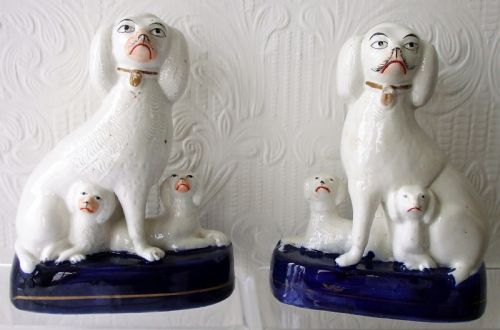
Some nineteenth-century poodles arrive accompanied by tiny removable pups nestled beside them on the ceramic base.
Distinctions in quality
The sophistication of the modelling distinguishes standard production pieces from finer works, particularly in the rendering of fur textures and anatomical proportions. Maker attribution and the preservation of original gilding and enamel colours further elevate individual pieces within the range.
Thomas Parr·Wedgwood and Co Ltd·Royal Capodimonte Factory·Meissen porcelain·Rosenthal
The Glazed Ceramic Dogs Glossary
- Earthenware
- Porous pottery fired at lower temperatures, commonly used for nineteenth-century Staffordshire figures. It requires a glaze to become impermeable to liquids.
- Foo Dog
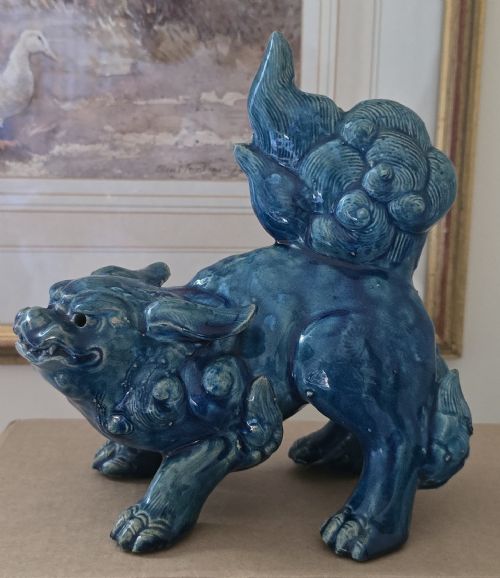
- A traditional guardian lion figure originating in Asian art, often rendered in glazed ceramic or porcelain. These protector figures frequently appear in pairs guarding entrances.
- Staffordshire
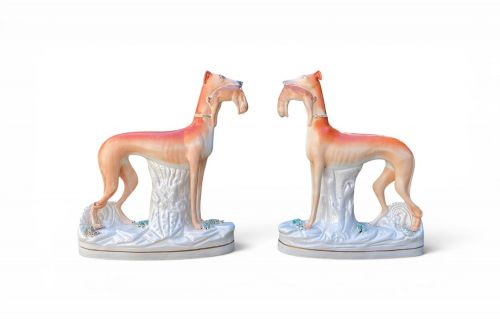
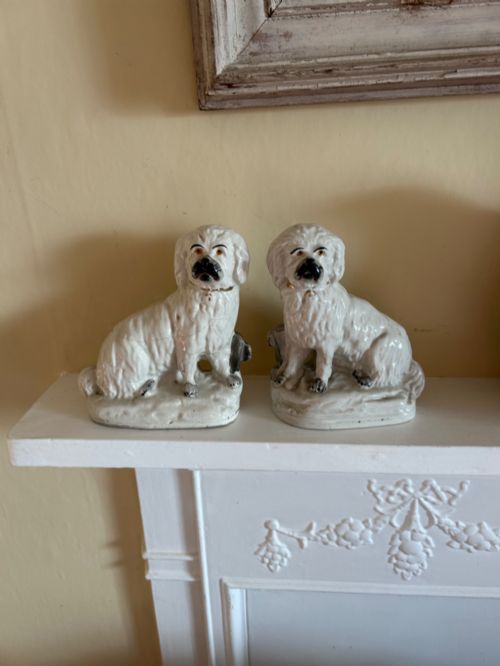
- Pottery produced in the English county of Staffordshire, famous for pairs of mantel dogs. These earthenware figures typically depict spaniels, poodles, and greyhounds.
- Majolica
- Tin-glazed earthenware featuring colourful opaque glazes, popular in nineteenth-century Italian and European ceramics. The technique produces a rich, glossy surface finish.
- Shishi
- A Japanese term for a stone or ceramic guardian lion or dog. These figures date across various Japanese periods including the Meiji era.
Glazed Ceramic Dogs: Frequently Asked Questions
What are Staffordshire dogs?
Staffordshire dogs are earthenware ceramic figures produced in English potteries during the nineteenth century. They were designed primarily as decorative ornaments for mantelpieces.
Pairs of spaniels, greyhounds, and poodles represent the most common forms found from this tradition. Potters frequently finished them with hand-painted markings and copper lustre details.
How do I date an antique ceramic dog?
Dating relies on examining the material composition, glaze characteristics, and manufacturing style. Earthenware bodies and copper lustre decoration typically point to the nineteenth century, while specific porcelain marks can narrow down the decade.
Stylistic cues such as Victorian ornamentation or Meiji period aesthetics also help establish the chronological origin. Comparing the base construction and wear patterns provides further confirmation of age.
Where were glazed ceramic dogs placed?
In nineteenth-century British homes, Staffordshire dog pairs traditionally sat on either side of the fireplace mantelpiece. They served as domestic ornaments that signalled respectability and comfort.
Asian ceramic lions and Foo dogs traditionally stood at entrances or temple thresholds for protection. Smaller items like inkwells and quill holders functioned as practical desk accessories.
What is a Foo dog?
A Foo dog is a traditional guardian figure representing a symbolic lion, common in Chinese and Japanese ceramics. These creatures were believed to offer spiritual protection to buildings and households.
Ceramic versions range from turquoise-glazed Qing dynasty pieces to Meiji period Shishi figures. They often feature open mouths and stylized curly manes.
Are these ceramic dogs sold as pairs?
Many of the ceramic dogs in these listings were created as symmetrical pairs for mantel display. Spaniels, greyhounds, and poodles frequently appear matching left and right orientations.
Single figures and smaller groups also occur, particularly with specific Asian temple figures or specialised desk pieces. Each listing indicates whether the item is a matched pair or an individual sculpture.