




Glass Vinegar Cruet
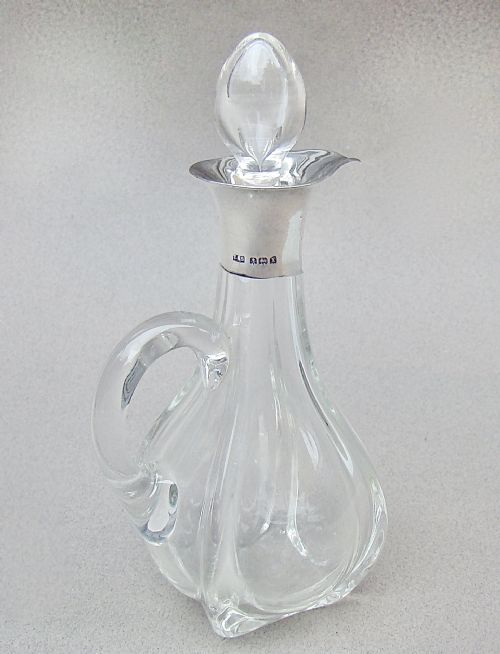
A glass vinegar cruet brings functional elegance to the table, combining heavy cut glass with precious metal mounts.
Glass Vinegar Cruet
A glass vinegar cruet serves as a dedicated vessel for dressing and seasoning, designed for regular use at the dining table. When exploring this selection, buyers frequently encounter pieces dating from the Georgian period through to the Art Deco era.
Origins span English workshops of the eighteenth and nineteenth centuries, alongside continental European pieces. The predominant styles reflect Victorian and Edwardian domestic dining customs, where table presentation held considerable social importance.
Materials and construction methods
Makers utilised heavy lead crystal and cut glass for the fluid containers, often incorporating deep geometric facets to catch the light. These glass bodies were frequently paired with sterling silver mounts or silver plate.
Metalwork involved traditional silversmithing techniques, including casting, piercing, and hallmarking on pieces from London and Birmingham. Wooden frames utilised mahogany and ebonised timber, sometimes fitted with carrying handles and protective rims.
Glass Vinegar Cruet Retail Price Guide 2026
Typical asking prices for glass vinegar cruet among the pieces listed under this phrase on Sellingantiques today, from the lower quarter to the upper quarter. They describe what is for sale here now, not the wider market.
Some Victorian dining tables featured figural novelty cruet sets shaped like animals or birds, ready to waddle across the Sunday roast.
Distinctions in craftsmanship
The standard of execution depends heavily on the clarity and depth of the glass cutting, alongside the weight and purity of the silver mounts. Superior examples display crisp faceting on the bottles and clear, legible hallmarks on the metal components.
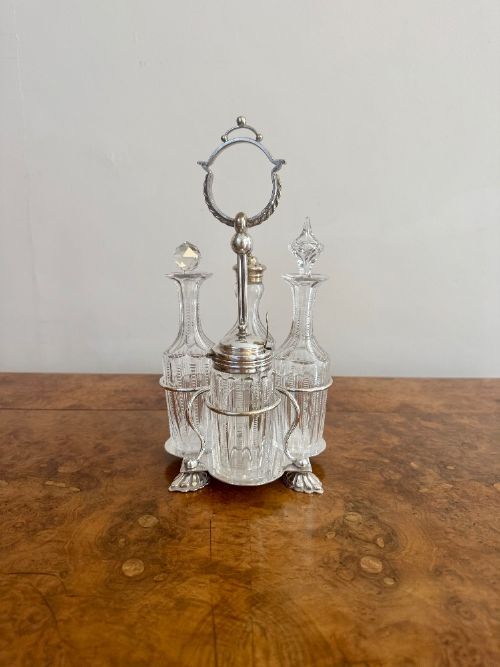
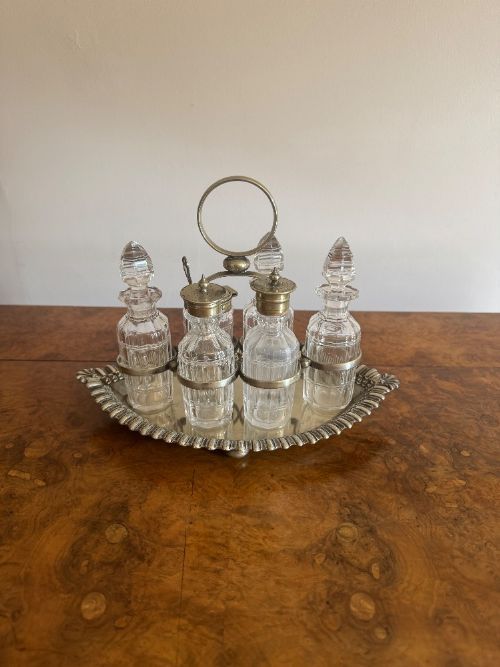
Construction rigidity also sets tiers of execution apart, particularly in multi-bottle cruet stands where the frame must securely hold heavy crystal bottles without wobble. The integration between glass stoppers, collars, and stands indicates the original maker's investment of time and skill.
Levi and Salaman·Mappin Brothers·Walker and Hall·Charles Thomas Fox·Elkington and Co·Hester Bateman·Wade Wingfield Wilkins·William Hutton and Sons
The Glass Vinegar Cruet Glossary
- Cut glass
- Glassware shaped and patterned by holding the surface against a rotating abrasive wheel. This technique produces sharp facets that enhance the refraction of light through the vessel.
- Silver plate
- A base metal, commonly copper or white metal, coated with a thin layer of silver. This process provided the visual appeal of solid silver at a lower cost for larger table sets.
- Hallmark
- An official stamp applied to precious metals indicating the standard of purity, the assay office, and the year of testing. These marks help verify the age and origin of silver mounts.
- Cruet stand
- A frame or tray, often fitted with a central handle, designed to hold multiple condiment bottles together. They allow diners to pass vinegar, oil, and sauces around the table with ease.
Glass Vinegar Cruet: Frequently Asked Questions
What is a glass vinegar cruet used for?
These vessels held vinegar for seasoning food at the dining table, often paired alongside companion bottles for oil.
They allowed hosts to serve liquid condiments with precision during formal meals.
How do I identify a Victorian cruet set?
Victorian examples frequently feature ornate silver plate mounts, heavy cut glass, and larger multi-bottle frames designed for elaborate dining.
Look for registration marks or specific nineteenth-century stylistic cues like Gothic influences.
Are these cruet bottles safe to use today?
Most antique glass cruets remain structurally sound for holding vinegar or oil if cleaned thoroughly with warm water.
Silver-plated or sterling mounts require gentle hand washing to preserve the metal surface.
What materials make up these sets?
The listings show combinations of cut glass, lead crystal, sterling silver, and silver plate, occasionally supported by mahogany or ebonised wood stands.
Metal mounts often feature distinct hallmarks or plating stamps.